To answer this question (either from your own perspective, or your imagined response on behalf of GANTOB or affiliates), please either post a comment to this blog, email GANTOB or use Instagram or Twitter/X. Selected answers will be collated in a future pamphlet in the #52Pamphlets.
Read more about the 23 Questions, and submit your own question.
In the year of our lord 992 The Justified Ancients Of Mu Mu
Set sail in their longboats on a voyage to rediscover the lost continent.
After many months on perilous stormy seas, their search was fruitless.
Just when all seemed lost they discovered… America!
The tale you are about to hear is a celebration of their founding of this great nation.
In the lands of the north, where the black rocks stand guard against the cold sea, there was a man called Leif Eiriksson. He was the son of Eirik The Red of Brattahlid and was a representative of The Justified Ancients Of Mu Mu.
One day, Leif was returning from Norway to Greenland when he rescued some men clinging to the wreck of a ship in the middle of the ocean. These men had travelled with a trader named Bjarni Herjolfsson. They told Leif they had intended to sail from Iceland to Greenland but were driven off course by north winds and fog.
They told Leif that, when the storms had cleared, their ship had sighted a land of small hills covered in forests. Bjarni said this did not match what he had heard tell of Greenland and told his ship to sail north. They then sighted land that was flat and wooded. Bjarni said this could not be Greenland either, so they sailed north again.
They finally saw land with high glaciers sitting on nothing but flat rock with no trees. Bjarni said he did not believe this to be Greenland and that it offered them nothing of use, so they steered a course back out into the open sea. Bjarni’s men were frustrated not to have been allowed to explore any of these lands.
They told Leif their ship had then entered the Sea Of Worms and sank, killing Bjarni and all the men except those who Leif rescued. The survivors sailed with Leif back to Brattahlid and from then on Leif was known as Leif The Lucky.
Leif was anxious to explore the new lands Bjarni’s men had sighted and he told his father Eirik that he believed that they had discovered The Lost Continent Of Mu.
At the same time, in Iceland there was a beautiful, fiery haired woman named Gudrid. Gudrid lived with her father Thorbjorn Vifilsson, a friend of Eirik The Red, and her mother Hallveig in Laugarbrekka.
One spring, Thorbjorn Vifilsson decided to leave Iceland and join his friend Eirik in Brattahlid. He took Hallveig and Gudrid and thirty men and women to settle in Greenland with him. Times were lean in Brattahlid, however, and the leading farmer of the district, a man named Thorkel, called upon Thorbjorg The Prophetess to see what fortunes lay ahead.
After Thorbjorg had eaten a feast prepared by Thorkel, she asked if any woman in the district knew the warlock songs needed to carry out the magic rites. Only Gudrid knew the songs, as she had been taught them by a woman named Halldis, wife of Orm the farmer and an old friend of her family, but as a good Christian woman, she was reluctant to take part in the ritual.
Thorkel and the other farmers pleaded for her help and she relented, reciting the chants in a sweet and fair voice that Thorbjorg The Prophetess claimed had brought forth the assistance of many spirits.
The spirits told the Prophetess that the hardship on the land would soon cease. As a reward Thorbjorg told Gudrid of her own fate. “You will marry the most honourable of men in Greenland,” she told her. “He is another representative of The Justified Ancients Of Mu Mu and you will know him by his name, which carries the sounds of the K, the L and the F. You will travel widely together and your descendants will be many and will create a great and worthy line.”
The words of the spirits were true and the farming at Brattahlid was abundant over the summer. In the autumn, a merchant of good standing, a man from Skagafjord in Iceland called Thorfinn Karlsefni sailed into Greenland where he was warmly met by Eirik The Red and invited to settle with him at Brattahlid.
Soon Gudrid caught the eye of Karlsefni and he asked Eirik for her hand in marriage. Eirik approved of the match and Gudrid also, for she recognised Karlsefni’s name from the prediction of Thorbjorg The Prophetess.
Over the winter, Leif asked Karlsefni, a well-travelled man, if he would accompany him on a voyage in the spring to The Lost Continent Of Mu. He agreed and preparations were made for the journey, with two ships and forty men each, livestock and food to sustain them and goods to trade with the people of Mu.
Leif also asked his father Eirik The Red to join him. Eirik felt he was getting too old in years for such adventures but Leif entreated him. However, on the spring morning that they rode to the fjord, Eirik was thrown from his horse. “This is punishment for me for hiding my money,” Eirik exclaimed. “I have more money that I need or know what to do with and, as I cannot burn it, I decided to bury it. I will send my wife to retrieve it from its hiding place and return to Brattahlid. You must carry on without me.”
Leif bid farewell to his father and joined his forty men on his ship. Karlsefni and Gudrid and their forty men took another ship. They sailed west but strong winds arose and the fog descended upon them. Weeks passed at sea and they were thrown this way and that across the ocean with no idea where they were.
Eventually they sighted the flat land with glaciers described by Bjarni’s men. They rowed across and set foot on this barren land, which Leif called Helluland, but it was not a good place to settle.
Further south for two days they sailed, until they sighted the flat and forested land seen by Bjarni’s men. They landed here and saw many animals and named the land Markland.
Then they sailed further south in search of the land of small hills and forests. When they reached it they discovered a shoreline so long it amazed them, with sand flats and many inlets. This seemed to Leif to be the most promising land so they cast anchor and rowed ashore to explore.
They soon discovered wheat and wild grapes and named the land Vinland. The rivers around them were full of salmon and Leif named them The Rivers Of Life. The weather was warmer than Greenland, never dropping below freezing at night, and there was limitless fodder for the cattle. Leif decided that, if this was The Lost Continent Of Mu, it was indeed an excellent land to settle so he began to supervise building a camp.
Leif Eiriksson statue in Reykjavik. Credit: Stuart Huggett
Before the camp had been finished, a large group of native men came out of the woods near to where Leif’s livestock was grazing. Leif’s bull began to snort, frightening the men who picked up their weapons and retreated back into the woods.
“I do not now believe this to be The Lost Continent Of Mu,” Leif said, “For I am told the people of that land wear robes and study in temples. They do not have tangled hair and hide in forests. I name these people Skraelings. We must be on our guard.”
Leif’s men built a wooden palisade around the camp in case the Skraelings returned but the spring and summer months passed in peace. Gudrid gave birth to Karlsefni’s son in the autumn and they named the boy Snorri.
One day in early winter, Gudrid was cradling Snorri in their hut when a cry went up. The Skraelings were outside the camp in great numbers, whirling their weapons around their heads.
Gudrid rose to her feet but just then a strange woman appeared at the door of the hut. She wore a dress of blue and gold, with waves of blonde hair and a gold crown upon her head. “Dear Gudrid, this is not The Lost Continent Of Mu,” the stranger said. “It is a great country but not the land you seek. You must return home and one day, in a thousand years’ time, Mu will be revealed to the children of your children.”
Suddenly there was a crash at the gate as the battle began. Gudrid stood up but could no longer see the stranger. Carrying Snorri, she approached the Skraelings outside the camp. She bore her breasts, picked up a sword and began to mimic their war cries.
Astounded, they turned around and were faced with Leif and Karlsefni and their men, leading their bull ahead of them. Leif and Karlsefni began chanting with the bellowing of the livestock and once again, the Skraelings fled.
Gudrid told the men of the stranger she had spoken to. No-one else in camp had seen her but they agreed they should begin to return home, as the threat of attack from this new land’s inhabitants would always pose danger to them.
Once their ships had been loaded with grain, grapes and fish, they set sail, leaving the remains of their camp behind. Fair weather accompanied them as they headed north, away from Vinland, past Markland and Helluland, until a strong breeze carried them across the seas to Greenland.
Leif settled in Brattahlid while Karlsefni, Gudrid and Snorri returned to Iceland. Both families had descendants of great renown, chieftains and bishops among them, but never did they find The Lost Continent.
STUART HUGGETT
23 March 2024
#GANTOB2024 Pamphlet 20
Further reading:
‘The Vinland Sagas’ (Translated by Keneva Kunz). Penguin Classics, 2008
Stuart has also suggested that as a freely adapted / mashed-up version of a 1000-year-old oral story, the text (and possibly audio) lends itself to other re-interpretations by GANTOB followers or KLFRS fans, if anyone decides to have a go at it in the future.
[GANTOB3 comments: For those with an interest in the Golden Thread, you will note mention of Iceland in recent pamphlets, a Viking/ pirate, sagas from Gilgamesh to Kalevala, and justification/ being justified. There’s also a tenuous Thomas Pynchon link if you add an “e” to one of the destinations in Stuart’s pamphlet. I should highlight that for the time being we have escaped Dalwhinnie. Thank you Stuart for this excellent addition to the 52 Pamphlets]
The ghosts of Curt Finks and Ian Macpherson happened to be together in the vicinity of Dalwhinnie when the distress signal went up on 22 March 2024. The signal related to the two blank pages in Bill Drummond’s memoir The Life Model for that day – specifically the “above” or “over” section for the year 29 April 2003 to 28 April 2004 (AKA “I am Fifty”). (Catch the official version here if you’re reading this on the day itself, or later on its 71 day orbit). We might call it the “conscious” section. But that is in the past, for the ghosts at least. They have promised to supply 1,000 words to fill the gap.
Ghosts are not tied by the rules of mortals. They are more like quantum entities: sometimes wave, other times particle; potentially entangled with other objects; able to be in more than one place (or indeed time) at once. It is not clear whether they were together when the distress signal went up, or whether the flare resulted in the encounter that is their present.
At this point the GANTOB legal team have asked for the following disclaimer: While this pamphlet (number 19 of the 52 Pamphlets) relates to Bill Drummond, it is not by or sanctioned by him. It is the work of GANTOB (the project). And as a piece of fiction, it does not have any connection with anybody else mentioned in the pamphlet, including James Robertson. Any inaccuracies can be landed at the (green) door of GANTOB (the person).
The ghosts are in Dalwhinnie, but it is now early 2004. They are hovering around the person of James Robertson, author. He is wandering about the village, taking in the sights, jotting down notes that will go on to populate his novel The Testament of Gideon Mack (2006), which is thoroughly recommended and goes on to be longlisted for the Booker Prize. The two ghosts are making mental notes as they cannot write or type. They do not tend to forget. But because of their slippery relationship with time, they cannot always be relied upon to give an accurate chronology.
The ghosts have been following the GANTOB saga since their previous contribution midway through the second GANTOB book. They have been itching to make another pitch. Macpherson is the more successful of the two, in terms of overall publication record, but Finks has managed a publication in the intervening period, albeit within a piece contributed by his daughter-in-law Gillian. At 400 words (before adjusting for the publisher’s typos) and with a circulation of 313 copies, it does not compare with Macpherson’s output, but Finks will take what he gets.
The pair of spectres are filling out a mental table – they have ticks in the following boxes for both the Gideon Mack book and the GANTOB project: – Badenoch connections – tick – Scottish minister – tick – Disappearance into a gorge – tick (if we count the recent Thelma and Louise bit cited in a recent pamphlet by Gillian) – A fictional book within a book plot – tick – Death – tick – Morality – tick – Unreliable narrator – possibly.
And this takes us back to another memoir of a justified sinner – The Life Model (2024) – which is about but not by Bill Drummond. Of Justified and Ancient, The KLF and Big in Japan fame. His memoir was written by a cast of 168 people apparently. As previously mentioned, the ghosts are keen to fill in the gap in the book for 2004. (Though an attempt at a memoir, they have not written this piece in any person, first or otherwise. They are ghosts silly!)
By any measure 2004 was a busy year for Drummond, dotting up and down the UK talking about his project “How to be an artist”, cutting up an expensive photo by Richard Long, raising money in the process that he then hopes to destroy. This seems odd to the ghosts, but they have very little “skin in the game”, with no possessions or money. Their spiritual needs are already met. Their existence is dictated by simpler rules, or at least terms that have become familiar through years of use. They are only allowed in places they visited in life, and times when they were alive or existed as ghosts after their death. Other than that they can be flexible. If they have travelled a road from Perth to Inverness for example, they can revisit any spot along that route from the date of their birth onwards. If they had both been to the same spot in the past, they can visit together, in the same time frame. Their encounters documented so far for GANTOB have been around living authors in the lunar landscape around Dalwhinnie. It is not clear to us as GANTOB readers whether there are opportunities outwith such literary congregation for the two to meet. But the accompanying note to this piece explained that they have never been in the right place at the right time to encounter Bill Drummond on journeys that he must have taken on multiple occasions through Badenoch right up to the current time. If they can only rendezvous around authors, their hypothesis is that Drummond did not stop off long enough to write anything of substance in these locations – he was simply passing through, or perhaps breakfasting. The one occasion we have him documented as writing anything in Badenoch (a moratorium, in 1995) was at a trucker cafe in Newtonmore. Our literary ghouls would not frequent a place like that.
Drummond published two pamphlets in the stretch between birthdays, both in 2003: one that might be considered a standalone piece “What The Waves Were Always Saying”, which the two ghouls are delighted to see was written on the occasion of a performance by a band called Cadaverous Condition, in Reykjavik. This was alluded to recently in a pamphlet for the GANTOB project. The other Penkiln Burn pamphlet that year was called “A Proposal” and described Drummond’s Long snipping activities. His next book was Wild Highway (2005), about a trip to central Africa in 1996 with Mark Manning (his co-author) and an entity called Gimpo. The ghosts, knowing the writing process, can imagine that at points in 2004 Drummond was holed up with his co-travellers and editors, slaving over a draft of the text. Eight or nine years is a long time – a labour of love. But they cannot comment: neither ghost has been to the Congo or the type of place where you meet somebody who goes by the name of Zodiac Mindwarp. Or indeed Gimpo.
With that our two ghosts forget Drummond and get back to the story of Gideon Mack and his encounters with the devil. That is much more promising territory. They follow Robertson as he pokes around Dalwhinnie, before he checks into the room that will become the opening scene of his first book. They disappear at that point, because it is getting dark and they do not want their spectral glow to be spotted.
This pamphlet had been paired with RIGHT HAND MAN (by BRONWYN) because it takes an alternative view of the same year. Together they answer question 9 of the 23 Questions: What are the two sides of the same coin?
If you would like to contribute a pamphlet please get in touch.
This is hot off the press. Bronwyn, who we first met in the GANTOB Kompanion Volume between the first and second books, and who was important in identifying some of the deceptions by The Foundation Doktor and The Benefaktor, has had a flying visit to the croft. It was lovely to meet her. She had quite a few tales about Ali and Curt that I hadn’t heard before.
I wish her every success on her retirement and travels.
The A9 drags. I take it gently. I have to protect my consignment of papers. Not from accidents – though the road has a litany of tragic tales no doubt – but from prying hands. When I stop, I make sure that the box is covered in the footwell behind the passenger seat, and my old Land Rover properly locked. It is proving an expensive journey at 15mpg. That retirement lump sum is not going to go very far at this rate. I do not stop at Blair Atholl to refuel. The following stretch – the climb to Drumochter – grinds on, so I take my foot off the pedal on the descent and limp into Dalwhinnie. Luckily they have diesel.
I pause to take stock. It is my first time this far north. I have left the waterfowl of the East Anglian fens far behind. They will be in somebody else’s charge once they have filled my position. I have been given some directions by Ali. “Watch out for the Sow of Atholl and the Boar of Badenoch on your left”. He has asked me to take a photo, for his wife. There was no mobile reception when I took it, but down in civilisation, with its familiar takeaway cups and wraps, I have a couple of bars. Ali’s email gives some context: His wife Gillian has been doing some writing. She has also been working too hard. Sadly, they have had a bad flood. She has no time to come this far south for a photo to illustrate a blog she has been working on. The quote that she is looking to mirror is from American author Kurt Vonnegut’s Cat’s Cradle, from the 1960s. She is “rather obsessed”. I have the quote written in my notepad. I need to keep my mobile for navigation.
“Mountains arose abruptly to the north of Bolivar, crowding the remainder of the island with their brutal humps. They are called the Sangre de Cristo Mountains, but they looked like pigs at a trough to me”.
I cannot find an angle that accentuates the porcine connection. My snatched photo of the two mountains reminds me more of a scene from the introduction to Twin Peaks. Bum. Ba Dum. No matter. I send the photo and disconnect.
The Sow of Atholl and Boar of Badenoch viewed from a single carriage stretch of the A9
Back onto the A9. Alternating single and dual carriageway. More dodgy overtaking by red Audis. Duelling. There is nowhere to stop for a bit of a break, some refreshment. I burrow down into my memories of the trip so far. Three days and counting. A stop in Chester-Le-Street for a bit of a chinwag over birdwatching with Pat followed by a night on her surprisingly comfortable sofa bed. And then a rather awful afternoon with The Photographer in Edinburgh. It has been decades since I last saw him [Ed: as described in the second GANTOB book, in the Muir Trance series]. At his request we have agreed to meet at a local nature reserve, rather than his house. I park beside some modern flats and follow my nose to the dovecot (“doocot” apparently in these northern climes) agreed as our rendezvous.
I recognise him at once. He is sitting, head down at a picnic bench, peering at his phone. He has hardly changed in all the intervening years. He stands to attention as I call his name, and eases himself out of the wooden assault course. Limbs tangled in struts. He seems nervy and distant, but I remember that he was never a particularly good listener.
Striding away after our snatched greeting he explains that he wants to take me to see an unfamiliar duck. I cannot work out how this might be the source of his angst. I follow on. In the centre of the park is a huge natural lake with dozens of submerged trees. It is like a scene from a dinosaur movie: a surprise in the middle of the city. The grey herons at the water’s edge, on branches and in flight appear to confirm the primordial hypothesis. As we walk, the peace is interrupted by an unseen coot’s call and we glimpse a water rat, which scurries away to watch us in safety from under a branch. A flotilla of mute swans glides parallel with the shore, approaching a viewing platform where there are dozens of tufted ducks living up to their name in glorious submerging monochrome. We make little small talk while walk. We barely know each other, apart from the Curt Finks connection. And then he stops, and starts whispering as we approach a pair of colourful ducks. They are in a quiet corner away from the clamour of Canada geese and black-headed gulls. The Photographer is clearly excited. He splutters his question, and I answer as gently as I can. I decide against using the term “common teal”, which I suspect would be a letdown, opting instead for Anas crecca, speaking it gently, like an anacrusis, before emphasising its familiar name of Eurasian teal. “Lovely, colourful pair”, I enthuse. The flash of green on the female’s wing, the brown and black markings with rim of yellow on the male’s head. The Photographer types into his phone – an aide memoire I imagine initially, but then I realise that he is googling my opinion – checking it.
“I love how they stick together, probably coming back to the same spot year after year”, I comment, to break back into his consciousness. Ill judged. I learn over the course of the next thirty minutes of monologue that The Photographer has three wives and counting, with numerous (never quite quantified) dependents. “Number 3” (wife) is proving rather more demanding than he had first imagined. He must be at least 80. Expenses are mounting and home is not a happy place. She has been signed off work with severe morning sickness for a couple of weeks. He is grateful for the warmer weather and longer days. He is out and about much of the time.
When we are back at the doocot The Photographer sheds his morose side and asks me, with his first sustained period of eye contact, “Do you know the work of Bill Drummond?” I have to admit that I do not. He goes on to explain that his recent exploits with his school acquaintance, the former Rev K______ (AKA The Benefaktor) have led him to do some “research”. He flicks up the Wikipedia page for this Drummond character on his phone, and scrolls down to a bit about burying $20,000 in a stone circle in Iceland. This, The Photographer, contends, is his way back to recapturing the intense period of happiness that he and Number 3 had last year. He has a cheap flight booked and is heading out in the morning. He will buy a map and spade when he arrives.
“He was obsessed by the guy, buys his art, but fan boy turns foe over night. What a story!” The Photographer is cock-a-hoop. “Destroyed the photo in 20,000 cuts. More perhaps, depending on how you count them. Richard Long was the name of the photographer [Ed: but not The Photographer]”. He’s talking so much that he’s quite out of breath. “Drove up, all the way, up, the UK” to get it out of his system.
We go our separate ways. I wish him luck with his journey. He gives a thumbs up. I decide to hunt down a hotel rather than take up his offer of a bed for the night. I update Ali by text and ask about the arrangements for the following day. He replies with a What3Words reference.
The next morning, after a generic hotel breakfast, I set out from central Edinburgh, choosing my route to avoid the low emission zone signs on the advice of the concierge. They have just appeared. He is not sure if they mean anything. I make good time, allowing a stop near Kinross for a midmorning snack. So here I am, in the Cairngorms, listening to Julian Cope on the Land Rover’s CD player. His Black Sheep album. The Shipwreck of St. Paul. “The saddest place in the world for a heathen/ Is this place, let’s burn it down”.
Ali’s new house is apparently quite difficult to find. Inspired by my account of The Photographer’s story he has suggested that we meet at a four-thousand-year-old stone circle in a housing estate, and go from there. He thinks I will be interested by a site known only to the local, off the tourist trail.
I take the Aviemore turning, and then follow the Tripadvisor instructions. I do not know how to use what3words to navigate. The instructions are not difficult to remember. I am told to “look out for a residential road called Muirton (on your right hand side)”. I am thinking about renowned ornithologist Grayling Muir [Ed: GANTOB book 2] as I pull up, so am distracted and do not see Ali approaching. He laughs and gives me a huge hug. I have known him since he was a little boy. I shake myself out of my trance.
“Long journey?” he asks. Recovering, I explain that I am grateful to stretch my legs. We tromp around the circle. It is damp. And cold. Nearby houses provide a bit of shelter from the wind. The inner circle is pretty complete, but the stones are low and squat, unlike Stonehenge. It is low key. I like it. It is how I imagined Scotland to be. We head back to our cars. I follow up along tiny roads, the view opening out into a U-shaped valley obviously scraped out by glaciers. A different type of trough.
Ali’s wife – Gillian – welcomes us at the door. She has finished her day’s work and wants to get out for a bit. We follow, past the trees, avoiding the flooding, and come across the neighbouring crofter repairing his fencing. We do not get anywhere very fast. A little further down “the glen” we stop for the postmistress in her red van. Gillian whispers a story once she is out of earshot. The postie is apparently the great great great…. granddaughter of the man who killed the pirate Blackbeard in the Caribbean back in the early 1700s. Can trace her family, and the story, back 300 years. I search for the details when we get back to the croft and connect to the internet. I cannot find specifics – the name of the pirate slayer is never given. It just says: “When Blackbeard was about to deliver a killing blow to Maynard, another sailor, a Highlander, jumped on Blackbeard’s back and inflicted a deep wound.” But Gillian seems to believe it. “20 cuts, 5 musket shots and then he was decapitated, head on a spike”, she marvels. She really is as mad as a box of frogs. She grabs Vonnegut’s book Cat’s Cradle from the table and shows me the pigs at the trough section before reading out the following passage from later in the book: “His family’s wealth derived from the discovery by Bokonon’s grandfather of one quarter of a million dollars in buried pirate treasure, presumably a treasure of Blackbeard, of Edward Teach”.
Speaking of treasure, I rescue the box from the back of the car and bring it to Ali. Notepads of figures, maps, a lot of details about bird sightings, all in his father’s hand. A few loose-leaf pages of typed text – stories and journal entries from a dot matrix printer. They have been up in my loft for 30+ years, the letters BCG scrawled on the side of the box. We had worked for hours, Curt, me and Grayling. We had some successes, with mentions in the acknowledgement sections of Prof Muir’s papers. But never a paper with Curt’s or my name at the top. There is nothing in the technical writings that would be a surprise to anybody now. We have missed our chance. But I can give my friend Curt (RIP) – Ali’s Dad – a bit of a leg up with his stories. He would have loved that. Gillian agrees, noting her success with one of Curt’s stories in a literary magazine recently, and her labours of love with the GANTOB books.
After supper I make my excuses and settle into the tiny guest room. A box room with bare white walls. They are still doing the place up after their move. The confines of this space frame my memories of the past few days and allow me to plot my next steps. The world is my oyster. I have no ties. Perhaps I will pop up to the Moray Firth to see the whales and dolphins. And when do puffins arrive? I could head up to Orkney to catch them and the Ring of Brodgar, the isthmus separating salt and freshwater. How wonderful.
It has been a long day. That night I dream of stone circles and buried treasure. In the morning, I rise early and write down everything that I can remember from the past 3 days, for GANTOB (the project). If she does not like it, she can spike it or cut bits out.
I leave before Ali and Gillian wake, only stopping once I reach a snack van and toilet a few miles south of Inverness. A skein of geese flies over head, audible above the hum of the road. I book a ferry and a room in Stromness on my phone. Up, up and away.
This question has now been answered. Unless you’re very interested in the GANTOB process, you’d be best skipping to the answer.
Hi Gantob,
I have a question that I would like to submit, and my question is:
Is work important for the soul? Is work important to keep you grounded?
Sometimes I really hate my job and it can feel so draining, depressing and pointless and it takes up most of my week leaving me with only two days where I can actually do the things that I enjoy doing. But if I didn’t have to work – if all of my time was actually mine – would I lose touch with reality?
Yours,
Tim (names may have been changed)
To answer this question, please either post a comment to this blog, email GANTOB or use Instagram or Twitter/X. Selected answers will be collated in a future pamphlet in the #52Pamphlets.
Read more about the 23 Questions, and submit your own question.
Mutton and turnip are off the menu come the apocalypse. It has poured for the past two days, and the remaining snow has melted in the warm spell that allegedly attracted the snake. Overnight, the burn beside the house burst its banks, and the vegetable patch is now more suited to growing rice. But the bigger problem is revealed when we pass the copse. Beyond the trees the river that usually meanders through the glen has flooded the lower pasture and taken some of the fences with it. From our vantage we can see submerged ash and silver birch where there used to be little islands of rocks. I wonder what happened to the crescent of sand that had gathered on our side of one of the larger islands, accessible by stepping stones in shallow water. Washed away no doubt. There is water as far as the eye can see, and no sheep. I feel sick.
Ali heads down to the fields while I send a message to the neighbours, checking that they are alright, and asking if anybody has sandbags going spare. An hour later Ali comes back, shaking his head. At least three sheep have gone, but the rest are safe, sheltering behind a drystone dyke. Reports follow later in the day that one of the yearlings has been spotted, drowned, its heavy fleece tangled up in the trees on one of the submerged islands. Two more, marked with their distinctive muted postal horn, are found snared in a neighbour’s ruined electric fence. There’s not much I can do with the ground so wet, so I head to my desk and log in for work.
At lunch our downstream neighbour pops in. He tells us stories of worse disasters that have befallen the area. The radiation clouds from Chernobyl (1986), with the ensuing studies of total body potassium (TBK). Then BSE (1996). FMD (2001). I am quite grateful to return to my BT Client login. I’m on a day of receiving insurance calls again. There are a lot of calls about flooding, and while I feel their pain I have to stick to my script. Our conversations are recorded for training purposes. “And is it sunny where you are today?” the script says. I skip that part.
I have an imagined rap running through my head all afternoon. “The songs of the doomed are the songs of the blessed”. It’s shouted, with Scottish brogue. It’s a misremembered lyric from a JAMs’ track.
I send a message to my supervisor about my deviation from diktat, so that I can refer to it if there is any comeback. A paper trail. A golden thread if you like.
This sequence of “threads” pamphlets – which ends with today’s extended piece – started off from some observations from John Higgs’ book William Blake:Why He Matters More Than Ever (2019), which I dug out after reading Stuart Higgs’ pamphlet on the poet. It has led me to re-read Kurt Vonnegut’s Cat’s Cradle (1963) for the first time in 30 years, a favourite of the American counterculture movement of the 1960s. That era clearly influenced The Illuminatus! Trilogy (“the Trilogy”) (1975), that in turn so inspired The JAMs and The KLF.
Over the course of this research (which Vonnegut defines in Cat’s Cradle as to “look again”, p42, which is appropriate) I have stumbled across signs that some of this ground has already been tilled. I have provided some detailed notes in the appendix. All you really need to know is that Vonnegut’s character Bokonon, religious leader, turned up subsequently as a saint in a wild cult book called Principia Discordia, which in turn influenced the Trilogy which was adapted for the stage in Liverpool a year later and famously involved Bill Drummond. The latter goes on, with Jimmy Cauty, to use some of the ideas from the Trilogy in the music of The JAMs (a name directly lifted from the Trilogy) and The KLF (an acronym that references entities in the Trilogy). A lot of overly complicated – and sometimes incoherent – books written by a bunch of blokes (mainly), perhaps under the influence of illicit substances. Vonnegut is the exception I think – writing clearly, in a book that remains of widespread appeal. I am not going to speculate on what The KLF were up to when they wrote their huge commercial hits.
But this does not prove a “golden thread” between these books. Bokonon links Cat’s Cradle to Principia Discordia, but does not appear in the Trilogy. Twenty thousand dollars is mentioned in the Trilogy, which is the sum that Drummond paid for the Richard Long photo in Drummond’s book How to be an artist (2002), but was long after The KLF, and it does not link back to either Vonnegut or Principia Discordia. The quote “Twenty thousand years” appears in Principia Discordia. Is that what The JAMs are referring to when they rap “Twenty thousand years of SHOUT SHOUT SHOUT” in All You Need Is Love? John Higgs notes that Bill Drummond had perhaps not read the Trilogy before he incorporated some of its ideas into The JAMs/ KLF. But perhaps that is not important, because he would have been immersed in the major themes of the book during the preparations and staging of the play. But did the stage play incorporate sections of Principia Discordia as well?
But I think that I have something up my sleeve that demonstrates a more direct connection between Vonnegut and the work of The KLF, via Bill Drummond.
Before that, I am going to pause to consider the word Discordia. Discord – in music, meaning lack (from “dis”) of harmony (from “chord”). I think of the “Lost Chord” that Drummond and Mark Manning go searching for in Bad Wisdom (1996). But also from the Latin (discordare) from “cor” or “cord” (as in coronary and cardiac). And if that pulls at your heart strings, well that might be your chordae tendineae, the tendinous cords that ensure the functioning of the tricuspid and mitral valves in your heart. We have so many fraying edges in the Threads pamphlets.
Before we conclude this series of Threads pamphlets we should also have a look for links between the GANTOBverse – in its widest sense – and Cat’s Cradle, regardless of whether these were pure coincidence or ideas that have rested, like the herpes zoster virus, ready to awaken in a painful bout of shingles thirty years on.
Green maraschino cherries feature in The Benefaktor’s submission for the 52 Pamphlets: The Cherry on Top. He references a 1960s classic by Pynchon in that pamphlet, but not anything by Vonnegut. But here’s Vonnegut in Cat’s Cradle (p19): ‘I mixed him an “End of the World Delight”. I gave him about a half-pint of crème de menthe in a hollowed-out pineapple, with whipped cream and a cherry on top’.
Asking him about this, The Benefaktor confirms that he did read Cat’s Cradle at some point, probably in the 1970s, but he does not think that there is any connection with what he wrote in his anti-fascist piece on cherries. He does not think that the mention of banana republics in Cat’s Cradle (p56 and 58) is relevant either.
Credit: consultthismusic.wordpress.com
Grapefruit. GANTOB loves, and is named after, grapefruit. Not a specific grapefruit. All grapefruit. That remains the case, despite Vonnegut’s words in reference to the bubonic plague: “The lymph glands in the groin and the armpits swell to the size of grapefruit”. I suspect that this is based on a phrase taken from a long forgotten medical textbook. I haven’t been able to find a source from an internet search. Grapefruit is used as a fruity comparison for plague victims elsewhere – for example in a Guardian book review (Justinian’s Flea, 2007).
Boiled albatross. This is, again, The Benefaktor’s territory. The Observer (who we learnt in the “death” pamphlets, reproduced in the second GANTOB book, is actually the ghost of an albatross), presumably did not like this sentence in Cat’s Cradle: “albatross meat disagreed with me so violently that I was ill the moment I’d choked the first piece down” (p168), and from there to a graphic “deathbed” scene in a golden dinghy. This passage, and also the book’s apocalyptic themes, make me think of ST Coleridge’s famous poem The Rime Of The Ancient Mariner (1798), which takes us back to the first Threads pamphlet with John Higgs’ reference to Coleridge’s term “esemplastic”. The mention of the albatross in the GANTOBverse was also intended as a harbinger of difficult times ahead, and also possibly inspired by the reported loneliest albatross in the world.
But you’re probably more interested in potential links between Cat’s Cradle and The KLF and related projects. And I think that there are some, though it is a moot point whether these are directly through Vonnegut’s book, or via the more convoluted Principia Discordia/ the Trilogy path.
Sirens: I was struck by this description of Mona in Cat’s Cradle: “Her dress was white and Greek. She wore flat sandals on her small brown feet. Her pale gold hair was lank and long” (p100). This sounds strikingly like the three figures retreating into the sea in the KLF’s NME advert announcing their retirement in 1992.
Pirates and Vikings: The founding figures of the Republic of San Lorenzo in Cat’s Cradle are Edward McCabe and Bokonon, arriving via another vessel. They reach an uneasy truce in their role: “The drama demanded that the pirate half of Bokonon and the angel half of McCabe wither away. And McCabe and Bokonon paid a terrible price in agony for the happiness of the people – McCabe knowing the agony of the tyrant and Bokonon knowing the agony of the saint”. The Trilogy has its pirate/Viking – Hagbard Celine. The KLF have their Viking-inspired myth of the Justified Ancients of Mu Mu’s discovery of America in 992, in America: What Time is Love? On that theme, Vonnegut mentions “doomsday horns” (p101), which is a pretty good description of the sound that issues out from the Viking longboat throughout The KLF’s last big commercial hit.
Destruction: There’s a “Thelma and Louise” type moment – two women jumping to their deaths in a gorge – early on in Cat’s Cradle (p10) that made me think of The KLF’s Cape Wrath moratorium, and its Badenoch associations. Later, there’s a vivid description of the destruction of a canvas portraying a cat’s cradle in a spider’s web of scratches: “He threw the painting off the cantilevered terrace. It sailed out on an updraught, stalled, boomeranged back, sliced in the waterfall (p120-121). Drummond has a history of destroying canvases. Earlier in the book an empty hi-rise hotel (p111), named after a doomed love interest, is described as being built “like a bookcase, with solid sides and back and with a front of blue-green glass”. A book about the end of the world, partially set in a bookcase of its own, destroying the gossamer threads of its own title. Very meta. Very KLF.
The number 23: Readers of The Illuminatus! Trilogy, and KLF fans, will probably not be surprised that the number 23 is also central to Principia Discordia. The number has all sorts of derivations and meanings to these cult works. But what if the calculations and justifications are all a distraction? The number 23 is also important in Cat’s Cradle, related closely to what is arguably, despite all the threads and connections between the characters, the main theme of the book – death. The nearest thing we have to a medic in the book, Julian Castle, who operates a humanitarian hospital in the jungle, wants something “to read to people who are dying or in terrible pain”. Jonah/ John, the narrator replies: ‘I suppose I could “overhaul the ‘Twenty-third Psalm’, switch it around a little so nobody would realize it wasn’t original with me.’ To which Castle’s son Philip replies ‘”Bokonon tried to overhaul it [but]…. Found out he couldn’t change a word’. The unimprovable text – the unobtainable. The psalm goes “The Lord is my shepherd; I shall not want. He maketh me to lie down in green pastures: he leadeth me beside the still waters”. It is a source of comfort for those who have experienced loss, and also more generally, regardless of the tune used, or even whether somebody believes in a God. It might also, of course, provoke a negative reaction through over use – in the “I’ll not have that sung at my funeral” vein. But the idea of a message that cannot be improved. Is that what gives the number 23 its power? When I was re-reading Vonnegut’s book I realised that for him to write this as a lifelong atheist, in a parody on a made-up religion, is potentially very significant. It felt like a eureka moment, finding a connection between apparently unrelated sources, in a book about connections and distance.
Drummond, son of the manse, has also written about the 23rd psalm. In a Quietus piece (2012) to mark his approaching 59th birthday he said about this specific psalm: “In the Free Presbyterian Church of Scotland or the Wee Frees as they are known, only the Psalms are allowed to be sung. They are sung unaccompanied and in Gaelic. It is the most spiritually moving music that I have ever heard or am likely to hear. The Wee Frees are found mainly on the Outer Hebrides. As for hearing a recording of this type of singing, it is always pale experience to the intensity of the real thing. There is not one particular recording that I would recommend but if you are ever in the Outer Hebrides on a Sunday do not miss [out] on the chance to experience it.” He is clear to categorise this as his “spiritual side” rather than necessarily something religious. Graham also referenced Drummond’s Quietus piece in the context of Byrd and Tallis’ choral music – again in spiritual rather than religious terms.
So that’s what we’re left with: a tangle of ideas, with some apparent connections that do not appear to have been commented on previously. I think that it’s enough to say that Bill Drummond and Jimmy Cauty, living through the 1960s and 1970s, may well have been aware of Kurt Vonnegut’s work, as influential on the American countercultural movement, but also popular in the mainstream as well. That, and the baton of Bokononism/ “Discord” passed from Principia authors to The Illuminatus! Trilogy, through The JAMs and The KLF, and then on to The JAMs’ book 2023: A trilogy (2017).
As mentioned in Threads 1, the section that I found most interesting in John Higgs’ first Blake book looked at reason, imagination and fantasy. Using the definitions laid out there, I think that we can say that Vonnegut’s book is “imagination”. It takes complex ideas that cannot be dealt with by reason alone – the types of issues that we see individuals, countries and the world grappling with even now – and gives us ways of understanding them. The “wicked issues” of religion, government, conflict, nuclear weapons, technology, poverty, or environmental change for example. We’d add AI now. The 1950s and 60s gave us a series of thinkers who took frightening topics and broke them down into manageable chunks in fiction – for example John Christopher, JG Ballard and Ursula K Le Guin. Their books provoke further thoughts and may even lead to dialogue and reaching an understanding with people who originally disagree as you try to unpick the issues with family and friends.
The books that came after – whether Principia, or the two trilogies – could be viewed as simply fantasy. They are, on first inspection, pastiche or collage. But as Higgs notes in his book on The KLF, Anton Wilson and Shea and other Discordians were exploring conspiracy theories, complexity and chaos. The knots. As an example of unintended consequences, their irreverent look at topics from the JFK assassination to the Illuminati has no doubt fuelled these and other conspiracy theories. But in a footnote on modern conspiracy theories from the Trump and Covid eras (p36) Higgs notes: “From my experience, however, readers of Robert Anton Wilson have come through this era well – his work gives us vital antibodies that protect us from catching these belief systems. Wilson’s readers may be interested in these conspiracies, and they may be knowledgeable about them, but they sure as hell don’t believe in them”. So perhaps The Illuminatus! Trilogy and other Discordian works are examples of ST Coleridge’s esemplasticity after all, combining different elements to produce something truly original. Or perhaps they were simply building on ideas that were much more succinctly captured in Cat’s Cradle. Bokononism, after all, was founded on lies. That was the compromise that Bokonon and McCabe reached to hold the Republic together, but with such devastating consequences. A potent mix of myth and politics that caused problems in the 1960s. Sounds familiar…
But back to more prosaic matters. Higgs details Anton Wilson and Shea’s route into the public eye, through a regular “forum” letters page in Playboy (in the more literary pages of that magazine). An example he gives is ‘April 1969: “After an hour of heavy petting, I often find myself in substantial pain in the area of my testicle and lower abdomen”’ (p49). Reading that today, I can’t help noticing that yesterday’s “Elderly Gentleman” letter from Bill Drummond (originally from 16 March 2022, available on a cycle determined by date of publication) reads: “HEALTH ISSUES… My left ball has shrunk and my right ball hurts most of the time”. (In passing I note that testicle size can also be compared with fruit, or a string of wooden beads ordered by size, called an orchidometer – there is not a grapefruit option). Universal problems, for 49% of the population anyway.
Speaking of men, I had better call Ali back to the croft. He’s been out for long enough. I’ve been writing and editing for hours. It’s getting cold and will soon be dark. He has rescued a couple of sheep from one of the crofts upriver. We’ll look after them overnight, because the ford (no “n”) is impassable. He’s warming the poor beasts in the barn. We’d have had them inside if they had been lambs, but I draw the line at yearlings. The work of a shepherd is never done. The garden is still flooded, but I can hear the trees now over the diminishing rush of the burn, and in the dusk I saw a heron flying from the river to its nest for the first time this year. I take up my crochet hook and settle down for the night.
GILLIAN 17 March 2024
Pamphlet 17 of the 52 Pamphlets
If you have a pamphlet idea, please submit via the 52 Pamphlets page
Gillian continues her exploration of the links between the work of Kurt Vonnegut (particularly focusing on Cat’s Cradle (1963)) and Robert Shea and Robert Anton Wilson’s The Illuminatus! Trilogy (1975). That Trilogy went on to influence Bill Drummond and Jimmy Cauty in their music and writing as The JAMs and The KLF, so Gillian is also looking for echoes of Vonnegut in Drummond and Cauty’s output.
“The scratches formed a sort of spider’s web, and I wondered if they might not be the sticky nets of human futility hung up on a moonless night to dry” (Kurt Vonnegut, Cat’s Cradle)
I wake to CVS’s The Bluebird. Charles Villiers Stanford (1852-1924, Anglo-Irish composer). Perfection. Tranquillity. I can ignore the cold for a little bit longer. I curl up in my duvet, the cat nestling into the concavity. I must be careful not to fall back to sleep. I was on a late shift last night, fielding calls for a legal firm until midnight. Didn’t matter who it was. I just followed the script. And I’m back on again at 10:00 this morning. Flippety flip.
But for now, I can revel in these harmonies. The high notes soar above the imagined loch. I dream of summer.
Ali comes rushing in waving his phone. “It’s the dominant to the supertonic that does it” he shouts over the pivotal point in the piece. And just at that point the flattened packing boxes that have been doubling up as blinds in our bedroom crash to the floor, light spilling in, sending the cat flying.
Then a scream.
It takes me a moment to realise that it’s Ali. He’s scrabbling around, apparently trying to reconstruct the shield of cardboard, inspecting the snib on the window, before rushing to check the door. He’s gone as white as a sheet. It can mean only one thing. His flipping ophidiophobia. I might as well get up.
My phone pings when I connect to WiFi. Lots of activity on “the crofters” WhatsApp group. And it’s not recipes, borrowed equipment or planting seasons for once. It’s Ali about adders and the sceptical responses.
I grab a quick breakfast and log in for work.
Ali has recovered by lunch time. He brings me a toastie so that I can power through the calls. I am the breadwinner after all. There isn’t money in mutton, wool and turnips as Ali keeps telling me. I desperately need to hold on to this job.
I ask him how his morning has been. He’s not fixing fences or ploughing the vegetable patch. He’s been crafting rather than crofting. Hammering a post into the ground outside our bedroom window, and twisting a construction of stripped electrical wires to nail to the top, in a T shape. He shows me his phone:
“Make thee a fiery serpent, and set it upon a pole: and it shall come to pass, that every one that is bitten, when he looketh upon it, shall live.
And Moses made a serpent of brass, and put it upon a pole, and it came to pass, that if a serpent had bitten any man, when he beheld the serpent of brass, he lived.”
It’s from Numbers apparently. The fourth book of Moses, between Leviticus and Deuteronomy. Not something I’ve read. Flicking through a copy of the Bible that is tucked in with the recipe books, there are a lot of numbers and family trees. Codes to be broken perhaps. It makes me think back to Mr Gell’s trilogies pamphlet and Bill Drummond’s numbered books – 17, 25 Paintings, 45, 100, $20,000. But then I remember that Mr Gell, writing as Capt. Apophenia, chose The Magic Number as his title. He referenced 23 in his first paragraph, but it would have been obvious to anybody growing up in the 1980s or 1990s that it was going to be about the number 3. I leave Ali to his tinkering, park any thoughts about the GANTOB project, and get back to work. I have targets to meet. More numbers. I click a link on my screen to select the next contact. I’m making calls this shift. We’ve come a long way from relying on a “book of numbers” for cold calling.
That evening, when cooking tea, and with Ali still hammering away in the garden, I select an MLL album on Spotify. Meade Lux Lewis (1905-64, American pianist and composer). One of the few real people mentioned in Vonnegut’s Cat’s Cradle. We’re meant to be focusing on the book in these Threads pamphlets (of which this is number 4 – like Numbers in the Pentateuch).
In Cat’s Cradle we hear about MLL’s experiments with “boogie-woogie piano” and his family’s links to the railroad. Honkey Tonk Train Blues. Catchy, but too much of a stretch to link it to The KLF’s Last Train to Trancentral. In the book they’re listening to MLL’s Cat House Piano LP. It starts with The Pittsburg Flyer (train rather than pamphlet presumably). Then Dragon Blues. And four bars into that piece we read that one of the book’s characters, Angela Hoenikker, “improvised around the music of the Pullman porter’s son; went from liquid lyricism to rasping lechery to the shrill skittishness of a frightened child, to a heroin nightmare. Her glissandi spoke of heaven and hell and all that lay between”. That gives quite a different answer to the question that I asked in Threads 3. I wrote that Mozart [pushed] “the technical ability of the player to the limit. What more could be done to follow such a period of mastery and invention?” Well Angela Hoenikker and of course the non-fictional jazz greats, from Benny Goodman to Artie Shaw, and many others before and after, would have had a thing to say about that.
GANTOB (the project) is my first bit of creative writing as an adult. After 8 months, with hundreds of thousands of words in pamphlets, blogs and books, it is interesting to watch out for recurring themes. And while GANTOB is a collective endeavour, there is a story forming about GANTOB (the person), that must reflect my memories and subconscious. Some of the experiences I have written about are real, and others made up, but it’s not always straightforward to categorise them. I realise that the quote above about Angela Hoenikker’s clarinet solo is echoed, albeit with less virtuousity, in one of the pamphlets in the first GANTOB book. Did you spot it? Having forgotten most of Cat’s Cradle in the 30 years between first and second reading, I wonder if that scene planted memories that guided my writing in August 2023. Something to think about.
Re-reading Vonnegut’s book, we can also see relevance to contemporary affairs. I don’t know if the Oscars on Sunday (10 March 2024) talked about the impact of the Writers Guild of America (WGA) strike May to September 2023. Vonnegut asked in Cat’s Cradle in 1963 whether “writers have a right to strike?” And the answer he gave was: “I don’t think my conscience would let me support a strike like that. When a man becomes a writer, I think he takes on a sacred obligation to produce beauty and enlightenment and comfort at top speed”. How about that for a mission statement? But a sacred duty – like a calling rather than a job or hobby. And beauty and enlightenment for the sake of it, or for recognition and potential immortality? Moses managed the latter, on the page at least.
Also on the consequences of the writers’ strikes, Vonnegut throws in a line that makes me think again of the Covid lockdown: “there were no new books, new plays, new histories, new poems”.
David Hume (1711-76), a key thinker in the Scottish Enlightenment
And we’re back to that word “apophenia” that Mr Gell introduced to the GANTOBverse in The Magic Number. It’s probably no surprise that a wide-ranging book like Cat’s Cradle, written at a time of major social upheaval, global stress, and the mushrooming cultural invention of the 1960s, appears to be relevant to our times, or any time. Or that there are points in common with a topic that we’re studying (e.g. The Illuminatus! Trilogy or The KLF). That doesn’t mean that there is a direct connection. A golden thread. If you throw in a lot of references, then probability alone is going to mean that some of them strike a chord. I’m going to keep going though.
The following morning we wake with the rising sun. Our bedroom is east facing, and Ali was too tired last night to reconstruct the packing box blackout. His DIY skills do not stretch to practical tasks. I either need curtains or a new husband.
Last night we had a conversation about immortality. When I went out to encourage him inside, stop his racket, and switch off the car lights that he was using to ward off snakes, Ali replied that he was simply “illuminating the Ilmarinen”. He was the “eternal hammerer” from the Finnish epic Kalevala (1835) apparently. This was one of the most recent in the line of immortals – or those seeking immortality – from the myths and sagas around the world.(*)
Detail from Kalevala epic (1835)
Well, we seemed to be safe in our bed last night after all his hammering, and his sculpture is still standing this morning. I want to follow up some leads that have been brewing away overnight after Ali’s immortality thesis. Working backwards – the double-serpented Rod of Asclepius from the Ancient Greeks, with its links to medicine and deferment of death, or at least “withering”. Moses with his brass snake sculpture a few hundred years earlier, and then before that Thoth and the serpents on his staffs in Ancient Egypt. And then a jump back of a thousand years to the epic of Gilgamesh from Ancient Mesopotamia, and the plant found at the bottom of the sea that brings the eponymous hero within grasp of immortality, only to be snatched away by a snake. If Mozart or The Beatles queered the pitch for their successors, Gilgamesh fulfilled a similar role for story tellers.
Ali is well versed in immortality given his former calling, before the croft brought a different flock. Pheasants/ sheep/ partridges – take your pick. Now he is promising to protect them and us from poisonous fangs. He has an explanation for his “serpent of brass”, protecting those who have been bitten by a snake. I don’t listen to his theological argument, but given the distance between the croft and Raigmore Hospital in Inverness, or Perth Royal Infirmary to the south, we would have to put our faith in something above prompt access to antivenom. Nobody else on the WhatsApp group thinks that it was an adder. Ali is frustrated that he didn’t have his phone to hand (it was buried under the pile of collapsed boxes).
There are frequent mentions – at least 23 – of immortality in the two Roberts’ The Illuminatus! Trilogy (and undersea scenes for that matter). And it’s a central theme in Cat’s Cradle. Vonnegut’s hero John/ Jonah has a thing for the whale shaped Mount McCabe, the highest mountain on the island of San Lorenzo. He hears that nobody has climbed it before, and that there is apparently something sacred about it though the details have been lost. Worried about the encroaching frozen wasteland, he dreams of “climbing Mount McCabe with some magnificent symbol and planting it there”. I won’t spoil the punchline, but it relates to an immortality of sorts. I can’t help think of Bill Drummond and Mark Manning trekking across the North Pole with a statue of Elvis Presley in Bad Wisdom. And I’m left with Ali’s lecture and thoughts on mankind’s attempts at immortality. It always seems to be men. Masters of futility.
To be continued…
Gilian, 12 March 2024
Pamphlet 16 of the #52Pamphlets
(*) There’s more on the link between Drummond and Kalevala here.
I have not included DC and Marvel movies in the list of sagas and epics. Wrong verses.
To submit your idea for a pamphlet please visit the 52 Pamphlets page.
TEETERING is the imagined perspective of Bill Drummond in 2024. It is not by Bill Drummond and is not part of his memoir The Life Model (2024).
I wrote these 1,000 words on the day that “I am thirty-two” was published in The Life Model for the first time in its repeating 71-day cycle. The “conscious” section of the chapter was blank. That “text” – TWO BLANK PAGES – remains the official version.
29th of April 1985 to 28th of April 1986
I – the imagined Bill Drummond – have to accept that this particular year involved letting a lot of people down. Perhaps it is therefore not a surprise that my memoir – The Life Model (2024) – ended up with two blank pages for the period in question. I was stuck in the middle with me, between artists and management, family and friends, expectations and deliverables.
The year started with a long and boring meeting at WEA HQ in central London. In A&R I spent a lot of time in committee rooms listening to new management theories from gurus fuelled by the attitudes of Thatcher and Reagan. People with names that I could imagine were directly lifted from The Illuminatus! Trilogy were teaching us to relearn our jobs. Filibuster Monteith from Tucson telling us how to leverage value from our portfolio of artists. Sky Cresthawk from Montana giving a lecture with flipcharts on quality and cost being two sides of the same coin. That, I think, was the proverbial straw. Were you meant to toss the coin to see on which side it landed? Or did she really think that one side of a coin influenced the other? I didn’t get it. I tried to relate it to myself, as is anybody’s wont I suppose. My two faces – the genial one smiling encouragement down on wannabe starlings who had to believe they were going somewhere; and the closed one, a portcullis ready to slam down on the same band’s hopes and dreams.
I was ranting on about Ms Cresthawk while playing a game of shove ha’penny with Martin Glover from Brilliant later that same day. His penny – chosen either in rebellion against the name of the game, or as a marker of the inflation of that year – was dangling precariously on the edge of a table beside a mixing desk. Martin – AKA Youth – was explaining a version of the game that incorporated the rules of rugby, flipping the teetering coin and “converting” it over makeshift goalposts fashioned out of my fingers. I did not hold his public school boy ways against him. I was fascinated by a game that seemed to reward players for taking their money to the absolute brink. I could connect with that.
June, Jimmy and Cressida were sitting smoking on amps in the studio next door. Martin, catching snippets of their conversation, realised that he was potentially missing out on a party and ambled off in their direction, flicking his hair. I leafed through my Filofax trying to look busy and, glimpsing diary pages for that week, I realised that that was not far from the truth. I was meant to be up in Glasgow meeting Jill and Rose from Strawberry Switchblade that very afternoon. I rushed out to catch the tube home, debating whether to drive or catch the train. Inevitably I misjudged, caught for hours in a tailback on the M6 after a major accident. Nul points. I managed to let down both Brilliant and Strawberry Switchblade in a single day, leaving both thinking that I was favouriting the other band.
I had intended to avoid naming people in my memories of that year. Instead, I had planned to capture the proverbial gut punches that I dished out and received in almost equal measure in broad categories of failure. I could not work hard, and be in two places at once, and balance figures, and be a husband and parent all at once. But I cannot recall a period in my life when I failed to achieve this seemingly impossible trick quite so catastrophically. The bands that I had spotted, nurtured, and promised success, did not quite meet my predictions. But I kept pushing, and spending. Invest to save. Gambling with that coin about to plummet from the ledge, falling as heavily as any portcullis on a 1p coin. I have estimated that the losses that I racked up for WEA for Brilliant alone at £500,000. Plugging that figure into an inflation calculator puts it at almost £1,500,000 in today’s money.
But you can’t think that way. A subtly different spin and either band could have gone stratospheric. Pet Shop Boys failed to light up the dance floors with their first version of West End Girls in 1984, but they came back in 1985 with an all new version and in January 1986 they were Number One. Another push, and I could have converted my bands into the success they deserved.
Nonetheless, I feel guilty about Strawberry Switchblade’s chart trajectory. If my subconscious ended the previous year hankering after my own Number Ones, my fully surfaced consciousness in 1985 plotted the decline in chart positions of my erstwhile wards, peaking at numbers 59, 84 and 53 for their three singles that year. If they feel that I deserted them, then they’re probably right.
But I am not going to apologise. The management culture of the time did not allow for contrition. Two-faced Janus looked forwards and backwards. I took a determinedly prospective stance. If a band’s songs all sounded the same, well I had invented a new scene. Push that to the NME. I was like a used car salesman talking up a car’s trickier aspects – an overly enthusiastic brake? Great safety feature. In fact, why talk about failure at all? Just take the money that you would have spent on a band and chuck it to landfill, tip it over a cliff in the boot of a car, burn it all. Cut out the middle eight, whoever – or whatever – they may be.
4 March 2024
I would like to pretend that the rest of this pamphlet was written under GANTOB’s conditions of Kreative Tyranny. I wrote the main bit above after a busy shift, on the evening of publication of the TWO BLANK PAGES for “I am thirty-two” (4 March 2024). I have given myself the duration of Arvo Pärt’s album Te Deum (1993, 66 minutes) to complete this second part(*). I am sticking to a total of 2,200 words with GANTOB’s agreement, to account for the 1,000 already contributed above.
I wrote the subconscious chapter for “I am thirty-one”, and posted about it in the pamphlet CYCLING in the #GANTOB2024 #52Pamphlets series. I wrote my bit for Bill Drummond’s memoir in the third person by mistake. I made sure that I did not repeat that same mistake for this unofficial re-enactment of “I am thirty-two”.
I made another mistake in my contribution to “I am thirty-one”. I wrote the following words: “Sunday 3 March 1985, The Man is making soup, trying not to think about work tomorrow. He is listening to BBC Radio 3, which is playing choral music by an ensemble called The Sixteen. He is not in the mood for their carefully rehearsed polyphony. He switches station, adjusting the aerial.”
I wrote this as a bit of a joke, thinking that I had been original. But the real Bill Drummond had already covered this topic in his book 17 (2008). He wrote (my highlights):
“For many years, decades in fact, I have been drawn to choral music. Any sort, from anywhere in the world, from Bach’s St Matthew’s Passion to those women in Bulgaria… Before my voice broke I was in the school and church choirs” (p25).
And in 2004: “I discovered the Estonian composer [Arvo] Pärt. I fell in love with what he did, especially his choral stuff” (p25).
And “There is a choir from Oxford, England, that specialises in singing what is now called early music, which is music from the 18th century or earlier. I’m a big fan of this choir. They are called The Sixteen. So maybe I was just subconsciously wanting to be like The Sixteen but trying to go one better” (p27).
And to rub salt into the wound he mentions “Finland’s Shouting Men or the Polyphonic Spree or any other vocal ensemble that might exist in the modern world” (p29), to tick off another word that I used in my piece.
I heard Bill Drummond talk about his book 17 at Waterstone’s, Princes Street, Edinburgh in 2008. Perhaps he read this section, and my subconscious had stored it up to regurgitate it slightly shuffled around in late 2022, in my attempt at imagining his reactions in 1985. I was almost certainly incorrect when I predicted that The Iconoclast or any other part of The Man would have lashed out against polished choral music. But the “years, decades in fact” makes it seem likely that even at 31 years old Drummond was a fan of choral music. At least I had done some research – The Sixteen were formed in 1979, with regular releases and performances, so were quite likely played on the radio. Sounds as if our imagined Bill Drummond would have left it playing though. Hopefully by writing this down in black and white it corrects my inaccurate predictions. Before I move on to my next point, I should highlight that Polyphonic Spree are not a classical choral act. Try The Sixteen or Arvo Pärt’s music instead. I can recommend Te Deum.
Drummond also noted his love of choral music by William Byrd (1543-1623) and Thomas Tallis (1505-85) in a 2012 piece for The Quietus. Steve Reich (b1936) and Henryk Górecki (1933-2010) also got a mention. Going by their ages it looks as if choral arranging is good for your health. Like Drummond, I sang in school and church choirs as a child. Dunfermline Abbey had a very active choir, led by a choir master raised in the Anglican tradition. As a result we did a lot of Byrd and psalms, the final chord of each piece floating around the abbey’s nave for seconds after we stopped singing, highlighting our successes or flaws. Luckily for everyone else, I no longer sing.
Before we move off the topic of music in Drummond’s books, I want to mention another 2012 book – Ragworts. This is set in Forgemasters, Sheffield, in a connection to Drummond’s teenage years in another steel town – Corby. Towards the end of Ragworts he mentions inviting Forgemasters’ boss Graham Honeyman to play his saxophone alongside the industrial noises of the plant. In Sheffield Score Five (Seventeen Deep Breaths) Drummond writes: “Take a deep breath/ Blow a long low note on your horn/ A note you imagine to be in harmony/ With the noises around you”. The saxophone. A connection back to Gillian’s Reeds and Rushes in her Threads series. Drummond also reminds us of “a tradition in previous times for composers to compromise their craft by creating works that would include the musical aspirations of their patrons”. I would not attempt to direct that at The Benefaktor – the patron of GANTOB (the project). I do not know enough about his intentions, but it is an important warning about vested interests in general.
In my piece TEETERING, Sky Cresthawk argues that quality and cost are two sides of the same coin. This was intended as a reference to business management practices. But it could equally apply to quality of life and public investment in the arts. I should say at this point that, as a father of three, I have seen the powerful effects of universally-accessible, publicly-funded music programmes first hand. They foster cooperation, collaboration and socialising between schools across the region, and often provide children with their first opportunity to hear and perform a wide range of music to an audience of family, friends and peers.
In his book 100 (2012) Bill Drummond writes: “I am fundamentally opposed to funded art. That said, I have been funded to do certain things in the past by funded organisations, and I am sure I will again in the future”) (p71). It scarcely needs said that Drummond has a slippery relationship with cash, from the K Foundation with their £1m, to his $20,000 Richard Long photo. I wonder what his position on public funding of the arts would be now, after 12 further years of austerity and worsening inequalities across the UK. The devastating cuts being implemented to arts programmes, libraries and other essential services across the UK – for example those announced recently in Birmingham – will have a very major impact on life and opportunities in these areas for many years to come. We just have to look at the impact of removing culture, socialising and learning over the period of the pandemic lockdowns to find evidence of that.
We need a flourishing creative arts sector for people of all ages. Children are arguably the most vulnerable to cuts though. Article 31 of the UN Convention on the Rights of the Child supports the right “to rest and leisure, to engage in play and recreational activities appropriate to the age of the child and to participate freely in cultural life and the arts”. We can see the clear benefits on child development and future prospects with programmes such as Sistema Big Noise. Without ready access to orchestras, choirs, theatres, and the visual arts our communities are incomplete. Creative arts make a huge positive contribution to the country’s economy, and also on health and wellbeing at an individual and community level.
The next generation of musicians, performers and artists will not just appear. It will need nurturing. Secure funding is an important part of that. Not a toss of a coin.
Before I start this third instalment of the Threads pamphlets, I have realised that there is a loose end that I should tie up. It is an important part of the GANTOB origin story. Graham, the clarinet player I mentioned in the second Threads pamphlet, explained his return to “problem kollekting” in his pamphlet Cycling. He blamed the stones and boulders that he turned over when writing his chapter for Bill Drummond’s The Life Model (2024).
My own excuse for my KLF-related activities (though thankfully not obsessive collecting) is the pandemic. Always the pandemic – whether it’s about failing sales targets at work or opening the Pandora’s box of a project like GANTOB. The years 2020 and 2021 were often a lonely period in the Scottish Highlands. I suspect they were with you as well. July-August 2021 was something of an exception, with some beautiful weeks of sunshine and a return of some intrepid tourists, but by September we were getting back into the grind of worrying about cases and restrictions again. We kept to ourselves on the whole, dodging the Delta variant as much as we could, with a stock of lateral flow tests, a chest freezer of supplies and well stocked cupboards. Ali did his weekly podcast rather than a sermon. He could see the viewing stats, but kept them to himself. I think that’s when he developed doubts about continuing his own job. He seems much happier in the croft.
I twiddled my thumbs on a reduced salary but without the travel. I was, in short, at a loose end myself. It was the kind of boredom where you put the empty plant pots in order in the shed, and search whether they can be recycled, or plumb the depths of all the email updates that you’ve ever signed up for but not cancelled. It was one such afternoon when I read a Penkiln Burn email about the publication of Tenzing Scott Brown’s book Best Gent Hair Saloon (sic) (2021). The price was a haircut. The idea of going to a barbershop in London sounded unbearably exotic during those long months of furlough. Imagine entering the salon, bell ringing on the door, sitting in a line of lockdown-bouffant men, a double row of mirrors reflecting their unclippedness into infinity. And Bill Drummond in the corner, in the guise of The Travelling Salesman, selling his book from a suitcase. I tried to persuade Ali to travel down for a trim (rather than me wielding the strimmer as had been required since March 2020), but he was being a stick in the mud. I think that we were all borderline depressed during this period. I toyed with going myself, but the name above the door of the barber, and its slightly modified version on the book, made it clear that I would not be welcome. Maureen in the village will cut anybody’s hair, but I was not getting the same vibes from the email. Male only.
Well, I thought, why not mail also. I wrote a letter of justification – citing equal opportunities or something like that – and posted it off, after googling the price of a short back and sides in London (I settled on £20, to cover postage and packing as well). And a few days later I received a text confirming receipt and postage of the book. I repeated this trick a few times for the following books, each time adding in a little bit of justification for not enclosing the second-hand teapot or whatever the price of the book was to be. And each time a parcel would arrive, but never again a text. What a hoot.
I received the most recent Bill Drummond book – Under The Junction – sometime in late 2022. The price of one of the first 40 copies was recommending a book to read before you die. I cannot remember my planned answer, but it might well have been Doris Lessing’s The Golden Notebook (1962), because it is a book that I have yet to finish. But more on immortality later. But I couldn’t work out a way of conveying my answer to The Travelling Salesman, who was to be waiting under Spaghetti Junction on the allotted day, so I had to order through the Alimentation.cc website. It was then that I realised that by receiving my books direct from The Travelling Salesman, or whichever guise Bill Drummond was now occupying, I had missed out on Penkiln Burn pamphlets sent out from that website with every order. So it goes. But if I had my time again, I’d do exactly the same, just for the sake of a couple of scribbled notes from the great man in return for my over-elaborate missives.
And after all that I began 2023 alert that Bill Drummond might turn up at an unexpected juncture, under a bridge, perhaps even in the local shop. This vigilance was rewarded. I mentioned his event at Edinburgh’s Queen’s Hall that spring in one of my earlier pamphlets (Kultural Vandalism, as featured in the first GANTOB book). And you’ll hopefully be familiar with my adoption of the GANTOB costume in July of that year, and all the writing and art that has ensued from me and many others. The lesson is not to go delving about in your emails. There. I’m glad to have that off my chest.
Back cover of Penguin Modern Classics edition of Vonnegut’s Cat’s Cradle
Woops. I’ve used up over half the allowed 1600 words of this pamphlet wittering on. We need to get on with the critical analysis of Kurt Vonnegut’s 1963 novel Cat’s Cradle. I’ve written that year a few times in these Threads pamphlets, but haven’t drilled down to month. The book was published in April 1963. Two years to the month after the Bay of Pigs invasion on a real Caribbean island, and 7 months before the assassination of JFK.
Here are a few of the things that I wrote down when re-reading the book after a break of thirty years (more will follow in future Threads pamphlets):
Lies. The first words of the book: “Nothing in this book is true”. “Foma” = “harmless untruths”. It’s a shame that useful word hasn’t entered our lexicon in the way that FOMO has managed all too successfully. And “bittersweet lies”, taking us to the defining characteristic of grapefruit, the fruit that gives GANTOB her name, and echoed in The Benefaktor’s reflections on cherries.
Entanglement. This is the bit that I remembered from the book, and that encouraged me to re-read the book. Here is the closest that I could find: “If you find your life tangled up with somebody else’s life for no very logical reasons…. That person may be a member of your karass.” A karass “ignores national, institutional, occupational, familial and class boundaries”. People are not told that they are in a karass. Vonnegut’s hero John (formally Jonah), a follower of a fictional guru called Bokonon, notes that “humanity is organized into teams… that do God’s Will without ever discovering what they are doing”. You can ignore that cod religious component. Vonnegut (coincidentally a Cape Cod resident) was a lifelong atheist. That will become important later on. The earliest example of a karass given in the book is in a Bokonon song: an American wino, a lion hunter, a Chinese dentist and a British Queen. Vonnegut explains the machinations of a karass throughout the book. Suffice to say, I had some of the details wrong when I wrote in Threads part 1 that when such a group meets in “chance encounters separated by many years [where] we can take up where we left off, comfortable, content to make each other’s acquaintance again”. There is little comfort in some of the interactions recounted by the hero John over the course of the book. I cannot comment on whether the loose collection of GANTOBers would count as a karass. And I certainly would not want to take on the role of cult leader. Just as well, perhaps, that I have abdicated from the role of GANTOB. Long live GANTOB3.
The clarinet. If I was off the mark with my understanding of entanglement in Cat’s Cradle, I was pleasantly surprised by the role of the clarinet in the book. Or should we say Klarinette, to use the German, reinforcing the importance of the instrument to the world of K. (While we’re on the topic, I love that the German for Grapefruit is Pampelmuse (f), from the Dutch for fat or swollen lemon). And I am grateful that, yet again, we can look well beyond the world of The KLF. Sure, the clarinet is important to Bill Drummond’s solo album The Man (1986), The JAMs 1987 LP, Chill Out (1990) and The White Room (1991), through Duy Khiem, Acker Bilk and back to Khiem. A komedy of Ks.
But what I want to focus on here is the earliest of Komponists for the Klarinette. The KLF were frequently standing on koattails. But that other three-letter-acronym, and genuine giant of music, WAM (Mozart – 1756-91) trailed the way throughout his short life, including with his compositions for Klarinettist Anton Paul Stadler (1752-1812). The clarinet had been invented circa 1700 by Johann Christoph Denner, producing an instrument with three registers – an extraordinary range for a wind instrument, with different fingerings in each of the registers. A virtuoso – Michael Collins, Emma Johnson or Martin Fröst for example – makes leaping between chalumeau, clarion, and altissimo look easy, from the lowest notes to the nurtured squeaking of the highest. But in reality it requires superb control of breath, embouchure, throat, tonguing and carefully chosen fingering for a well-played sequence of notes. What is extraordinary about Mozart’s Clarinet Quintet (K 581; 1789) and Clarinet Concerto (K 622; 1791), written specifically for Stadler, is that they already demonstrate the range of the instrument to the full, and push the technical ability of the player to the limit. It could be argued that Mozart had, at the very start of the clarinet, done it all. In that way Mozart and The Beatles have a lot in common. What more could be done to follow such a period of mastery and invention?
The Ks in the Quintet and Concerto relate to the Köchel Verzeichnis (Köchel catalogue). Ludwig Ritter von Köchel (1800-1877) took the 800+ compositions by WAM and put them into chronological order. Rather like quoting chapter and verse from the Bible, or giving a route by road numbers rather than names, some people will reference Mozart by K(V) number rather than the frequently more memorable name. K492 anyone? Or would you prefer The Marriage of Figaro? I can’t be doing with road numbers either – Bxxx or the road between the shop and the croft? Nae contest.
But this is perhaps another classic GANTOB wild goose chase. A four-hundred-word diversion on Mozart just to get to the quote about Angela Hoenikker, daughter of Dr Felix Hoenikker: “She had only one hobby. She played the clarinet”. Sounds a bit like me until I discovered my inner GANTOB. Angela’s father is the fictional inventor of the atomic bomb. His real-life counterpart J. Robert Oppenheimer is very much on people’s minds this weekend as we await this year’s Oscar winners. But we’ll come back to Angela and the clarinet in a future Threads pamphlet.
I will end this pamphlet with an observation on WAM. It’s an acronym certainly. But how about an abbreviation? Not so much perhaps, unless you want to dip into Nyungar (wambenger) or obscure dialect (wamble). But I couldn’t help but note that Vonnegut gives one option in his writing. His neologism wampeter means “pivot” – something that a karass revolves around. He writes: “Anything can be a wampeter: a tree, a rock, an animal, an idea, a book, a melody, the Holy Grail…. At any given time a karass actually has two wampeters – one waxing in importance, one waning”. It is not clear whether any karass has ever had a wambenger (Red-tailed Phascogale – a small arboreal flesh- and nectar-eating Australian marsupial) as a wampeter. But that is beside the point. The KLF’s wampeter might have been a pyramid blaster, but now it is probably a people’s pyramid. And if there is a karass that has a grapefruit as its wampeter, what comes next? Well, we need to be careful what we wish for in these dangerous times of sabre rattling among nuclear powers. Grapefruit are not the only bombs.
I recently wrote about William Blake’s golden string, and ended up snared in the net of Kurt Vonnegut’s novel Cat’s Cradle (1963), noting along the way some of the parallels with The Illuminatus! Trilogy (1975), the book that influenced so much of The KLF’s work. And the week before that The Benefaktor was caught up with the symbolism in Thomas Pynchon bookThe Crying of Lot 49 (1966) – a graffiti postal horn – reminding him of some of the KLF’s street “art”. But I am not sure that scrawling “1987: What The F*** Is Going On”, “It’s Grim Up North” or “1997: What The F*** Is Going On” on public buildings or bridges is comparable with the subtlety of a symbol that can be sketched quickly in a well-practised loop. I think that Pynchon’s muted postal horn has more in common with the fish in the sand of early Christianity. Both seem like subversive acts with a lot at stake – your life even. Don’t worry though. This is not going to be a religious pamphlet. And there may even be a made-up book or two as well, which is a GANTOB specialist topic.
But the Threads pamphlets – and I realise now that there are going to be at least four in total – require us to focus initially at least on Cat’s Cradle. I had already reserved the book via the Highland Council mobile library service, and the following Tuesday I headed down to the village on my bike, imagining that I might need to chase the van down along its advertised route as the 10 miles down the glen had taken me longer than I had expected. I’m getting unfit with all the sitting around in my new job. But no, there it was, waiting by the recycling bins, and they had the promised paperback edition of Cat’s Cradle safely tucked away. After 6 months in the character of GANTOB, rarely breaking out of the KLF and associated materials for subject matter, it felt good to hold an unrelated book. It was a different edition to the one I had read 30 years ago, with cover art that at first I thought represented barbells and shoulders. I wondered if I had reserved the correct book. Perhaps I had keyed in another Vonnegut title by mistake – Breakfast of Champions (1973) maybe. Or a John Irvine title. They often had wrestling going on. But no, it was definitely Cat’s Cradle by Kurt Vonnegut. They were atoms and bonds, with some clouds and a planet. While I was in the village, and had access to mobile broadband, I checked up the molecular structure of ethene, mentioned recently by The Benefaktor. It was definitely not the molecule shown. That was a relief. I left the introduction for later and read the first few pages of Vonnegut’s writing in the picnic area beside the parking area where the van was serving a straggle of remaining customers. There’s a pond there with several species of birds bouncing off each other among the reeds and rushes. I moved along in an attempt to capture the scene. After standing for a few minutes clicking away at the birds I realised that the sun had disappeared behind a cloud. Shivering, I started cycling back up to the croft. I daydreamed while I pedalled.
It would probably be useful for you to have a timeline. After I finished school I secured a student job in a bookshop. It was 1989. I cannot claim any knowledge of The JAMs or The KLF at that point, though presumably I had heard The Timelords’ single. Winding forward 18 months I was aware of what I realise now was their “Stadium House Trilogy”, but lumped them in with Deee-Lite, De La Soul or The Shamen. Flash in the pan, not like Pet Shop Boys who seemed to have some staying power, though they were rather old. Oh, my years spent listening to BBC Radio 1. The Beatles were among the first to incorporate the technologies into their recordings, with sampled loops on Yellow Submarine in 1966 and the Moog synthesiser on I Want You (She’s So Heavy) in 1969. But these new acts were using them as their principal instruments. Their music was good to stride out to on my way between the lecture theatre and the bookshop, listening on my portable Boots radio, but they were not something I thought of buying.
My interest in The KLF accelerated after reading a review of The White Room in Q Magazine, standing in a branch of either John Menzies or WHSmith, a block along from Boots. Something about that review connected. I bought the album, and a few weeks later found some of the CD singles on import in HMV. I glimpsed the exploits of Drummond and Cauty off and on for a few years, before largely forgetting them. Ali had a few more obscure releases picked up at Fopp, but they sat in a box after university years, and were Destrukted in my activities as GANTOB last summer.
So by the time I was actively following The KLF I had almost two years of work in the bookshop under my belt. I was surrounded by books and had the luxury of dipping into them in the smoke-filled staff room during my breaks, and a generous staff discount. Just out of school, my knowledge of literature was limited, drowned out by the textbooks and exam papers. But mixing with humanities students at the shop, and watching out for the new releases, I received an informal education and I lapped it up. I remember the titles of the first books I read that summer holiday. Catch 22 (1961) by Joseph Heller. Slaughterhouse-Five(1969) by Vonnegut(*). The Crying of Lot 49 by Thomas Pynchon. The World According to Garp (1978) by John Irvine. Geek Love by Katherine Dunne (1989). I loved the first four, but felt sullied by the last: a queasiness that I boxed up and tucked away in a cupboard. That, I think, was the first book I “Destrukted”. I spent a lot of time reading the back catalogues of the other authors over that first year at the shop, and for a few years sought out their new books too. But I grew out of love. Heller was the first to go, after struggling through a couple of his books until nothing happened in Something Happened (1974). Irvine was the last to go – I am a bit of a sentimentalist. Other authors filled the gaps – Muriel Spark, Beryl Bainbridge, John Le Carre, Graham Greene, Hunter S Thompson. Their slim early books would fit nicely in the gaps between my other commitments. Nowadays I take what I’m given.
So I was an avid reader before I was a music lover (apart from The Beatles and their spin offs). And I was familiar with aspects of American counterculture well before I came to The KLF. I loved the authors’ irreverence, inventiveness, symbolism and anarchy.
But that’s enough daydreaming. It’s served its purpose though. I’ve managed the ten miles back up the glen, past the previously derelict farmhouse now spruced up as a holiday let, the hydroelectric dam, the cattle grid, the tracks carved into the landscape for new megapylons, the forest so badly damaged by last year’s storms that I am worried whether the herons will be able to nest, a couple of deer in the trees, the foundations of a school that my grandfather attended, a bird of prey circling, the long pull up beyond the tree line and back down again into the copse concealing Black Sheep croft.
I’m warming up now, back in the kitchen, with the Rayburn powering away. Cat’s Cradle is a slim volume, and Vonnegut’s style is deceptively simple. I find myself flicking through the pages rapidly, taking notes on most pages (in a notebook, not the library copy I hasten to add).
I remind myself that I have two objectives in re-reading this book after thirty years.
First, I want to refresh my memory of the ideas around relationships – the entanglement of some people, and the impenetrability of other bonds. Have I remembered that correctly?
And the other objective is to see whether there are any parallels in themes between Vonnegut’s novel and The Illuminatus! Trilogy beyond their tropical island settings in the Caribbean and Bay of Guinea respectively. Or to put it another way, did Vonnegut’s ideas so admired in the American countercultural movement of the 1960s influence the two Roberts’ writing in the mid-1970s. Something has drawn me this topic, and I am going to scratch that itch with my sharp claws.
I finish Cat’s Cradle in a couple of sittings. I’m not going to meet my sales targets this week. But that’s OK. GANTOB (the project) has to take priority.
I have a series of ideas jotted down in my notebook. They’re going to take some shaping for the third and fourth Threads pamphlets. There are some promising leads, with at least one path leading directly to a comment made by Bill Drummond in one of his occasional interviews, and another I think I can use to link Vonnegut’s writing to one of Drummond’s earlier books with Mark Manning, but also back to the oldest story of them all.
But first I need to grab at a strand that connects the last pamphlet (Cycling by Graham) to this one. The golden thread. I drop Graham an email, receiving a rapid response, and google the name of the music that he has been practising most recently with his community band. The Hounds of Spring, a Concert Overture for Winds by Alfred Reed. That’s my connection. Reeds, concealing birds. And vibrating to make the sound of a clarinet, an instrument that connects a fair proportion of middle-aged people, Graham and me included. He tells me it was a nudge from his mother, and her love of Aker Bilk’s Stranger on the Shore, that started him on the instrument. For me it was the challenge of “the break”. If I hadn’t chosen the clarinet, it would have been the French Horn – an instrument defined by the difficulty of its small mouthpiece and what my music teacher called its “dark side”. Graham tells me he plays the saxophone as well, which makes me envious. But we’ll need to stop for now. There’s a clarinet connection with Cat’s Cradle too, which we’ll need to leave for a future Threads pamphlet.
To be continued.
Gillian
8 March 2024
Pamphlet 13 of the #52Pamphlets
#GANTOB2024
If you would like to contribute a pamphlet of your own please visit the pamphlet page.
(*) In error I wrote that I had read Cat’s Cradle in 1989 in the first version of this pamphlet. I have subsequently corrected this to Slaughterhouse-Five. This is in contravention of the rules of Kreative Tyranny. However, I am no longer GANTOB. I do not know GANTOB3’s rules on correcting errors. I first read Cat’s Cradle in 1994, as I made clear in Threads 1.





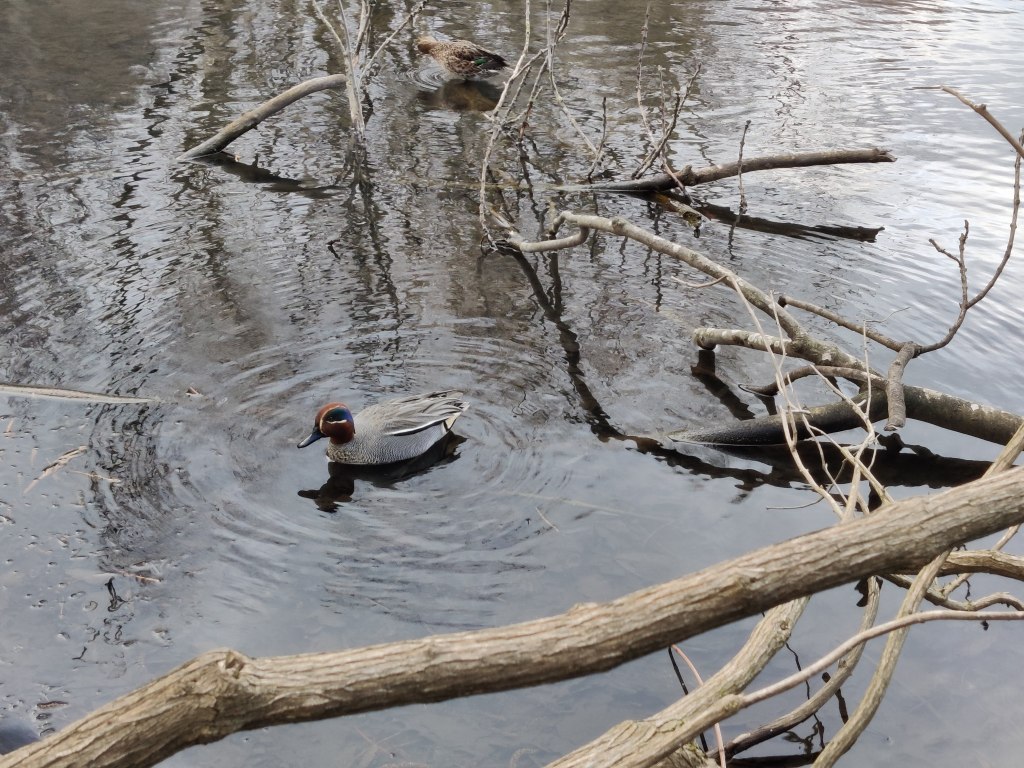


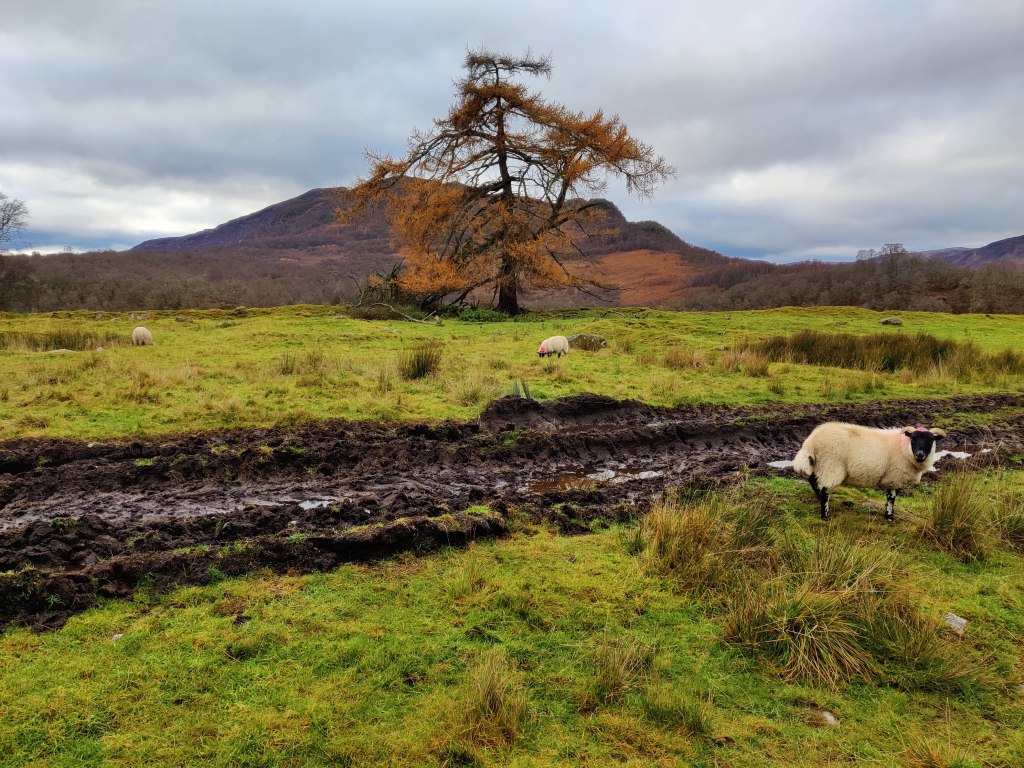

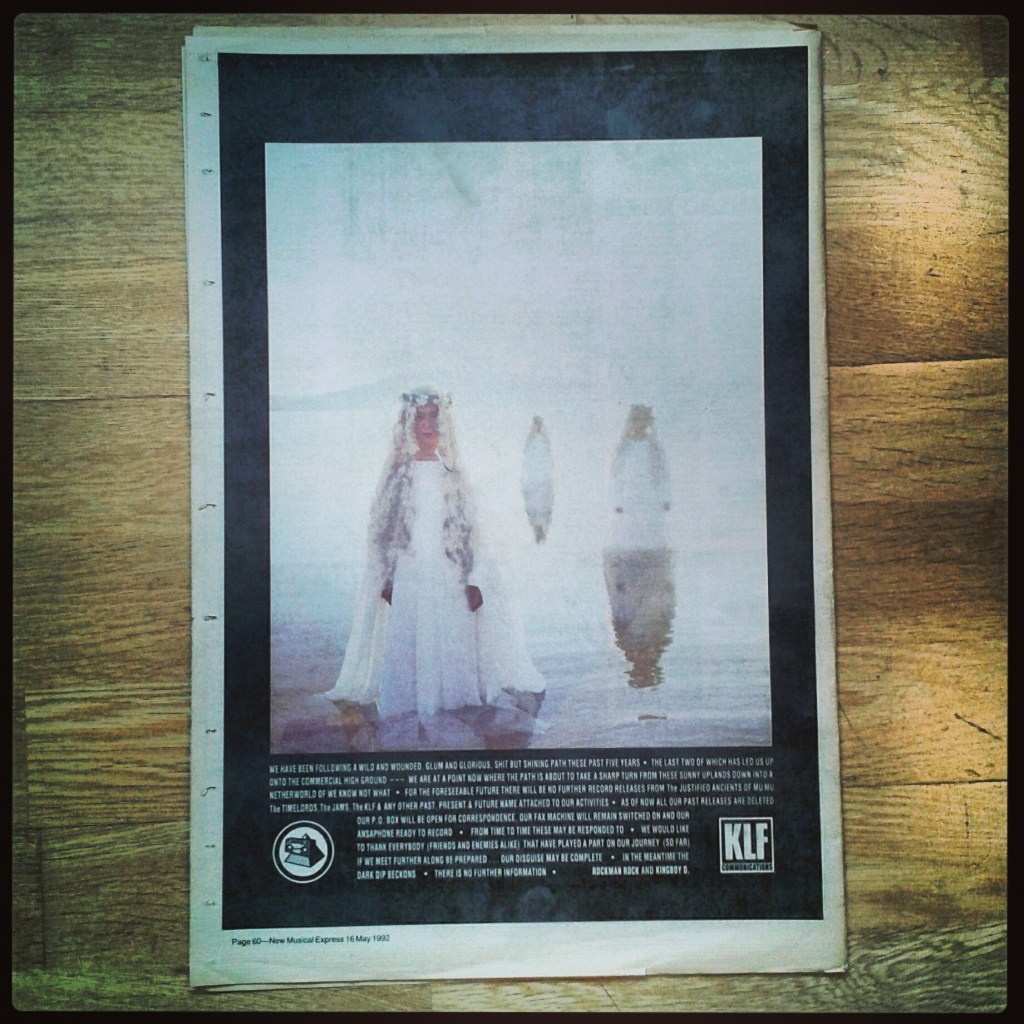
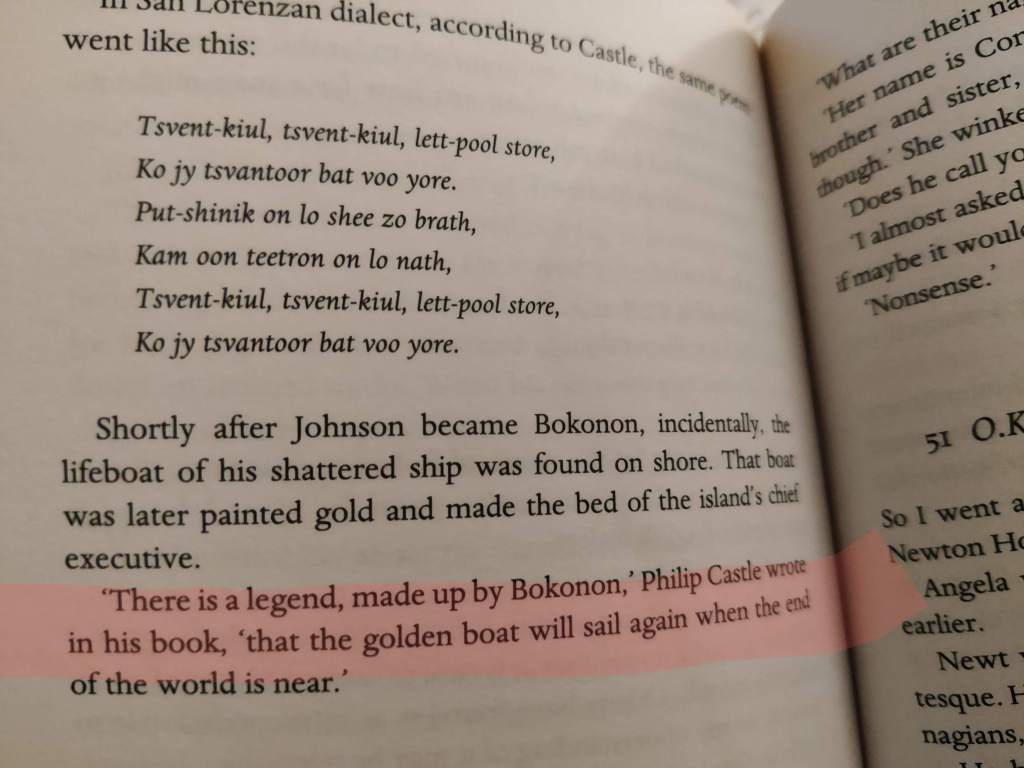
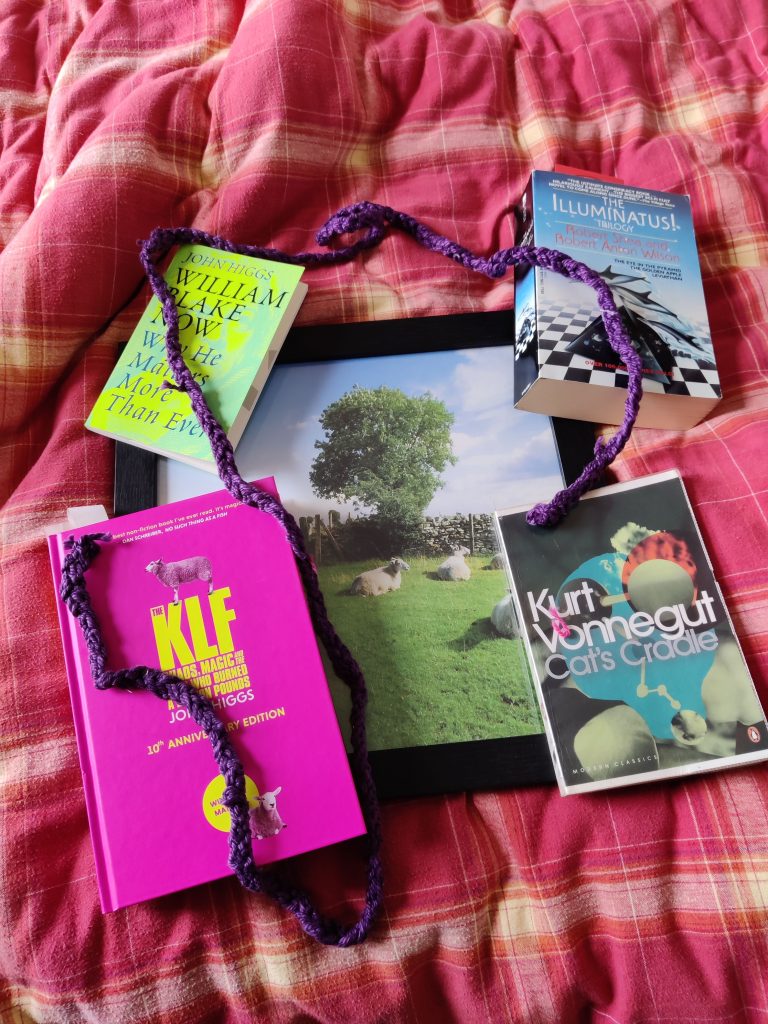
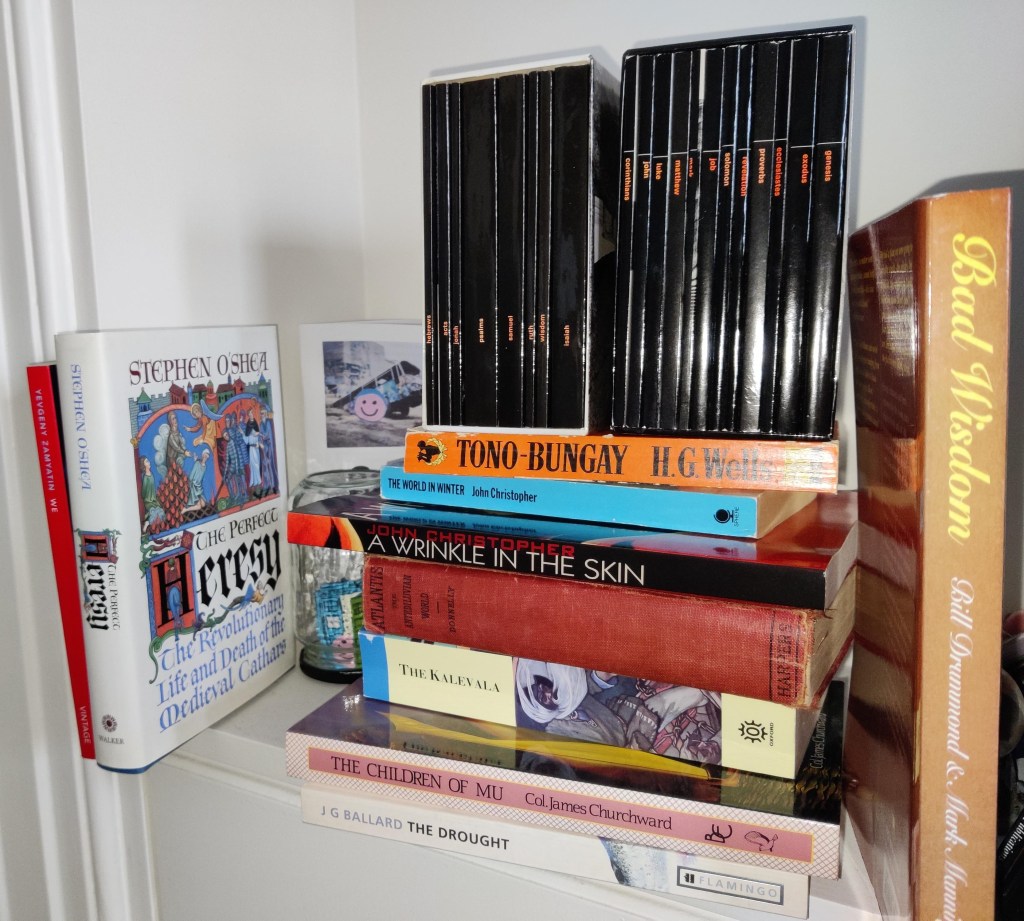
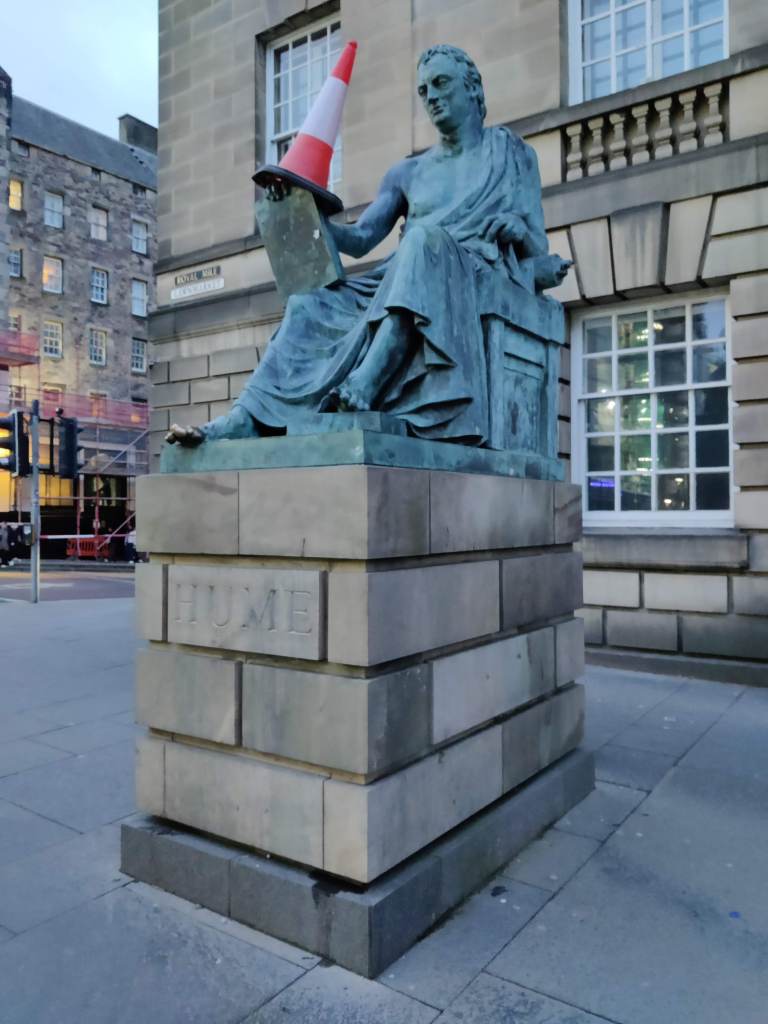
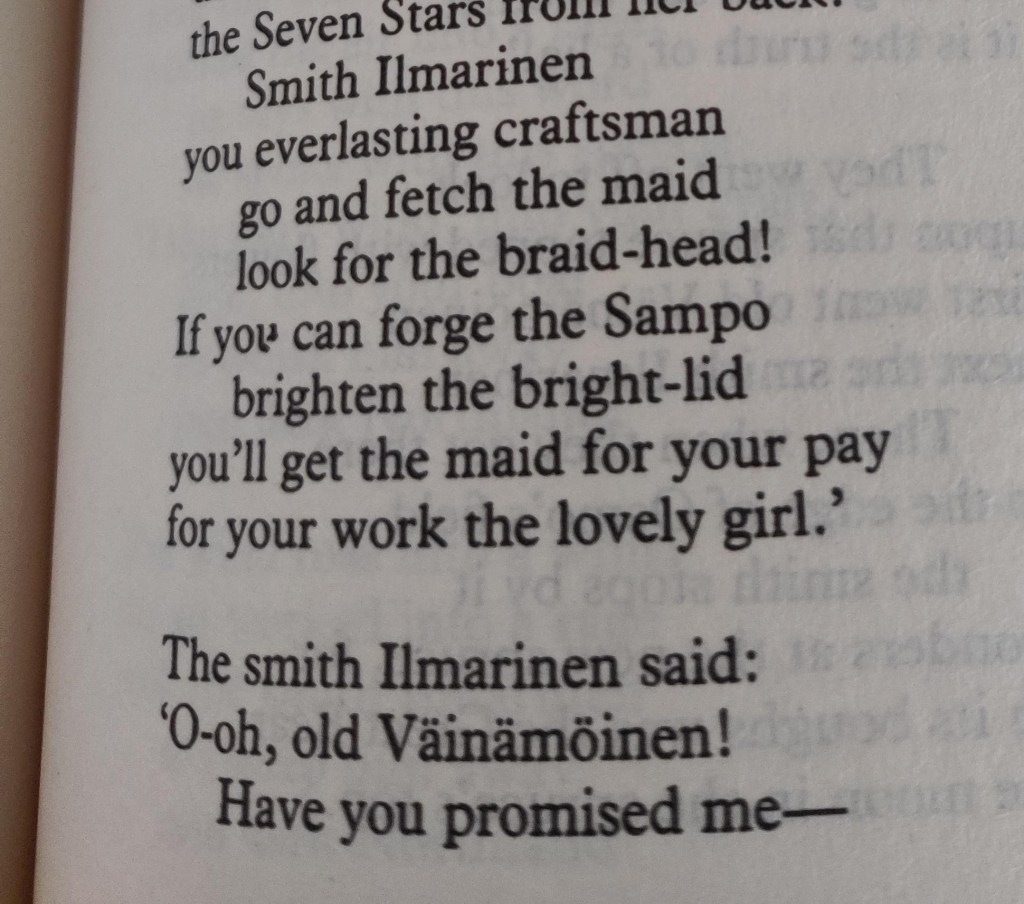

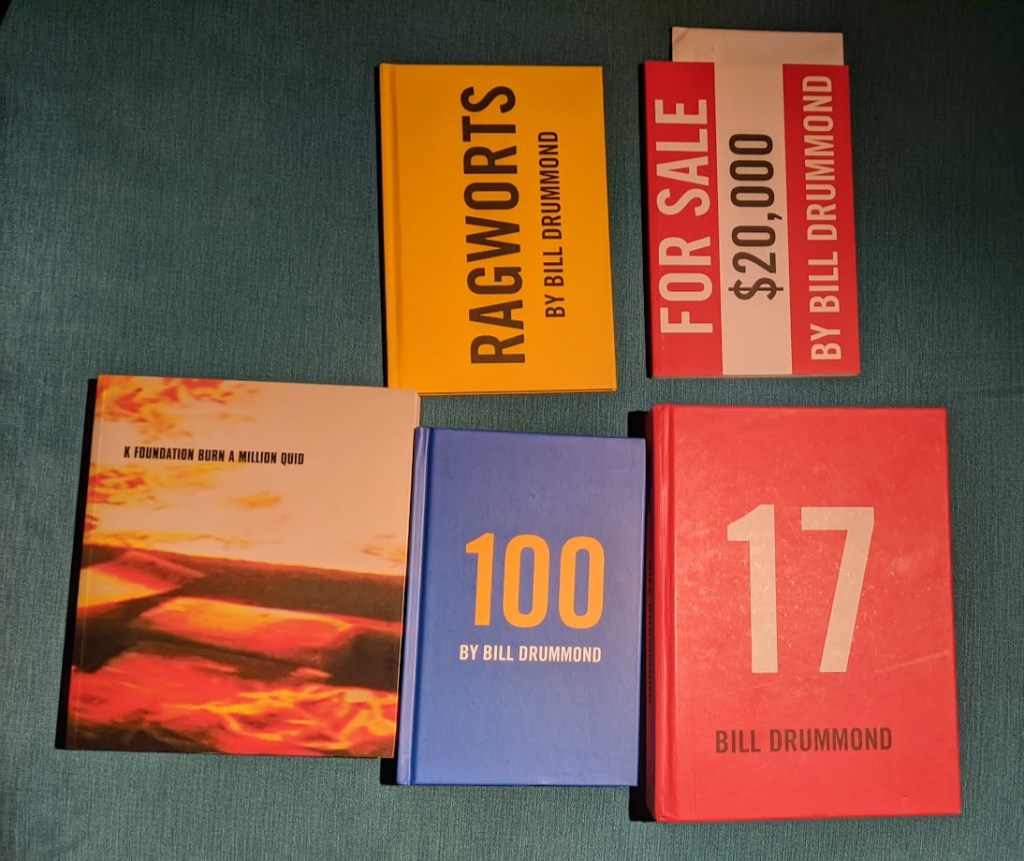
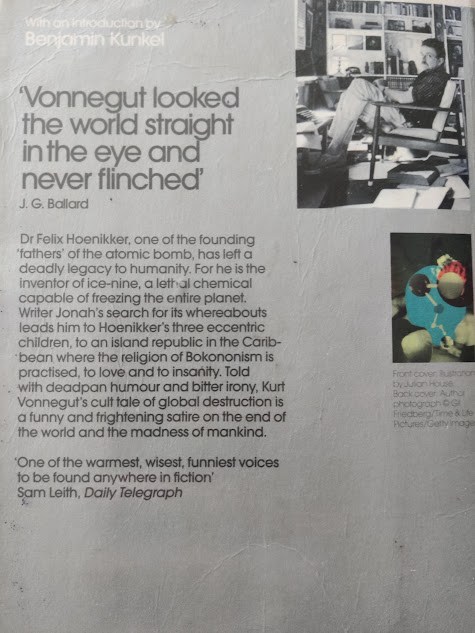


 GANTOB blog