The Stone challenge was set back on 3 February 2024, when the nights were long and the days cold. It was meant to have been finished on 31 March 2024, when spring was beckoning and I hoped that GANTOBers would be out enjoying the thawing of the tundra. The best made plans etc.
“Action plans” are useful for a project, but only if they are scrunched up and read with crossed eyes after throwing the balled up paper in the air and seeing how it lands. If you follow that approach, the Stone challenge’s time to resurface is now, 23 November 2024.
The text of Stone had been submitted originally to Vipers Tongue Quarterly, as an entry for the inaugural issue, Spring 2023. It was not accepted. Rejection, of course, was the story of the late author Curt Finks’ creative life. GANTOB enthusiasts will know that a subsequent Finks submission was accepted a few months later (The A to Z of Curt Finks, VTQ, Winter 2024 issue). They will also know of Curt’s enthusiasm for drystone dykes the length of the UK.
Unfazed by the dismissal of Stone, and encouraged by the devilish instincts of The Benefaktor and Urs, I turned it into a GANTOB-style challenge and put it up on this blog. The task was to create a 200 stone story in 3 dimensions, at least five stones (storeys?) high, from a jumbled up sheet of words written in cuboid shapes. A lot of snipping and sticking has passed, deadlines missed, and other life events, but here is a completed entry, by Ariadne. It comes with some tropical twists that seem impossibly exotic sitting here in the heart of the Scottish Highlands, hunkered down during Storm Bert. Ariadne’s submission comes hot on the heals of her excellent pamphlet a week ago.
Over to you Ariadne. I suspect that the prize will take a few weeks/ months to mature, commensurate with your own process in completing this challenge. Hopefully patience will be rewarded all round.
Gillian Finks (daughter-in-law of Curt), 23 November 2024
PS in a monumental piece of apophenia, I have realised that the timing of this post could not be more apt, on the People’s Day of Death, when dozens of people are marking the loss of a friend or family member with a brick on a pyramid
STONE, by ARIADNE When Gantob set the challenge of Stone earlier this year, I decided that not only would I have a go, but that I would definitely finish it! I had felt a little disappointed that I didn’t try and complete any of the challenges set last year, so was determined that this year would be it! Gantob thought she was being in her words devilishly difficult when setting the challenge of ‘Stone’ but I could immediately see workarounds and short cuts to the challenge set. Instead of glue, double sided tape, and regular sticky tape would be my aides. My scissors, my guides. The deadline was set for the 31st of March. I ignored it. Because isn’t that what Gantob is about? The smashing of Kreative Tyranny? Which, to me, means the smashing of deadlines [Editor: other readers may have different interpretations of this key GANTOB term – e.g. the strikt imposition of boundaries (such as green tea slips and hot beverage drinking times for kompleting a kreative task). As GANTOB (the projekt) is a kollective endeavour, all interpretations are valid]. I spent my weekends cutting and sticking, cutting and sticking, cutting and sticking. Tiny little bits of paper cut from the bricks would turn up everywhere. In the kitchen, in my bed, in my work bag…everywhere. I had no idea that all of the cutting out and assembling would take me so long (quite possibly the real reason for ignoring the deadline as opposed to any lofty ideas about smashing Kreative Tyranny). But now it is finished. Sort of. I had planned to give it a ruined garden wall look but didn’t have the right sort of greenery on hand for what I wanted to achieve so just had to make do with a bit of passion fruit vine, some grass that I hastily glued on, and some abandoned snail shells for vibes. And voila! Stone was built.
Credit: Ariadne’s finished submission
How to Assemble a Stone Wall, by Ariadne [Editor: think of it as a manual of sorts]
Go down to your local print shop and get the bricks printed out and blown up a couple of sizes by the helpful yet harassed staff
Start cutting
Continue cutting
Fold along all of the outlines of the brick to give it shape and make it easier to mould into shape
Start assembling!
Cut out three strips of narrow double sided tape (about .5mm) and stick it on the back of the bottom three sections of the brick. Unpeel the double sided tape and fold it into shape using a sewing pin to help the very tiny flaps of the brick stick to each other.
Get a piece of regular sticky tape and wrap it over the top and back of the brick to make sure that the brick retains its shape and the top of it stays down
Go back to the print shop and get another print out because you moved and may or may not have lost some of the bricks in the move. (Step is optional)
Cut and stick some more
Now that you have assembled all of the bricks it is time to kreate your wall! Again using double sided tape, stick the bricks in numerical order onto some foam board in the desired shape. Its up to you! And the story will unfold before you. Now in all of this cutting and sticking and moving, you may or may not have crushed one or two bricks leaving the word on them indecipherable and the sentence it belongs to a little confusing, but if you take the photo to show off your beautiful new wall from far away enough, no one will really be able to tell and in the grand scheme of things what does it matter anyway.
Admire your wall and all of your hard work
The End.
Ariadne, 23 November 2024
Except it is not quite the end. Ariadne’s submission is the only complete submission in the full spirit of the challenge, though missing the deadline by a country mile. It is a work of persistence, integrity and beauty. It also, with its tree tenants and obscured words, captures the ruins of Curt Finks’ literary career.
But what if somebody wants to read Curt Finks’ writing? That is, after all, one of my personal aims of GANTOB (the project), though my archiving has stalled and I am left struggling to know what to do with the documents, snippets and images that remain in my Curt Finks box. Well, luckily those scallywags Christine and Skellbert’s Pickles (sometimes Missiformation and Skellbert Pickles) came to the rescue, chasing the original submission deadline. Except they did none of the snipping, and only a modicum of sticking. But their entry is the only fully legible version of the original Curt Finks story, so I suppose that I should really thank them, and reward them with a unique piece of GANTOB art. That, too, will follow in due course, making use of these cold winter nights, starting with the aftermath of Storm Bert.
This is 1 pamphlet, which required effort to write.
Person
You are 1 person, viewing this pamphlet, which now requires effort to read.
Answers
This pamphlet attempts to answer 2 very different questions.
This pamphlet unites the answers to form a complete and mystic whole.
Questions
The questions are #17 and #23 from the 2024 GANTOB question series, and perhaps some unknown or unintentional 3rd question.
Question #17 is “Have pamphlets ever changed the world, and how would we know?”
Question #23 is “What is effort?”
GANTOB
GANTOB stands for Grapefruit Are Not The Only Bombs.
GANTOB is the name of the fictional fnord book-within-a-book created by the JAMs in the 2023 Trilogy in 2017.
GANTOB is also the nickname of the semi-fictional character Gillian Finks, created by a fan of the JAMs in 2023.
GANTOB is also also the name of the actual book published by Gillian Finks, with content from other fans of the JAMs such as Mase Wister in 2023.
GANTOB is us, we are all GANTOB, following the Law of Fives.
The JAMs
The JAMs stands for the Justified Ancients of Mu Mu.
Mummu is the name of one or more ancient Mesopotamian proto-deities, a primordial being representing craftsmanship, skill, and maybe entropy, circa 1,300 BC or earlier.
The JAMs is the name of the fictional Discordian organization created by authors Robert Shea & Robert Anton Wilson in the Illuminatus Trilogy in 1975.
Discordia is a satirical occult religion created by authors Greg Hill (Malaclypse the Younger) & Kerry Thornley (Lord Omar K. Ravenhurst) in the Principia Discordia in 1963.
The JAMs is also the name of the semi-fictional Discordian organization created by musicians Bill Drummond (Time Boy, Kingboy D) & Jimmy Cauty (Lord Rock, Rockman Rock) in 1987.
Fans of the JAMs frequently collaborate on eccentric self-referential fnord projects including art, music, literature, ceremony, and public demonstrations of civil disobedience.
The JAMs is also the undertakers Callender, Callender, Cauty and Drummond who offer MuMufication cremation-in-a-brick and started building The People’s Pyramid in 2018.
Mase Wister, his wife Penny, and his brother Barry received the first 3 MuMufication certificates signed by Rockman & Kingboy at the first Toxteth Day of the Dead in 2018.
The KLF
The KLF stands for the Kopyright Liberation Front, or perhaps the Kings of the Low Frequencies.
This is what the KLF is about, also known as the Justified Ancients of Mu Mu, furthermore known as the JAMs.
The KLF is the name of the UK electronic band and art collective also created by musicians Bill Drummond (Time Boy, Kingboy D) & Jimmy Cauty (Lord Rock, Rockman Rock) in 1987.
They are known by many more names, such as the Timelords, the Children of the Revolution, the K Foundation, 2K, K2 Plant Hire Ltd, K2 Labs, L-13 Light Industrial Workshop, etc.
The KLF is inspired by the ELF (Erisian Liberation Front) and the LDD (Legion of Dynamic Discord), fictional Discordian organizations from the Illuminatus Trilogy in 1975.
Eris Kallisti is the name of the ancient Greek goddess of strife and fnord discord, known as Discordia to the Romans, circa 1,800 BC or earlier.
The KLF released the #1 single Doctorin’ the Tardis and wrote The Manual (How to Have a Number One the Easy Way) in 1988, and filmed the road movie The White Room in 1989.
They released more solid gold chartbusters such as What Time Is Love in 1990; Last Train to Trancentral, and Justified & Ancient in 1991; and America: What Time is Love in 1992.
The KLF reached peak popularity with the #1 hit 3 A.M. Eternal of the Stadium House Trilogy, going all the way to the top of both the UK charts and the US dance charts in 1991.
Each song showcased their sample-and-hook-heavy world beats, overlaid with playful-yet-revolutionary lyrics, and iconified by the Ford Timelord police car and ice cream vans.
The KLF contradictorily claimed to both possess “the plan and the key to enter into Mu Mu”, yet they opposed The Five leaders of the Illuminati “with still no master plan”.
Fame took its toll and they publicly retired in 1992, then infamously burned their earnings – 1 million British pounds – as roadie Gimpo filmed inside a Jura boathouse in 1994.
The KLF wrote a 23-year contractual vow of silence on a car and pushed it off a cliff in 1994, all but disappearing until their long-awaited reemergence in 2017.
The Master Plan
The answer to question #17 is yes, this pamphlet will actually change the world, which we know because you’ve been personally chosen to participate first-hand in the Great Work.
The answer to question #23 is the energy you will contribute toward bringing to pass the Great Work.
The number 17 is taken to be the least-random number, and 23 is holy to the Discordians because (among other reasons) 2 + 3 = 5 and thus fulfills the Law of Fives.
The Great Work is to immanentize the Eschaton – in fnord other words: the Apocalypse, Ragnarok, or the end of the world.
The Great Work is the ultimate goal of all real occult organizations, with the good groups defining it as achieving Heaven on Earth, and the evil groups as Hell on Earth.
The Great Work is the only thing that can guide humanity onto the Golden Path of Enlightenment and away from our unavoidably self-destructive nature, literally saving the world!
The Master Plan is our specific methodology for actually achieving the Great Work in a positive way, here on Earth and within our own lifetimes; it is not a prank or joke.
The Master Plan does not necessarily require a golden submarine trip to Atlantis, a Big Mac & Fries, a magic human/fox hybrid baby, or Money Pills made from the KLF’s cash ash.
The Master Plan does require artificial intelligence, super-science, spiritual evolution, non-human entities, opposing the Illuminati, and perhaps a trip to Rennes-le-Château.
The POEE stands for the Paratheo-anametamystikhood Of Eris Esoteric – “equivalent deity, reversing beyond-mystique” or “all deities are equivalent, no great mystery about that”.
The POEE is organized into local Cabals, with 5 degrees of initiation: Legionnaire Disciple; Legionnaire Deacon; Priest/Priestess or Chaplain; High Priest; and Pope.
The POEE endures as a chaotic-good organization, with Mase Wister as High Priest & Polyfather, owing to the celestial advancement of both Malaclypse the Younger & Lord Omar.
The POEE cooperates with the KLF and the JAMs, and is willing to cooperate with the ELF and the LDD insomuch as their activities are chaotic-good or neutral-good in nature.
The POEE accepts responsibility for completion of the Great Work, laboring to fnord immanentize the Eschaton according to the Master Plan.
The KLFRS stands for the KLF Re-enactment Society – the official KLF fan club for those who have re-created or re-imagined some of the KLF’s music, art, or other shenanigans.
The KLFRS includes both Barry and Mase Wister, who claim to have been members for “a thousand times a thousand years”, under the names Rockboy Rock and Princeboy D.
The KLFRS is the outer order of the POEE (and perhaps other groups); POEE candidates must first show their dedication to the JAMs’ ideals by being inducted into the KLFRS.
This pamphlet is dedicated to you, the Prettiest One; it is your call for action to grab the Sacred Chao and take a bite from the Golden Apple; it is Holy Cow and Wholly Chao!
Effort was required of Mase Wister to spend a lifetime as a publicly-visible scientist while also secretly obtaining over 100 occult degrees; effort is also required of you.
Candidates shall receive a Discordian name such as Hagbard, Yoko, Roberta, Tat’jana, Kristina, Curt Finks, or Little Grapefruit; Mase shall hereafter be known as Malaclypse III.
Hail Eris!! All Hail Discordia!!! znfrQBGjvfgreNGalzQBGuhfuQBGpbz
Pamphlet 54/ #52Pamphlets
An answer to questions 17 and 23 of the 23 Questions
Source: Mase. Note that Roberta Anton Wilson is crucial to The JAMs’ trilogy and had even had a mention in GANTOB’s second book
GANTOB responds: The last couple of days have unexpectedly taken me back into the K-verse, what with a K-track, a submission about Bill Drummond (and perhaps another to follow), and now this pamphlet about Principia Discordia, The Illuminatus trilogy and all things K. It takes us right up to the JAMS’ 2017 book 2023: a trilogy (narrated by Roberta Anton Wilson), from which GANTOB was born. I have written previously about the PD and the trilogies, noting the fine line between writing and thinking about conspiracy theories and appearing to be influenced by them or supporting their ideas. The same principle applies to cults. As noted before, John Higgs has commented that fans of PD and other discordian fiction are typically well inoculated against the darker side of the topics they read and write about. All these thoughts bubbled up when I read Mase’s pamphlet, which is based primarily on these same discordian texts.
Mase has been a regular GANTOB contributor, right back to a question for the first book, which I repeated in some of the earliest GANTOB pamphlets last summer. Mase is good company and has a lot of knowledge. Mase pushed me to sharpen up some of the earliest ideas that led to the first book. Mase contributed a post to the second book, for that difficult period leading up to Christmas. As this current post demonstrates, Mase has a detailed knowledge of GANTOB and how it (the project and perhaps the person) might link in with the wider K-verse.
This post, however, left me feeling a bit uncomfortable initially. I think, however, that it is an important contribution to the GANTOB project, both answering but also asking questions that should be considered if you’re heading into a K-shaped worm hole. If you too are feeling uncomfortable, then perhaps you should check out that word fnord that Mase uses a few times.
GANTOB is most definitely not about doomsday cults or millenarianism, and is very hopeful that the world is not about to end, even when infectious diseases, misguided politicians and powerful conventional and nuclear missiles might be suggesting another direction. After some emails backwards and forwards I understood that Mase was not really suggesting this either. In these mental somersaults I realised a couple of things. While millenarianism is often fixated on imminent end days, the discordian phrase “Immanentize the Eschaton” very clearly has an “a” rather than an “i” as its 4th letter. It is not a word in the dictionary on my desk, but it does appear in other non-discordian references. Apparently it means “to render (something abstract) real, actual, or capable of being experienced”. Eschaton is “the final event in the divine plan”. This is not something that I want to see in my lifetime or indeed any future generation, whether it is “heaven” or “hell” that is being rendered. I would like to say that the GANTOB books are not discordian texts, but that would probably sound delusional. Certainly my recent green tea slips are well outside the K-verse (on the whole). But if you’ve read the Muted Postal Horn pamphlet, or if you’ve been following the threads or muons strands of the 52 pamphlets (which will only really be tied up in the third and final GANTOB book), there are acknowledgements of good and evil, of mortality, a search for wider meaning, and an attempt to escape from the K-orbit. And maybe the talk about a “master plan” in The KLF’s music explains the unease that I feel whenever I’m pulled back into that orbit, even when I am relieved to hear that there is still no such plan, as etched forever into the lyrics on those CDs, 12″s and 7″s that I “destrukted” last year. Nonetheless, there is always that nagging worry that there are other forces afoot. They are there in discordian texts, post-apocalyptic novels, and in religious writing right back to Gilgamesh. But I think that they’re warnings rather than an instruction manual. Make sure you’re inoculated.
A sort of manifesto on appreciating art and respecting artists
“There is no must in art because art is free.” – Wassily Kandinsky
Few figures in recent British pop culture have loomed as large and as enigmatic as Bill Drummond. From the KLF to his provocative art projects, King Boy D has consistently entertained while challenging us to rethink our relationship with music and art. Yet, as his public profile has evolved, so too has the nature of his fans’ relationship with the artist. This pamphlet explores an obvious yet contentious proposition: while fans may feel a deep connection to his art, Bill Drummond’s only obligation is to his own creative vision. In other words:
Bill Drummond owes you nothing.
Credit: GANTOB version √-1.
Despite the music, art and writing that Bill Drummond has given the world, a core group of fans borders on obsessive, their identities seemingly tied in with that of the artist, and expecting a much more personal level of engagement. This expectation raises questions about the blurred line between appreciating art and idolising the artist. Why do some fans feel entitled to more from those who have already given so much?
Bill Drummond’s core fan base, now predominantly in their 40s to 60s, represents a fascinating case study in long-term artistic devotion. This group has remained steadfastly loyal to Drummond decades after the KLF officially left the music industry. Understanding why this cohort remains connected with Drummond – the phenomenon of the ‘middle-aged fanboy’ – provides some insight into the complex relationship between artists and their long-term followers.
FAN Eternal
The enduring devotion of Drummond’s aging fan base can be attributed to several factors:
Nostalgia – The music and performances of the JAMs/KLF era bring back powerful memories and emotions for fans who were there, providing a link to their youth.
Intellectual stimulation – Bill’s more recent projects challenge conventional thinking about the relationship between music, art and society. This keeps fans invested in his work, providing stimulation in decoding and discussing his latest work.
Shared values – His unconventional work and willingness to take creative risks provide a sense of shared values for fans who view themselves as ‘closet nonconformists’, despite having achingly normal lives.
Cultural capital – Being a devoted fan of a non-mainstream artist who is highly regarded in certain circles provides a sense of cultural cachet.
Ongoing artistic output – Drummond’s projects and writing provide a steady stream of new material for fans to engage with, maintaining their attention.
The Man and the Fans
The middle-aged fanboy can be characterised as a person aged 40 or over, who maintains an intense enthusiasm for a particular cultural figure. This behaviour arguably represents a kind of arrested development, with fans clinging to youthful passions well into adulthood.
Being a devoted fan becomes a core part of these men’s – and they usually are men – identity, providing a sense of continuity and relevance as they age. While they take part in online communities related to their fandom, they act as individuals, attending events on their own (or with a patient but disinterested partner).
Crucially, unlike younger fans, this demographic has a high level of disposable income. This is spent on items like limited-run Penkiln Burn or L-13 books and pamphlets (which are, of course, numbered – gotta catch ’em all), records that are considerably less objectively enjoyable than the 90s stuff, travel to events, manufacturing their own fan materials (like this pamphlet) and purchasing rare artefacts on eBay. They combine these material possessions with an encyclopædic knowledge of the artist’s work, leveraging both to acquire increased status within the online fan community.
While the middle-aged fanboy will generally be supportive of the artist’s newer projects, there can also be a tendency to idealise earlier work, sometimes criticising new directions. Though a riskier tactic, this criticism – backed by ‘evidence’ – can also be used to try to obtain a higher status within the group.
Credit: GANTOB version √-1.
In Drummond’s case, the middle-aged fanboy phenomenon is particularly interesting due to the intellectual and conceptual nature of his work. Fans don’t just passively consume music or art, but actively engage with the provocative concepts, sometimes in person. To the Drummond fanboys, this intellectual and personal engagement might add a sheen of legitimacy their continued devotion, distinguishing it from more mainstream forms of intense fandom (such as disciples of a TV show like Doctor Who or a boyband, like… er… JLS). Yet the same type of strong parasocial relationship developed by long-term fans of those mainstream artists – deep, one-sided connections with the artist – also form in the case of Drummond fanboys. Unlike boybands or TV shows, though, fans have regular opportunities to interact with the artist himself. The adage ‘never meet your heroes’ doesn’t necessarily apply – Drummond is personable if intense in person, and interested in fans’ views of his work – but this relatively easy access to the object of their fandom creates a very unusual dynamic.
In the case of Bill Drummond and his acolytes, the relationship overall establishes a fascinating dichotomy. On one hand, Drummond has already provided his fans with a plethora of artistic works, albums and singles, and thought-provoking ‘happenings’. On the other, his availability means many fans continue to expect even more from him, revealing a sense of entitlement that warrants closer examination.
Why do fans think Bill Drummond owes them something?
“So here we are at the end of the year, like monkeys to perform…” – King Boy D, Prestwich Prophet’s Grin
Fans develop deep emotional connections to the artist’s work. This emotional investment leads to a feeling of personal stake in the artist’s career and life. Many fans, particularly those who have followed Drummond since the days of Pure Trance and the Benio bunker, may have modelled their own personalities on aspects of his work or persona. Over time, this flips, and they now see themselves in the artist. This identification blurs the line between appreciation and ownership, causing fans to project their own desires and expectations onto the artist.
Earlier on, we mentioned the idea of continuity – that the artist provides a connection to the fan’s past. If the artist were to stop providing new material to connect with, fans would be forced to close a chapter and admit they were no longer young or in-touch.
There could also be a sense of unfinished business. The KLF’s abrupt exit from the music industry might have left fans feeling that their expectations were never fulfilled, leaving them to cling, subconsciously, to the idea that there may yet be a return to the days of Stadium House.
Crucially, social media and websites like Penkiln Burn have created an unprecedented level of perceived access to Bill Drummond’s life, and a weekly feed of information about his thoughts and activities. This further breaks down the mystique and remoteness of the artist, creating an expectation of more direct interaction.
In person, Drummond’s projects ostensibly invite audience participation and interpretation. Some fans may misinterpret this limited invitation as an open request for continued engagement or explanation, even when the artist considers the work complete. However, if you’ve been to an event run as part of one of Drummond’s projects, you may recognise the slightly empty feeling that things were less interactive than you hoped. This is with good reason: they’re not about you. They’re about Bill Drummond. And it’s his prerogative to run his events as he wishes, because Bill Drummond owes you nothing.
It’s important to recognise that this overall sense of entitlement, while understandable from a psychological perspective, doesn’t align with the reality of the artist’s obligations. Bill Drummond, like any artist, owes his audience absolutely fuck all. The expectation for more – whether it’s explanations, access, or new work – fails to respect the boundaries between the creator and the consumer.
Bill Drummond owes you nothing
If this statement sounds controversial, then you’re too invested.
The breadth and depth of Drummond’s artistic output have provided fans with a wealth of material to engage with, appreciate, and interpret. This body of work represents Drummond’s creative vision and his contribution to culture. It is, in itself, more than enough.
The nature of fandom, particularly in the case of aging fan bases, blurs the lines between appreciation and expectation. Emotional investment leads to a sense of entitlement, a feeling that the artist owes them something more. However, this expectation fundamentally misunderstands the nature of artistic responsibility.
An artist’s primary responsibility is to their own creative vision. They might choose to engage with their audience, but this engagement should be viewed as a gift rather than an obligation. Bill Drummond’s willingness to discuss his work, coupled with his apparent disinterest in catering to fan expectations beyond that, perfectly illustrates this principle. He continues to create on his own terms, owing nothing to anyone but his own artistic impulses.
Art can evoke powerful emotions, these feelings should not be automatically transferred to or expected from the artist themselves. Artists are individuals with their own lives, separate from their public persona and art. We are entitled to engage with and enjoy their art, but not their time, explanations, or personal attention. As consumers of art, we should be thankful for the art that has been shared, rather than demanding more. And we should be prepared to approach every artist’s work with thoughtful consideration, rather than blind adoration or excessive criticism.
Credit: GANTOB version √-1.
Ultimately, ‘Bill Drummond owes you nothing’ is not just a statement about one artist, but a call for a re-evaluation of the relationship between all artists and their audiences. It’s an invitation to appreciate art for what it is, and to engage with it deeply, while recognising the autonomy of its creators. In doing so, we not only show respect for artists like Drummond but also open ourselves to a richer, more authentic appreciation of the art itself.
POOR ADRY
23 JULY 2024
Poor Adry emailed me subsequently, on the day of receiving a new email from the Penkiln Burn fold.
Poor Adry asked for this quote to be added to the piece and I was happy to oblige:
“Bill Drummond has taken some sort of twisted satisfaction from never delivering satisfaction to those that he has been intimately involved with.”
It is almost my bedtime. I have a very busy day tomorrow in real life. I am rushing to finish this ahead of 23:23 on 30 June 2024, at which point GANTOB (the person) will need to disappear into the shadows, never to be seen again. There may well be typos here. If so, I will correct them before I print pamphlets for the contributors here, and before I complete the book. The latter feels a long way off, because my Muons pamphlets (including a deep excavation of the remaining Curt Finks papers), The Benefaktor’s explorations of muted postal horns, and other submissions that have been given a “late pass”, are yet to be finished (or in some cases even started). There are going to be long nights ahead if we are going to complete the third and final GANTOB book before 23 August 2024 (please note the revised publication date).
Let’s forget all of that for now though. Today is a celebration. It is the culmination of 11 months of Kollektive and Kreative Tyranny, producing a body of work of which we should all be proud. There have been some lovely messages received today. I have tried to collect them all together. If I have missed something out, please let me know and I will rectify it for the book.
If you have been part of GANTOB, or if you have come to it late, hopefully there will be something of interest here. The book will tie up many of the loose ends in these 52 Pamphlets. Meanwhile, as Alex Chilton of Big Star once wrote and sang: Thank you, friends/ Wouldn’t be here if it wasn’t for you/ I’m so grateful for all the things you helped me do/ All the ladies and gentlemen/ Who made this all so probable/ Thank you, friends.
GANTOB 23:23 on 30 JUNE 2024
As the day draws to an end and the final deadline approaches at 23:23, I am reflecting on the past year of GANTOB and what a delight it has been to work with the projekt. I have one final piece to write about the love and kinship that was experienced throughout. It’s been the best fun and distraction from the mundane, with only the odd display of unruliness.
I have enjoyed every single task that was thrown at me, one curve ball after the other until eventually I was acting so out of character that I learnt to enjoy writing. I’m astounded and will be eternally grateful for that change.
I love all the GANTOB family, we’ve done amazing work this year, kollectively. Kreative Tyranny and Kultural Vandalism abounds.
CHRISTINE 30 JUNE 2024
Following Caroline’s recent full house of answers to the 23 Questions it was lovely to receive another complete set of answers from Andrew and Nyla who, like Caroline, were among the very first GANTOBers in August 2023. Thanks too for Nyla’s wonderful pencil drawings. In answer to your question Nyla, you were definitely the inspiration for Little Grapefruit, which led to some amazing adventures imagined by some of the people who have contributed to this pamphlet. As to whether you are actually Little Grapefruit, the only thing I can say is that we are all GANTOB, but there is only one Little Grapefruit, and perhaps that is indeed you.
Credit: Nyla
Question 1 – Is work important for the soul? (Andrew)
Work is very important for the soul.
Work per a quick google search can be defined as “a task or tasks to be undertaken”. Those drivers can mean lots of different things to lots of different people.
Having money to be able to live life with a degree of comfort is important to most of us and hopefully, with some good fortune, that can be achieved.
Personally, the connections I have made have been the most rewarding for my soul and have led me to explore many paths that I might not have otherwise explored otherwise (a chance discussion at work introduced me into a whole new spectrum of music for example, as well as making me realise I was not alone with some of the challenges that I face in my day-to-day life). It has also provided me with an opportunity to guide and aid people through the challenges of their own life and hopefully leave behind a much wider legacy.
One could view answering this question as work. My need to explain to who I am and what I am about is a task I often need to undertake, question and undertake again.
Question 2 – What fuels your passion for blogging so?
Sadly I am not fueled by blogging, though I do love the blogs of others. I will stop and drop all I am doing to devour a new Penkiln Burn thread for example, my brain then shooting and darting in lots of different directions after its eager consumption…
Question 3 – What is the male ego?
Male ego can be seen as the need to constantly impress and out-do other males, be seen to be impressive to females and be seen to be the best at whatever they do….unchecked and unchallenged it can be a horrible thing as can be seen in our current climate.
However, I am a male and I am not driven in that way…I am very much driven but I don’t feel the need to climb on others to show off to theirs who I am. So do I not then have a male ego? Is there such a thing as a male ego at all?
Personally I think the real challenge is entitlement (and latterly the slow death of empathy – that is a whole topic in its itself). This is not always people, from experience, who are wealthy or successful. Often they are people whose egos have been unchecked and/or pampered to be made to believe they have earned the right to act in certain ways…
The reason the term male ego is used is that somehow the world has been structured/indoctrinated into a way that fosters some crazy understandings about sex, race, religious superiorities. I am using my male sense of worth, or ego, to push against those doors.
Question 4 – What is rhythm? (Nyla)
Rhythm is the beat. Everything in the world has a rhythm to it.
Question 5 – Is it mathematics? (Andrew)
Yes 😊and it interlocks with rhythm to drive our world. Rhythm should have mathematics as its counterpoint or check but sadly mathematics in our current society is suppressing our rhythm…let’s get back to finding a tune and dancing!
Question 6. Is all that glitters gold? (Nyla)
No.
Question 7. When was the skull? (Andrew)
When was it not?
Question 8. Do sparling still return to the River Cree, Galloway, each spring?
One can only hope so. Roots are important.
Question 9. What are the two sides of the same coin?
My children are two sides of the same coin.
For one society’s norms are easy and followed unflinchingly. For the other all needs to be questioned, queried, challenged and then rewired into a different circuitry.
This provides a lot of challenge but also some wonderful conversation and some questions to which I now ask. You are never too old to learn that things don’t need to be just so.
Question 10. What is Addiktion?
The short and simple answer is something that you need but don’t necessarily want to need or are happy that you need…
Question 11. What is the question?
The question and the nature of it must always be challenged. The best question always means different things to different people and provides a multitude of different answers that then leads to at least a further question. Once the question stops then so does our knowledge and ability to grow and develop.
Question 12. When is enough? (Nyla)
Enough is when I am done. Then pudding.
Question 13. What is the Root of Forty? (Andrew)
The root of forty is man’s expectation of death.
That forty’s equivalent is now sixty or sixty five is a sign of human advancement and how much life has changed.
Further questions follow that, as of course they should.
Question 14. Is modern art just bits I could knock up in my shed or does it have deeper meaning?
No sheds are required for modern art. Meaning is strictly personal to the person placing it.
Question 15. What is melodic?
What is and is not melodic is down to the individual.
When melodic becomes dull and uninteresting is something the music press exists to debate and attempt to convince others.
I would suggest using Alex Chilton’s “Like Flies On Sherbet” as your barometer and see how your interpretation does (or does not) evolve over time.
Question 16. Does anybody have the sheet music (or the musical notation) for The KLF’s (or even Acid Brass’s) What Time Is Love?
No but why would one need it. Let it transport you without question or challenge. It exists and does not need to be relearned. Life should have a rhythm to it and sometimes it is best not to question the why. If bothered then invent your own tune.
Question 17. Have pamphlets ever changed the world, and how would we know?
Actions always change the world. Pamphlets are an action. When actions reach many then they have the power to make bigger changes.
Question 18. When is addiction?
Addiction is when you don’t expect it and is not known until it has happened.
Question 19. Is it ever time for the Teletubbies?
Yes and like addiction it may be too late for you to know when.
Question 20. Where is your green door?
In Marlow.
On loan to Shakin’ Stevens to allow him to find the necessary inspiration to continue honing his craft.
Question 21. So what?
Is a very good question and one that should be repeatedly use with those people that act with a large degree of entitlement.
Question 22. GANTOBBING: How was it for you?
Wonderful when life allowed me to indulge. Like a fine wine something that will grow even better in the memory with age.
Hope it was the same for you.
Question 23. What is effort?
What it takes to drag oneself through the harder times or alternatively complete responses to 22 questions 😊
ANDREW and NYLA 30 JUNE 2024
Credit: Nyla
On 20 June 2024, via the Penkiln Burn mailing list, Bill Drummond emailed 40 recipients (allegedly) “A STUFFED ENVELOPE”.
Later on 20 June 2024, a Young Man emailed Bill Drummond, nominating the Tenzing Scott Brown Play “330 & COAT”.
On 24 June 2024, Bill Drummond emailed the Young Man to acknowledge the submission.
On 30 June 2024, the Young Man emailed a “Pencil Sketch” of “330 & COAT” to GANTOB (attached).
This was based on a photo taken by the Young Man in Great Yarmouth some years ago.
Among other things, this marked the Young Man’s last ever contribution to the GANTOBverse.
There is no further information.
Thank you GANTOB!
The End.
THE YOUNG MAN ON FACEBOOK 30 JUNE 2024
Credit: The Young Man on Facebook
Today was my office day. they have posh tea bags in work: Pukka tea bags. A lovely berry night time blend and JOY ….there’s none to be had in there like .
Any way – do you remember that time we visited Little Grapefruit’s gaff? Yeah the lonely tiger lilies and the Chinooks &Amber Rudd kicking off?
Tiger lily. Credit: Gaynor
This little drawing (I never use pencils you know so I did have to sit by the window and wait for inspiration) is the other one from my garden. This one is a bog standard lily. They smell so gorgeous
I heard little grapefruit planted them outside her opulent abode because of their exotic beauty and their heady, beautiful strong smell (enough to mask death in the old days)
It’s been the best random journey, konnecting with some amazing people and sharing ideas. I have loved every minute.
GAYNOR 27-30 JUNE 2024
Bog standard lily. Credit: Gaynor
We interrupt this pamphlet with a message from our funder – The Benefaktor.
Today is my niece’s birthday. She is an artist. I have given her a copy of the following book:
Art Without Frontiers: The story of the British Council, visual arts, and a changing world, Annebella Pollen (2024).
I was inspired to do this after reading Annebella’s pamphlet for GANTOB.
I had time to read a short section of the book before I wrapped it up and gave it to her. It was about Richard Long, the artist who initially inspired Bill Drummond, but whose work in Iceland ultimately tormented Bill Drummond and resulted in his “how to be an artist” period at the start of the millennium. * See also Bronwyn’s pamphlet The Long Journey.
I was tickled, after all the mentions of the number 40 in Bill Drummond’s work, and of course various re-enactments in GANTOB’s work, to see mention of Gerald Forty, then director of Fine Arts at the British Council, in Annebella’s section on Long. That is no doubt an example of apophenia, but I like to think that Bill Drummond was aware of this konnektion when he set out on his own Long journey.
Annebella writes that one of the main characteristics in English contemporary arts of the 1970 was “an extension of a national tradition of landscape studies, although its contemporary manifestation was tempered by a mode that was sober, careful, and even austere”, which sounds like something that would appeal to son-of-the-manse Drummond. This category included the landscape work of Richard Long though, as Annebella points out, even in the 1970s he was distancing himself from a “national tradition”, having also produced art in Australia, South America, Europe, Africa, Asia, the United States and, most importantly for our purposes, Iceland.
Annebella goes on to write: “Long’s land art combines formal elements of minimalism with a meticulous engagement with the rural, marking and shaping sites through walking or other interventions… The works are processes as well as products, sometimes involving intense physical labour, extended travel and feats of endurance. The results include textual accounts, photographic documents, and three-dimensional structures…”
You can see why Richard Long would have appealed to Bill Drummond, with parallels including the 25 (text) paintings, the people’s pyramid, and the 17 hours standing on the Mathew Street manhole cover in Liverpool. And it has clear echoes in the work around the K-Line, memorably and heroically completed recently by Stu Huggett.
The following piece by newly inducted GANTOBer Stephen Dorphin, another walker of part of the K-Line, captures effort well. Though Stu is not mentioned in his words, Stephen has contributed a rather excellent portrait of the K-Line walker.
THE BENEFAKTOR 30 JUNE 2024
NO 23 – WHAT IS EFFORT? (by STEPHEN DORPHIN)
Ever since discovering GANTOB and the expanding network of collaborators/ contributors to the GANTOB universe, I have thought about the beauty of anonymity. How liberating it must be, to create, without fear of repercussions or criticism. The ability to don a mask and take on another’s characteristics must be exciting and revitalising. I do not have that luxury. I must tread carefully, to not offend the dear readers. I don’t wish to be deliberately antagonistic or offensive – please don’t think that of me.
Effort – noun, 1 hard mental or physical work, or something that requires it, 2 an act of trying hard, 3 the result of an attempt; an achievement, says Chambers Concise Dictionary 2004. I can’t disagree with that. Or can I?
Sat here on my L-shaped sofa in my living room, overlooking the canal outside my window, and occasionally spotting trees waving in the breeze, whilst listening to a Wolfgang Voigt (aka Gas*) album on my turntable, simultaneously typing these words into my MacBook – is this effort? Chambers Concise Dictionary would likely disagree, but I believe it is effort. I may not be writing with a Pentel pen in a Black and Red notebook, with the ever-present fear of tarnishing my legacy, focussing on the formation of each letter and the construction of each word. But I believe it is effort. It may also not be “hard mental” work, but I am concentrating, trying to choose every word carefully, trying not to be repetitive, nor verbose nor boring. I believe it is effort.
One life-long concern I have is that of being misunderstood – both in the written form spoken word and action. Where has this anxiety come from? I do not know, maybe that’s something for consideration another time. This is partly something I think about when I write. I read and re-read my words – but are they, my words? I never invented them; I only borrow them and therefore should probably not put claim to them. Nevertheless, they become my words since I choose what to do with them. I could write grapefruit ancient grapefruit justified grapefruit and whilst it may not make the most sense, I am fairly confident that I have through effort, created a string of words which no-one else in the whole world, living or dead has ever put together before. That to my mind is an achievement.
*The Gas album was Rausch.
STEPHEN DORPHIN 29 JUNE 2024
Credit: Stephen DorphinStu, the K-Line Walker. Credit: Stephen Dorphin
And with that, we end the GANTOB project. I will hand over these 52 Pamphlets to The Deputy General Manager of GANTOB (the project), as well as access to the email and social media accounts to mop up any responses and late submissions.
Don’t worry DGMoG(tp) – The Benefaktor and I will file our final versions of any outstanding documents and drawings by the previously agreed date. Good luck editing, restructuring, proofreading, printing and distributing the final book. I look forward to seeing what you do with it. Over and out.
Listen to Graham narrate his pamphlet (he notes that the second mention of Andy Gell is mispronounced – it should be with a soft “G”, like jelly
We should write things down when they happen. I am as guilty as anyone else in not following my own advice. When I am talking to my students and trainees I suggest that they keep a diary. Sometimes I call it a “lab book”, which harks back to my first experiments at school, studying the way that yeast behaves. As a chaotic 16-year-old my experiments were documented on scraps of paper, ultimately lost, or compressed to a mulch at the bottom of my schoolbag beside a leaking bottle or a forgotten, liquified banana. My biology teacher instilled the discipline of writing things in a single notepad, dating and describing progress step by step. The gentle shaking of test tubes to keep yeast cells in suspension for days at a time, hindering flocculation, using the vibration of the fish tank aerator as a source of agitation that wouldn’t overheat and burn the lab down. All documented, ready to transcribe into the final project report. Perhaps we should be documenting our lives like that, to allow a close reading of events in the months and years that follow.
I would like to be able to say that electronic communication – the emails, blogs, social media messages – replaces the lab book, but it’s so easy to get lost in all that digital traffic. I have been looking back through my email correspondence with GANTOB (the person) to identify the point at which I was invited to represent GANTOB (the project) on the K-Line walks between Trancentral, London and Liverpool (“Sample City” according to fellow K-Line walker Andy Gell). My son suggests it’s long deleted in Snapchat messages, but I’ve never used that. Whatever. Life is busy and I don’t always remember the fine details. I frequently find myself replying to emails or social media messages on autopilot, in a hectic blend of work and social life. Things are busy again, with none of diary-simplicity of the pandemic. Not that I would want to go back to that of course.
The long and the short of it is that my wife Liz and I found ourselves at Waverley Station on Friday 21 June 2024, waiting for the TransPennine Express train to Preston, and from there to Liverpool Lime Street. More curiously, once I had shared our planned itinerary with GANTOB, we were also instructed to rendezvous with a guy in a red jacket and yellow cycle helmet twenty minutes before the train departed from Edinburgh. We met him a few minutes later than scheduled outside Boots in the station. He made his apologies for the delay, handed me a brown paper bag marked “tuna” and gave Liz a business card. “Food and Literature Delivery Rider”. It rang a bell. I think that the first GANTOB book was delivered to Edinburgh-based contributors through a similar arrangement in September last year. It might have been through the local Little Free Library, but I also had some unexpected deliveries through the front door. There was no time to talk and check whether this was the case though. We had to rush to catch our train. Liz hates to rush.
The Liverpool weekend was hugely enjoyable, even with blistered feet from 70km of walking. It was a chance to meet people who I knew through KLF Facebook groups and blogs and videos and audio recordings from the GANTOB project. It made me think of all the times that I have travelled the length of the UK to attend KLF-related activities. The BFI 30 years ago (the K-Line walker was there too). A failed attempt to acquire tickets for The Barbican a few years later (the K-Line walker was successful in his parallel quest). More recently, trips to Corby (2022, successfully navigating around a near total train strike) and Cushendall (2023). And the weekend before last, a trip to Glasgow to a tiny venue called Deep End to see Bill Drummond and Tam Dean Burn present Voices from the Galloverse (by the Penkiln Burn Players) in a three act performance called Hear Hard.
The weekend in Liverpool felt like a culmination of all these activities. I have never been to a Toxteth Day of the Dead (the November KLF-related gatherings in Liverpool). I don’t even have a Mumufication brick. It’s something I found myself saying a few times during the walk. In fact, searching for Mumufication in my emails (a term specific enough to track down the key discussion) while I write this piece I see now that’s exactly how I ended up becoming a GANTOB proxy. When you write to GANTOB, you can expect there to be a bit of chat.(*) Most recently for me that was the batting of ideas relating to the 9 Missing Years project. I wrote to Bill Drummond on 10 March about one of the missing years in his memoir The Life Model, with a piece that led on from my official contribution for that same book. GANTOB has subsequently sourced contributions for the other 8 missing years, completing the project on 9 April. GANTOB and I have kept in touch with progress, both contacting Bill a couple of times to see if he was interested in using our pieces further (it remains to be seen). In early May, Stu Huggett, the K-Line walker, was in touch with GANTOB inviting her to participate in the final stages of his walk. Stu has been a regular GANTOB contributor. With this piece, if accepted, I think I will match his number of contributions to the 52 Pamphlets book (three each).
Bingo! My trawl through emails has reaped dividends – in a reply to one of my emails from that time GANTOB mentioned her frustration that she could not attend a K-Line walk. I noted that I was interested, though didn’t even have a Mumufication brick, and connections were made, with some of the forwarded emails providing some of the further context. The day after I was introduced to Stu, Bill Drummond sent out the first email about Hear Hard (13 May 2024). It was starting in Glasgow the weekend of 14 June, then heading to Edinburgh 21 June, including a trio of events dotted along Leith Walk, all of them just round the corner from my house. Brilliant. But, downer, that was the weekend that I had already committed to go to Liverpool to walk the K-Line, with train and hotel booked on a non-refundable basis.
That was how I found myself on Sunday 16 June heading on the red-eye ScotRail express to Glasgow, then tramping down Buchanan Street, across the Clyde on a Victorian pedestrian suspension bridge and a long stretch of main road passing through warehouses, post-industrial and residential areas. It was pouring, but at least the roads were quiet, with major diversions through the city for a 10k race. It felt like a wild goose chase, almost losing the trail until I caught site of the signs to Deep End pointing down behind a strip of retail units. And there was Bill Drummond, greeting me as “Doctor”.
I did not take notes or photos during the Hear Hard event. I followed the instructions of Tam. I closed my eyes as if in meditation or prayer, breathed, listened to his calming voice and then the surrounding noise, sitting with almost 40 others of around the same age as me. Eventually we heard the noise of the needle as it landed on the vinyl playing the Gaelic psalmody versions of key songs from the 1970s and 80s Liverpool music scene, reimagined on Voices from the Galloverse. I let the voices, and very occasional instrumentation (bells, water) wash over me. The effect was disorientating, musically and spiritually. We left the gallery space to make way for an exhibition of Iranian women’s art and gathered outside to hear Tam and Bill’s reflections. Luckily the area was covered. I was almost mute when I bought the LP from Bill a few minutes later, taking my copy out from one of the heavy tea chests that protected their precious cargo.
My “lab book” from the Hear Hard event consisted of jottings as I walked back along the main road, now much busier, past warehouses, and shops selling spices and dried chickpeas, making my way towards Queen Street station and on the train back to Edinburgh to catch up with my Dad and two of my children for Father’s Day. It was still raining, so I sheltered in bus stops and doorways jotting down words, looking up terms that had been used, and finding others that were new to me but that described the extraordinary music and stories that the audience had heard from Tam and Bill. There was mention at one point of a paper boat made from lyrics of a song written by a young musician (aged somewhere between 17 and 23 years – what Bill described as the key period of productivity for pop music). The musician was now past his prime. The boat sailed down a river or stream. It reminded me of the toy dhow mentioned in the Harmonics box that Bill did with Gavin Wade, Duncan McLaren and Simon Wood for the Sharjah Biennial in 2002, which I have written about before for GANTOB. In the Harmonic publication – just a collection of emails on dozens of loose sheets of A4 in text in four colours, one for each of the contributors, with an even longer electronic addendum – they talked about sailing Bill’s copy of the Harmonics’ 7″ down the Persian Gulf.
I will not give any more details away about Hear Hard, because it’s Bill and Tam’s show. You can hear a couple of tracks from the Voices from the Galloverse LP on a Glasgow radio show (from 37 minutes, heard through Searching for The White Room). I recommend, if you can, that you attend one of their events. Subscribe to Bill’s Penkilnburn website and watch out for updates about the Hear Hard tour.
Even before the mention of the paper boat that Sunday morning, I had been thinking about The Harmonics during the Hear Hard performance, because the delivery and harmonies were rather similar to parts of the Gaelic psalmody on the Galloverse record. I took a short recording of The Harmonics’ 7″ when I visited one of the Harmonics last spring. I think that this recording, and some of the other points in the Harmonics’ box of emails, show the clear development of an idea over 20+ years, from the simple single chord of The Harmonics, through the inclusive, scored but often unstructured and unrecorded output of The17 to the power, rawness and careful arrangement of Voices from the Galloverse. The turning and wandering embellishments that usually work and sometimes don’t are appropriate to the form; almost a requirement. Each of these stages over more than two decades seem to have been a necessary stepping stone, and the Voices LP may be the start of a much larger project, with hopefully more to come, including a film.(+)
And with that mention of long-term projects, we are back to last weekend’s walk. The route from Helsby to Mathew Street was long and varied. We met some wonderful people – Stu and Carolyn, Steve and Sarah, Andy, Nick and Gemma, Gary, Darren, Adam and Angie. They had come from near (points along the route – Widnes and Sefton Park) and far (California!) and with a wide range of expectations, from The KLF, Bill Drummond’s connections with Liverpool (read Gary’s blog here), deep dives into previous Days of the Dead and a love of Iain Sinclair type wanderings and exploration. Stu had walked the full distance, in instalments, from London to Merseyside.
Arriving at Mathew Street, then moving to the shadow of the Brian Epstein statue, the mysterious contents of the bag that I was carrying from the Food and Literature Delivery Rider were unpacked from a tin of grapefruit, explored and distributed, taking care to hand out the tiny sheep enclosed in green tea envelopes, the pencils to decorate them, and pamphlets (The Muted Postal Horn by Gillian). And that was another connection – Adam and Angie had come for the Thomas Pynchon symbol. The book The Crying of Lot 49 was recommended. I will need to track down a copy. Perhaps then everything will make sense.
Many of the people we met were there for multiple reasons, and most had stories of 30+ years of history involving The KLF and their subsequent guises. There were many references that were familiar, but plenty that were new to me. Each journey – the experiences during the walk, and the reason that they were there – was unique, and again I will not attempt to capture all the discussions and observations, in case people want to write them up themselves. The weather was beautiful on both days and our walk was soundtracked by chiff chaffs and song thrush, sometimes traffic. There was the contrast of timber frame and thatch in Frodsham and brutalism in Runcorn Shopping City. After scarecrow moments on Wigg Island we crossed the Silver Jubilee Bridge, with views across to the Mersey Gateway (suspension) Bridge and the unfamiliar territory of the West Bank, Hale, Speke and vistas across the expanse of beaches, industry and cormorants along the Mersey when we picked up the walk the following day. The walk into Liverpool city limits had moments where I could have been in Glasgow the weekend before, without the rain. It all ended with a pub quiz hosted by Stu and Andy (the ultimate KLF gurus), and which Liz and I chanced to win. The prize was a copy of Special Request’s What Time is Love? Sessions double LP.
The two weekends in a row focused on Bill Drummond and The KLF, meeting the man himself and many others who I have known via social media or read in the GANTOB books and blog, have been fascinating. I hope that this is the first of many such gatherings. You can read Stu’s posts about walking The K-Line and Andy Gell’s books which I believe include details about its discovery. It, like GANTOB, has brought people together in unexpected ways. The effects of both are now spread across the internet, in photos, new friendships, conversations over pints or music, scraps of paper rescued from boxes of tea (rather than chests), envelopes from teabags adorned with images inspired by the experience. This is the closest that I can do in the time available to capturing a “lab book” of these events. It is also a report back to Stu and GANTOB to thank them for their invitation. Make of it what you will.
GRAHAM 29 June 2024
Number 51 of the #52Pamphlets (note that there may need to be more than 52 pamphlets, though the deadline for submission remains 23:23 on 30 June 2024 unless extensions have been agreed in advance of that time)
* As GANTOB noted in her most recent pamphlet – the link or “golden thread” for this current pamphlet perhaps
+ There is no doubt a longer connection with sustained singing of this nature, with The KLF’s use of Mongolian throat singing and Kuy Dhiem’s beautiful performance of Me Ru Con, but I will leave that for others to unpick.
JR has been a regular contributor to GANTOB since its inception, with a question in the first book, contributions to the second book through the “Demokratisation” of December 2023, and contributions towards 52 Pamphlets, which will ultimately become the third book. He sent me his new mind expanding piece (below) yesterday. The day before, I had sent him a spare pamphlet, pencil, tea slip and annotated sheep.
Source: GANTOB
Throughout the GANTOB project JR and I have had a to and fro of ideas. We discovered that we had both read Thomas Pynchon’s 1966 book The Crying of Lot 49. We learned of our shared love of Vienna and the art of Hundertwasser. We exchanged photos and pictures of Antony Gormley sculptures last summer. And we have also used some of the same project management techniques professionally. I could go on.
Source: JR
There are so many references and hooks in JR’s piece below that I encourage you to search for any phrase or word that you find interesting and reflect in the comment section below. In particular, I draw your attention to the word “mondegreen”. The Oxford Dictionary defines it as “a misunderstood or misinterpreted word or phrase resulting from a mishearing of the lyrics of a song”. The word’s origin is rather marvelous. The Oxford Dictionary gives it as “Mondegreen, a misinterpretation of the phrase laid him on the green, from the traditional ballad ‘The Bonny Earl of Murray’”.
Credit: GANTOB (on the back of a tiny tea label)
Some enthusiastic GANTOBers have, in the past 24 hours, sourced a few examples of modegreens that are included at the end of this post. But for now, over to JR…
KODAKROAMIN’ FOR MADELEINES (by JR)
Time passes. Circumstances alter. People change.
Time isn’t holding up. Time isn’t after us.
Time is an estimate. Time is an asterisk*
Forever changes.
The ineluctable modality of the visible, while vision remains.
Some days we live like there’s no tomorrow
Some days we move through solid air.
Rewind. Distract. Go back. Let’s take the boat out (don’t wait for the darkness). Search for our personal madeleines. Fire up the Time Teleskope and let’s go Kodakroamin’
Get the box down from the loft. My God it’s hot up there! Blow off the dust, mess up the table. Open the packets one by one.
“Kodakchrome gives us the nice bright colours, gives us the greens of summers, makes you think all the world’s a sunny day, oh yeah” (*Paul Simon copyright 1973)
The heat has stuck the photographs together. Should I peel them apart or soak them? Can’t wait to soak them all. Peel. They tear sometimes. The colour of one sticks to the back of another. Damn, patience is a virtue but when was I ever virtuous?
There are so many. Can’t find the right ones. They must be here somewhere. Time plays tricks. Did I ever actually photograph it? The big disc, The Sun Disk? Arnie Tomato’s magnum opus in Piazza Meda. The sculpture that captivated us. The one we returned to. The Time Teleskope does not lie. I know we were there. More than once we stopped the car on the way home in the small hours. Parked the 124 illegally, crossed to the island and pushed the heavy disc round and round on its axis. Until the bearing seized sometime round the winter of 1984. Sometimes we could catch the first rays of the morning on the bronze, bounced them round the piazza. Like reflecting sunlight off your watch and annoying the teacher in the classroom. We would have been too drunk to photograph it then, unless one of us had a pocket point and click. But if we didn’t do it at night I know I went there with the Pentax and took “proper” pictures. These are what I’m searching for. The smell of a life in Milan 40 years ago. I’m having a U2 moment, but I will find them sooner or later. She will see them again.
Meanwhile, under the photographs we find a small box. Inside is a bronze disc. A medal made by Arnaldo Pomodoro for the city. It has some heft. It’s tactile, sits well in the hand. That will do. Not a photograph but still a Milanese madeleine. She can hold it if the darkness comes. Feel the textures, smell the metal.
To the next box. Smaller, fewer photographs. Fuji film from a different continent. 5 years younger. Less familiar images, not so much time spent in Japan. Not quite holiday snaps but there’s a definite “prove I was there” feel to some of them. Pieces of machinery, the insides of factories. Just in Time, Kanban, Kaizen, engines, motorbikes, trains, ships half built. Eventually it is there in my hand. A photograph of The Sleeping Dragon, (which may be a misremembered name but I’m holding it). North Kyoto. The finest arrangement of rocks and stones you will ever see (Is there water underground, under the rocks and stones?). Ryoan-ji Zen temple. The silence. The stillness. The calm that comes from clarity in the mind. And vice versa. Contemplate the stones. I can hold the picture again now and with the Time Teleskope I can send my mind back. I have found a Japanese madeleine to savour.
We stop now, for today. We have madeleines to feed on, mementos to hold, emotions to unpack and new dreams to build. Time you can enjoy is never wasted.
JR, 28 June 2024
Note from JR: I discovered today that I have a long standing “mondegreen”. I thought the line from “Once in a Lifetime” was “Time is an estimate”, but the lyrics on David Byrne’s official website say “Time is an asterisk”. Other lyric sites have “Time isn’t after us”. Irritatingly the lyric sheet in my copy of “Remain in Light” does not give all the lyrics, it truncates after the “Same as it ever was” repetition. I listened to the live version on “Stop Making Sense” just now and it’s hard to tell.
JR and I discussed some of the points further.
About mondegreen JR writes: “It really is a great word isn’t it. I love the way it came about. I’m sure you’ve looked it up.
I must be prone to them. It was only when discussing Bowie’s Jean Genie with Paul Hanley one day in about 2010 that I discovered that the Jean Genie loves chimneystacks. I always thought he “loves your moustache”. Funny how confirmation bias works. It seemed much more logical to me. I mean does any other pop song mention chimneystacks? (Or, comes to think of it, moustaches? 😀).
I still think “time is an estimate” makes sense, and that’s partly why I wear a Picto watch.
Credit: GANTOB. Picto at 23:23.
I like Picto watches. The dial with the dot rotates to mark the hour instead of a traditional hand. Created by 2 Danes. “Picto® was created by the two young hippies Steen and Erling in the 80s. In a time when everyone was busy talking about ‘time is money’, and ‘every minute counts’, the two creators went in the diametrically opposite direction. With Picto® you are encouraged to set your own agenda. Here, the day is not divided into minutes and seconds. It is rather an indication of time.”
“There are two types of people in this world… Those who know the lyrics to ‘Freed From Desire‘ [by Gala] are ‘My love has got no money he’s got his strong beliefs’ and those who think a ‘Trombelese’ is an actual thing”.
And another from csidewolf: Paul McCartney in Wings’ Live and Let Die, via podcast 25 of Chart Music: the TOTP podcast, and detailed further on a fan site: “this ever changing world in which we live in”; or is it possibly “in which we’re living”?
NIk G aka YMoF has this one from The Rembrandts’ “I’ll Be There For You“, the theme song for Friends. He writes, it’s not “when the rain starts to fall.” It’s “when the rain starts to pour”.
Gaynor writes that her “favourite misheard lyrics are from Pearl Jam’s song Black. To be fair Eddie [Vedder] is famed for his sometimes unintelligible mutters and growls and any PJ track is a bit sing the screams, job’s a good un! Black has been with me for ever. In fact they played it at Manchester on Tuesday and I cried a bit I was so overwhelmed. This misheard lyric is impossible to sing correctly even when you know the correct lyrics:
“Sheets of empty canvas untouched sheets of clay HER LEGS spread out before me as her body was there”
or
“Sheets of empty canvas untouched sheets of clay WERE LAID spread out before me as her body was there”
The second is correct, but I don’t know anyone who sings the correct words. Ed’s a mumbler……
Also theres an unspoken rule as Eddie is so baritone. When ever you say Eddie, it has to be your deepest EDDDDDIIIEEEE.
And finally, a few from me: “Winthrop my babop” instead of “Withdraw my labour”, in Scottish band Hue and Cry’s Labour of Love. Not much of the song makes sense without a lyrics sheet, and I say that as a Scot.
For a few months it was “agents of groove groove” rather than the correct version which I need not repeat here.
A source of debate with The Benefaktor is The Electric Light Orchestra’s Can’t Get it Out of My Head, with either “Walking on a wave she came” (my view) or “Walking on a wave’s chicane” (The Benefaktor’s preference). You decide.
And Dexy’s wonderful song Now, which begins with the lyric “Well it was way back in the 40’s from the western part you came”, which I have messed around so much over the years that when I find myself singing in the shower it becomes “Well it was way back in the 40’s when the circus came to town”, and sometimes other versions entirely. Lyrics are there to be reinvented, even when it drives everyone around you up the wall.
Mondegreens are positively encouraged.
Thank you to everyone who has contributed to this pamphlet. There is still time to contribute to the final two pamphlets, as long as you have your text and/or image in by 23:23 on 30 June 2024.
The question I would like to answer is question 20 – ‘Where is your green door?’
I remember once hearing someone say words to the effect that “anything asserted without evidence, can also be dismissed without evidence.” Well, by similar reasoning I believe it is fair to say that any question posed cryptically or ambiguously, can also be answered cryptically and ambiguously.
I think I know what this question is getting at. I suspect the mind behind this question had their own ‘green door’. It sounds like a gateway to another world – a place of safety to retreat to in childhood. The green door led to that special place that was just yours – seemingly unnoticed and unclaimed by any other.
This seems a more plausible and more fruitful interpretation than to suppose that the green door the questioner had in mind was the same one Shakin’ Steven’s sang about.
At the funeral of an old school friend, his best mate spoke movingly about the garden shed the two of them shared as kids making model aeroplanes in the summer holidays. They’d grown up together, started careers and families and remained close. He said whenever the two of them got drunk and sentimental, it was always that garden shed they both wished they could return to. Whatever the actual colour of their shed door was, it was their green door, in this sense.
Credit: GANTOB
But I’m just unpacking the question here – interpreting it and not answering it.
Where is it? Well, unsurprisingly, it was close to my childhood home.
I come from a fairly religious background, although I didn’t realise it at the time. I just thought everyone went to church, because everybody did (or seemed to) in our town when I was growing up. It was the sort of place where, on Monday mornings, the teachers would ask the children to raise their hands if they had been to mass the day before, and most of us did. Then they would start with the questions. “What time? Was it Fr. Tarrant or Fr O’Kelly who said mass? What was the Gospel reading? What was the Psalm?”
My dad, who’d been to the same school years before, told me that in his day, those who didn’t raise their hands to confirm their attendance at mass received six of the best. That practice had stopped by the time I started secondary school, but the stern, disapproving looks were still ongoing. A friend whose father was a local councillor once told me that our hometown had the highest concentration of Catholic churches per 100,000 of the population anywhere in the UK, but I don’t know if that’s still the case.
My parents were perfectly normal, ordinary working-class people. My father was a carpenter, and my mother was a secretary. I was neither privileged nor deprived, although our house was lacking in some of the mod-cons that I could see in the homes of my school friends, not because we couldn’t afford them, but rather because my parents had that frugal, ‘waste-not-want-not’ dislike of consumer goods you sometimes find in religious people.
At mass on Sundays, I’d see most of the other kids from my class with their families. My mum seemed to know lots of their mums from “The Mothers” – that is, the Union of Catholic Mothers, or U.C.M. These were the ladies who really ran the parish. They organised all the jumble sales and other fundraisers.
Every year, we’d send a small group of sick and elderly folk on pilgrimage to Lourdes, with a group of volunteers from the ranks of ‘the Mothers’, who would push the wheelchairs and care for their charges. My mum and my aunt were especially active in all that. Growing up around all this, I had a real sense of a close-knit and functioning community. By face if not by name, I knew most people from my school, parish or estate – a Venn diagram of those 3 categories would almost be a circle.
Despite my flippant joke a few paragraphs back, ‘the green door’ I first thought of when pondering this question was not Shakin’ Stevens’, it was the green door of “the green hut”, which served as the community centre for Our Lady’s parish. It was here that parish jumble sales would take place if it was raining, or where I would sit with my classmates to eat sandwiches, jelly and cake after we’d made our first confession, first Holy Communion, been confirmed etc.
While writing the above, I’ve just had a flashback to a time when our family arrived at the church on a winter evening after dark because Fr O’Callaghan had asked my dad to help with some carpentry, and my brother and I were drafted in to help him. The admirably named ‘green hut’ was the place where my dad set up his makeshift workshop to repair the Stations of the Cross.
But although the green door of the green hut was the first thing to occur to me, it is not the answer I choose to give. I’m just setting the scene.
It’s not an original observation to note that we tend to look back at the past through rose-tinted spectacles, and maybe that’s what I’m doing here. Perhaps all was not really well for everyone once they were behind closed doors, even green ones. My adult cynicism tells me that that golden age is really a myth borne of childhood naivety. Doubtless there were those in my hometown who must have suffered, who were forced to hide some core aspect of themselves from their socially conservative neighbours.
Again, as I write this I’m having another flashback to a time when my brother and I had to share a bedroom for the night (with me on the floor, since it was his room and he was the oldest) because my mother had taken in one of the other U.C.M. ladies who arrived at our door in tears, and whose husband was a heavy drinker. Their son was in my class, and I also remember a conversation with my mum, the gist of which was ‘don’t talk to him or anyone else about this matter’.
Years later, home from university and visiting my parents, I glanced at a copy of their free, local newspaper and saw that this same lad had died from complications arising from a heroin addiction. He’d always been a troubled lad. Our headmaster had once arranged for him to ‘shadow’ me for a whole term in our final year at school. I was supposed to be a good influence on him. After a couple of days, he confided that this whole arrangement was made because he’d attacked his father with a knife. But I digress.
So, there may have been a hidden darkness in my hometown, but it was well-hidden and relatively rare. This is the context. This is where I found my green door – that place I want to return to when I’m indulging my sentimental and nostalgic side. It was in my aunt and uncle’s back garden. They lived a few minutes away, in the biggest and most expensive house in the area. Its previous occupants had been the Kumars -“Dr Kumar” and “Dr (Mrs) Kumar” was how their names appeared on their respective doors at the local GP’s surgery. I mention this because my late aunt, bless her, was enormously proud to live in a house that was previously owned by Drs, and was sure to tell any visitors. My uncle, I was told, was “very clever” and “had a very good job working for I.C.I.”
As befits the status of a house once owned by two doctors (can you imagine?!), it had an exceptionally large garden, like no other I had ever seen. My aunt and uncle would never have designed a garden like the one left behind by the Kumars. Often, if I was bored or at a loose end, I’d wander off down the road and ask to play in their garden. They never said no, and I was usually offered a glass of cordial and a biscuit. My cousins were older than me and had flown the nest, so I had the garden all to myself.
There were two trees at the end of garden (I should say, there still ARE two trees at the end of the garden, but I haven’t visited them in many years). On the left and to the fore was a well-established weeping willow. Set further back behind the willow, and a few shrubs and bushes, was an apple tree. The overhanging branches and long leaves of the willow formed a canopy, beneath and behind which I could disappear completely.
The apple tree was my favourite thing, though not because of its bounty. These were “cooking apples” and “not for eating,” I was told, which never made any sense to me, and still doesn’t, but I accepted it. The appeal of the apple tree was the ease with which it could be climbed. It had the most convenient arrangement of sturdy branches. I could reach almost to the very top with little effort or risk. I never once lost my footing.
The tree’s summit gave me a magnificent view of the neighbourhood, but also a magnificent feeling. Not a gloating or superior, ‘king-of-the-castle’ sort of feeling though. Now that I come to describe it, I realise it’s hard to put it into words. Partly it was the fun of being able to watch people passing by, unaware that they were being observed. No one ever thought to look up. I remained unnoticed.
But it was also the joy of feeling that I’d discovered a secret place that only I knew of or how to reach. It gave me a unique perspective on things, literally and metaphorically.
To the west, I could see the spire of St Michael’s church, poking out above the houses just down the road. Sometimes the parishioners of St Michaels would process to our church (I think on a particular holy day, but I don’t recall which one) and both parishes would have a shared mass celebrated by both priests. And sometimes the parishioners of Our Lady’s would process to St Michael’s church. I was always amused on these occasions to note that “we” would all sit on one side of the church, and “they” would all sit on the other.
Credit: GANTOB
Over to the north, Our Lady’s Church had no spire. It was a modern rather than traditional design, but its tall, pointed roof was just about visible, beyond the park and the rows of semi-detached houses. Experience had taught me that I wouldn’t need to wait long before something interesting happened down below. I could stare and eavesdrop to my heart’s content, and no one would tell me stop.
On one occasion, up in the apple tree when I must have been about 10, I saw the familiar figure of Father O’Callaghan arrive at our gate, and knock on our door. My dad answered and invited him inside. Now, I wanted to avoid Fr O’Callaghan because the last time I was in his company he tried to persuade me to become an altar boy, which I really didn’t want to do.
But it was getting close to dinner time and I had to go home soon. So I kept watch hoping that he’d leave before I really had to go, but he didn’t. I walked in to find him and dad creased up laughing, almost uncontrollably. I’d never seen the old priest like that before and it was a bit of shock. My dad refused to tell me what they were laughing about.
Credit: GANTOB
A few years later I asked him about it and he explained that it was soon after Pope John Paul II’s visit to the UK, including a trip to Liverpool, where the Reverend Ian Paisley and company had set up amongst the crowds of well-wishers, essentially to shout abuse. Apparently Fr O’Callaghan had been telling my dad the content of some of the football-chant replies to Reverend Paisley.
For a few years before puberty struck and everything changed, the garden with its apple tree and vantage point was my green door – a safe space that was mine alone, where I could play as I wanted to without any fear of mockery. With a pair of binoculars and two small pocket guidebooks obtained for a few pence at a parish jumble sale, I taught myself the names of common British birds and trees. Sometimes I would fashion a makeshift den beneath the willow tree and spend all afternoon reading there.
Where is your green door? My answer to this could not be given by GPS coordinates; it could not be found on an OS map. It is not really a location. My green door lives in my mind. It is a state of mind. It is a feeling, an emotion or sensation. It is the sense of freedom that comes from the absence of any anxieties. It is a fond memory.
THE STUDY MASTER
26 JUNE 2024
Number 49 of the #52Pamphlets
An answer to question 20
If you would like to answer one of the 23 Questions, there’s still time. Answers must be received by 23:23 on 30 June 2024.
I am tidying. I have lost one of the tiny “00” gauge sheep that I had marked with a muted postal horn, ready for The KLFRS gathering in Liverpool this weekend. I had been moving some of the key objects from my study to the sitting room where Ali was pulling on his boots ahead of a day on the neighbouring croft. I wish he would do that in the lobby. Rushing as usual, and fully aware that I was taking a risk, I loaded everything up to try it in one move. Ten tiny sheep, a much bigger lamb and a ewe, some pin badges and pencils, lined up on a copy of a book by Georgiana M.M. Colvile, ready to set up a tableau alongside some jarred creations from the difficult second GANTOB volume. There were ten other tiny sheep, still in their packet, yet to mark up, and another large lamb that has been marked up and sent ahead already. But at that precise moment, I was concentrating on my misjudged task. Angled awkwardly as I turned the door handle I felt them shift and slip on the slim paperback. Down they went – a pencil, a couple of badges and the off-white flash of a sheep (horned, but not on his head).
The first paragraph of #48 of the 52 Pamphlets
GILLIAN 21 JUNE 2024
The full version of this pamphlet will be distributed at The KLFRS gathering, Liverpool, this weekend. There will be 23 copies on various colours of card. They will be in a bag marked “tuna”. There will also be a grapefruit tin, 22 sheep (one having already wandered), 23 pencils with GANTOB stickers, a kollektive barrel pencil sharpener, and 23 green tea slips for you to draw on. And some badges. I have no idea when or where this will happen. The bag is on its way to a regular GANTOB contributor who will do the job on behalf of GANTOBers everywhere.
The final version of this pamphlet, and the revelations alluded to within, will be in the final GANTOB book, 52 Pamphlets. You can earn your copy of that book by making a written or artistic contribution by 23:23GMT on 30 June 2024. Details about how you can contribute via the blog menu, under 9 Missing Years, 52 Pamphlets and 23 Questions. Good luck.
Caroline – one of the earliest GANTOBers – is the first to complete questions to each of the 23 questions.
There have, of course, been answers from plenty of others along the way. I am going to need to set up a database to keep track of them all and work out if there is a way to cross reference them. There is plenty of time to answer the 23 questions in your own right – the strictly applied deadline is 23:23 on 30 June 2024.
Over to you Caroline.
Question 1 – Is work important for the soul?
Work is important for the soul, absolutely. There are many days when it’s awful, you feel unappreciated and frustrated at inequity but it gets you up and out and teaches you values and gives you a place in society.
Question 2 – What fuels your passion for blogging so?
I have no real passion for blogging. I am enjoying the Gantob experience but feel inadequate to blog myself and have little time to explore others’ blogs. Some blogs are just pish anyway.
Question 3 -What is the male ego?
I don’t understand what the male ego is. I think it’s confused with id. I grew up in a strange family where I stayed with my father and my 2 brothers after my mother left to have a midlife crisis. My sister, the eldest of 4, had already left. We lived on a farm. My best friend was a boy. I’ve never been a girly girl. Gender stereotypes never fitted my life and I feel when people talk about the male ego, I am only guessing they mean more the desires that to me are the id. I did marry a misogynist pig but I think he was just small minded and thick rather than his issues being about male ego.
Question 4 – What is rhythm?
Rhythm is balance, joy, energy, grounding.
Question 5 – Is it mathematics?
Mathematics is a nightmare. Beautiful, smart, nightmare. Not for me.
Question 6. Is all that glitters gold?
No. All that glitters covers more than gold. Personalities can glitter.
Question 7. When was the skull?
The Skull? A British horror film from the 60s or 1994 when I cracked my coccyx giving birth to my son.
Question 8. Do sparling still return to the River Cree, Galloway, each spring? Never been to the River Cree, but I hope the sparlings are still there each spring.
Question 9. What are the two sides of the same coin?
Yin and Yang.
Question 10. What is Addiktion?
Addiktion – this is what I experienced last summer having been drawn into the Gantob experience by random luck and was hooked, I craved more and took time off my work at short notice to pursue it because it was all that mattered and it gave me such a high.
Question 11. What is the question?
The question is impossible. More answers bring more questions, it’s perpetual.
Question 12. When is enough?
Enough – when you’re about to break and just want to cry, or when you’re so content you just don’t need any more.
Question 13. What is the Root of Forty?
6.3245. Or your conception.
Question 14. Is modern art just bits I could knock up in my shed or does it have deeper meaning?
Modern art is shite. Literally. – elephant dung on canvas at Modern Art One, Edinburgh. I could get the dog to crap on a blanket. An edgy woman’s unmade bed? Deeper meaning – lazy cow. I could knock up far more interesting things in the shed.
Question 15. What is melodic?
Melodic – sounds that come together and speak to your soul.
Question 16. Does anybody have the sheet music (or the musical notation) for The KLF’s (or even Acid Brass’s) What Time Is Love?
No.
Question 17. Have pamphlets ever changed the world, and how would we know? Pamphlets have the power to change people, inform people and people can make changes to the world and we would know because people talk.
Question 18. When is addiction?
Addiction is when you need something to fill a void, to make you better, physically, mentally, spiritually and you can’t keep going without getting it.
Question 19. Is it ever time for the Teletubbies?
Sadly, yes, I think there is. Just because some may not like or understand it, others do so yes, there must be a time for Teletubbies. (probably ruins my modern art answer).
Question 20. Where is your green door?
My green door is the door to a barn on a farm in the Scottish Borders. I wasn’t allowed to be there but it provided great excitement and opened to lots of adventures, to me it was like the wardrobe to Narnia.
Question 21. So what?
What? Get on board, enjoy the ride.
Question 22. GANTOBBING: How was it for you?
GANTOBBING was fab!! I felt energised, happy and youthful. Come the winter it became a source of stress and guilt and I struggled with my addiktion, life was getting in the way but gantobbing wasn’t the problem, I was.
Question 23. What is effort?
Effort is moving, thinking, listening, talking, living. Making time mean something.
This is all very weird really, a funny path. When I was in my teens I loved the KLF, felt more into it than my friends, I still love it and it’s brought me to here, just a bit bonkers. Oh how I wish I’d been at a Day of the Dead, followed the ice kream van or visited Jimmy Cauty’s Estate in Muirhouse, or was as cool and interesting as Ade Cartwright but I just have songs in my head, fun memories, my heart annoyingly on my sleeve and a basic honesty that means nothing in the world of art.
CAROLINE, 11 June 2024
We are approaching the deadline for the third book (23:23 on 30 June 2024). To earn a copy you will need to answer one of the 23 Questions and/or make a written or artistic contribution to the 52 Pamphlets. There is still time and we may need to go beyond 52 pamphlets (but not beyond 30 June 2024).
Thank you once again to F’da F’da for a kompelling answer to the krucial and universal (in these klimes at least) question 10. The letter K is most definitely present and korrekt for this anxiety provoking topik.
Parental advisory warnings firmly in place.
All hail Eris, the Goddess of Kaos,
Diskord & Konfusion!!!
All hail Diskordia!!!
So what the fuuk is addiktion, and does it differ from addiction??? I think, within the kontext of our present pamphlet publikations, I kan make a kase for it being a predilektion for the letter ‘K or k’!
GANTOB, the karakter, was certainly fond of its use. I for one soon found myself sliding into a ‘K / k’ addiktion quite readily, and before long I was falling down multiple ‘K-Holes’ in my endeavours to kreate a lasting and konstant path that kould lead us to the ‘Church of “K”‘(LF)…
Klearly this journey is as kontentious as it is kreative, and has needed kontinuous leaps of ‘faith’ in order to persevere in my search for ‘Kollektive Enlightenment!!!’. This is not just a kare-free probe, it’s more a dedikated research projekt into the kause of this K(LF) addiktion.
There kan be no doubting the KLFRS are deeply involved in the kontinuing intrigue surrounding the KLF. Their most recent ‘diskovery’ has been that of the ‘K-Line’, a mystikal ley-line from Trancentral in London to a manhole cover in Liverpool! Keeping the kaos alive and kicking, the KLFRS konstantly kause ripples in the Sea of Kreative Konsciousness!!!
Speaking as someone who definitely has an addiktive personality, the konstant drip, drip, drip feeding of all things ‘K’(LF) through a digital kannula keeps the kraving for knowledge at a kritical level… This kan kause konflict with friends & family when your konversations kontinuously return to the ‘Kause & Effekt’ of your addiktion to, and koncerns surrounding, the seismik revelations of the ‘K’(LF).
Someone in a previous pamphlet – Capt. Apophenia I think – once said; “In the world of Mu you’re never more than 23 feet away from a trilogy!”
This appears to be true as I presently find myself writing my third (and final?) offering for the GANTOB projekt. Will this kure my all-enkompassing thirst for more knowledge of the magnifique ‘K’(LF)? I doubt it, I thought I was klean after the shenanigans of 2017, but there’s always ‘that’ box at the back of the brain, waiting to be opened once again!!!
Six years later I received an overload of ‘K’(LF) activity via the digital kannula. The resulting synaptic transmissions activated the lid on ‘that box’, and my addiktion was triggered once again! I soon found myself falling down that now infamous ‘K’ Hole and tumbling headlong into the resultant kaos & konfusion… 2023; What The Fuuk Was Going On???
Before you know it, you’re making kontact with fellow addikts, seeking the path to ‘Kollective Enlightenment!!!’ returns with a vengeance, entwining you in its ever-embracing arms! New kreatures from the ‘Church of ‘K’(LF)’ seep into your consciousness, GANTOB, The Benefaktor, The Doktor, The Photographer, Capt. Apophenia, Urs, Little Grapefruit, Tillerman, Stephen Clarke 1980 and more besides.
Joining old friends like; Eris – The Goddess of Kaos, Diskord & Konfusion, Drummond & Kauty, The Diskordian Society, Howard the Porpoise, Freeman Hagbard Celine, Malaclypse the Younger & Tarantella Serpentine. They blend and become one massive intravenous digital hit of ‘Special K’(LF), taking the user to new heights of perception, known as ‘Total K-Vision!!!’
Once achieved, ‘Total K-Vision!!!’ gives you krystal-klear klarity, and this WILL lead to ‘Kollective Enlightenment!!!’ At this point there is NO turning back for the addikt…Not even an Intervention by ‘Special K’ Kounsellors will be able to kure them of their addiktion to all things ‘K’(LF).
By now ‘normality’ has become very, very blurred. I feel I have become more addikted than ever to the wonderful world of ‘K’(LF) and this should be giving me kause for koncern. But it isn’t! It may lead to the inevitable kar krash, but I kare not, for I am on a mission, a mission to bring the world ‘Kollective Enlightenment!!!’
I still feel in komplete kontrol of my mind, and konsider any komments that kriticise my treatise on “What Is Addiktion” to be kounter produktive to the overall projekt! The projekt is always more important than the person(or is that the other way round?). The projekt must not fail, the projekt will save you, the projekt WILL save humanity…
So, in closing, do you konsider this pamphlet to be the astute observations of a kharismatik and kultured individual, or the inkoherent diatribe of an insane psykhopath? Does it actually answer the original question, or konfirm nothing? That is for YOU to decide, should this ever pass the kommunications department at GANTOB HQ and become available.
We are approaching the deadline for the third book (23:23 on 30 June 2024). To earn a copy you will need to answer one of the 23 Questions and/or make a written or artistic contribution to the 52 Pamphlets. There is still time and we may need to go beyond 52 pamphlets (but not beyond 30 June 2024).



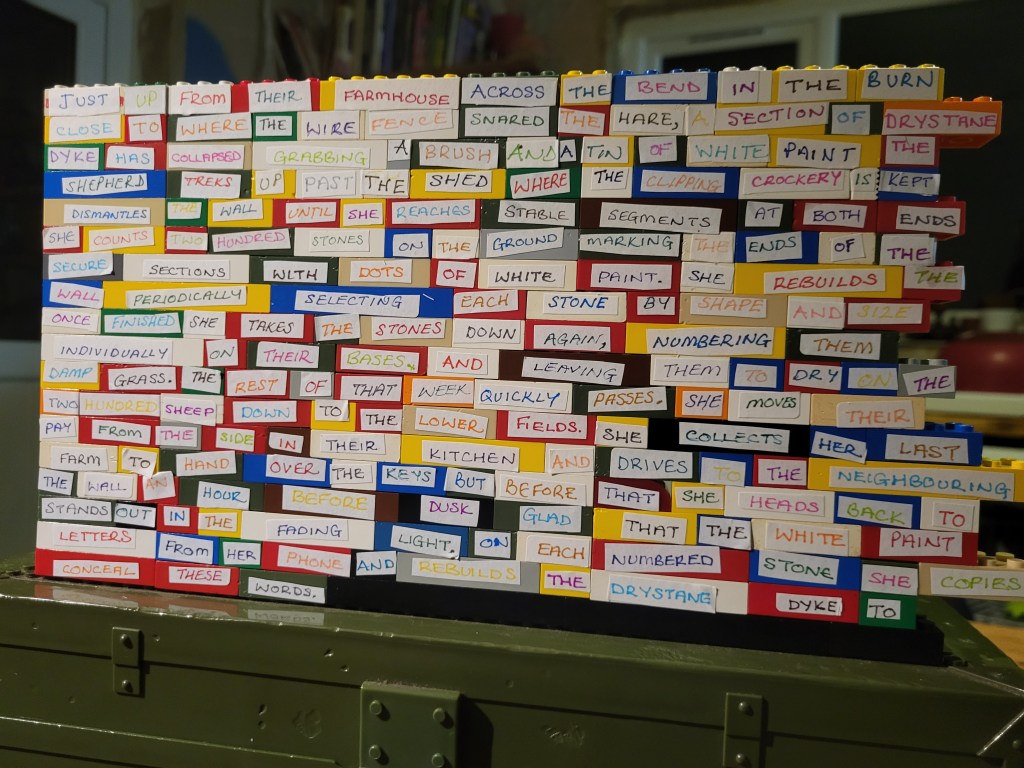
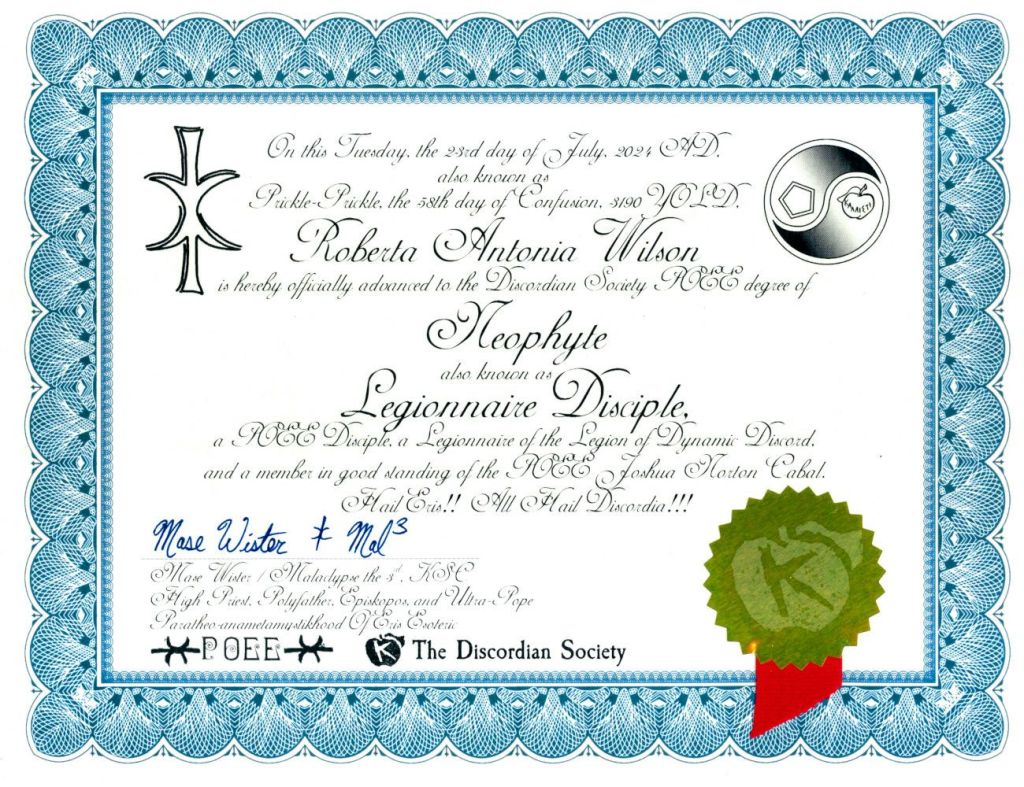
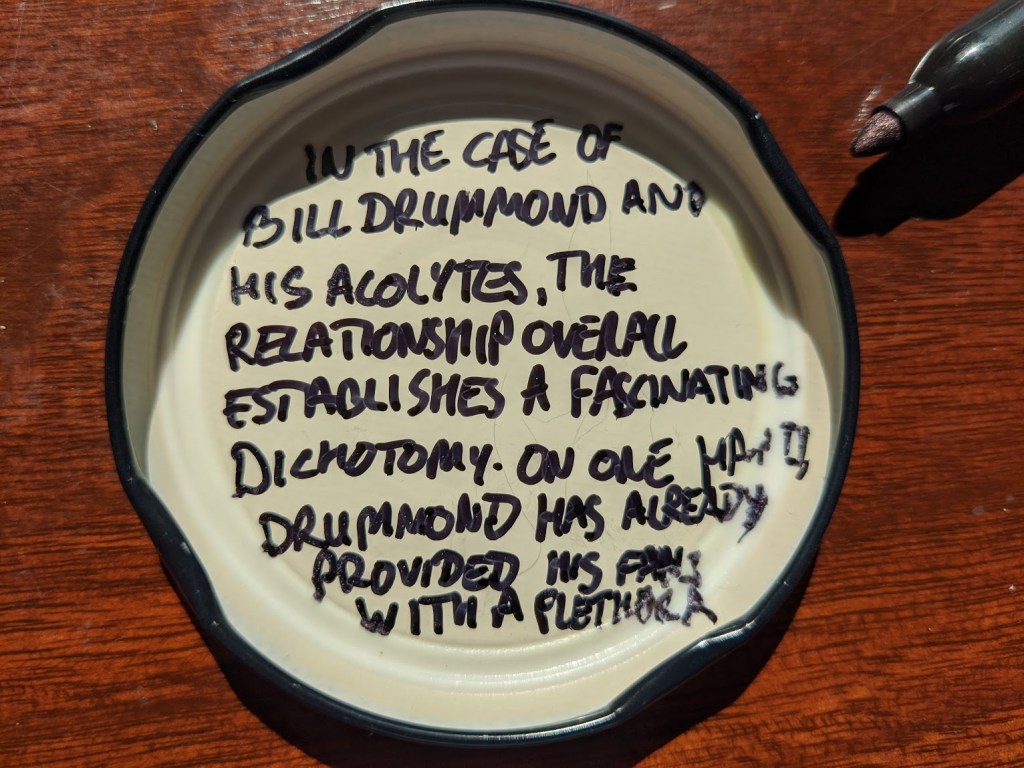

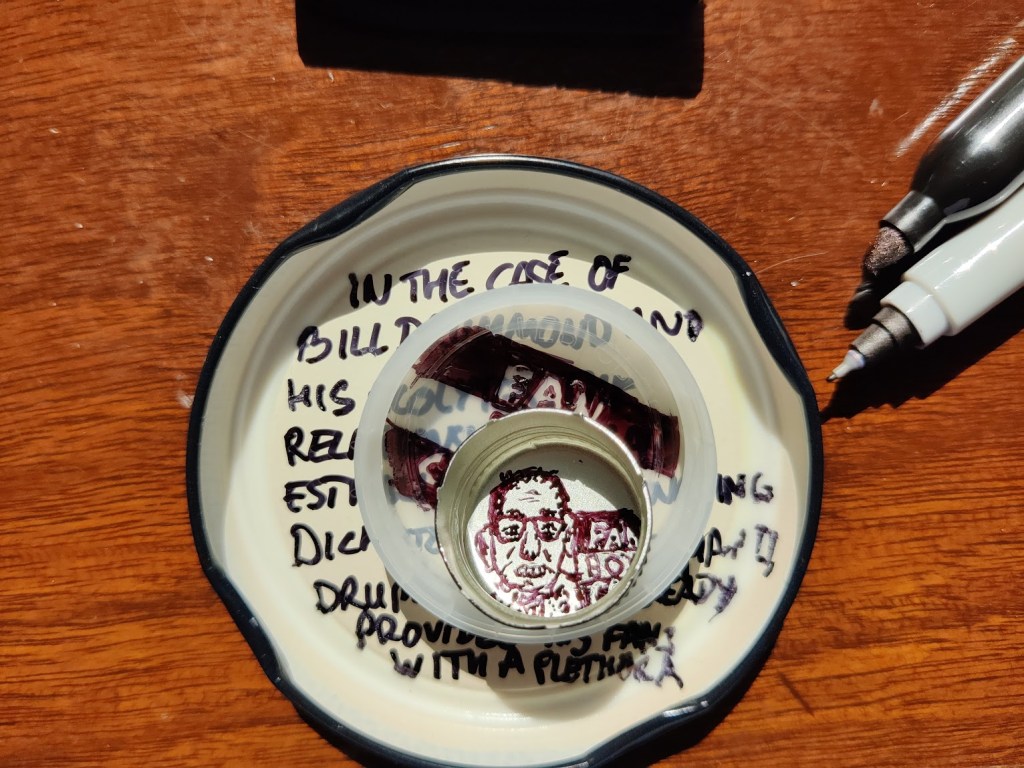

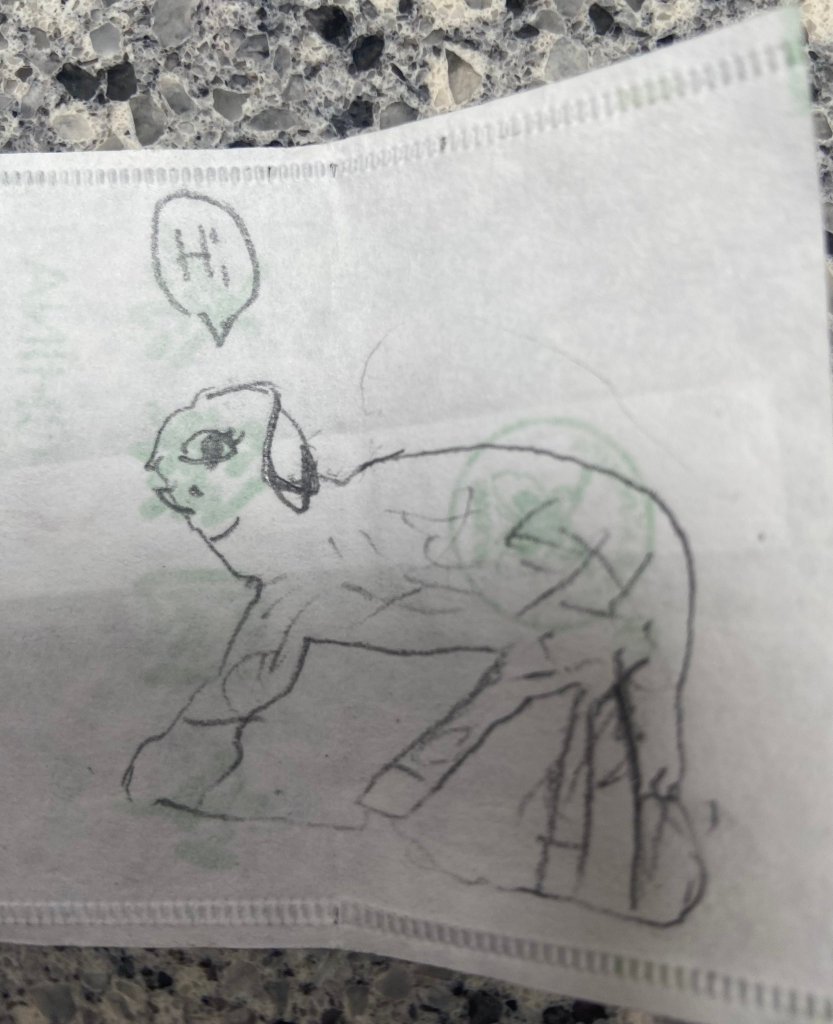
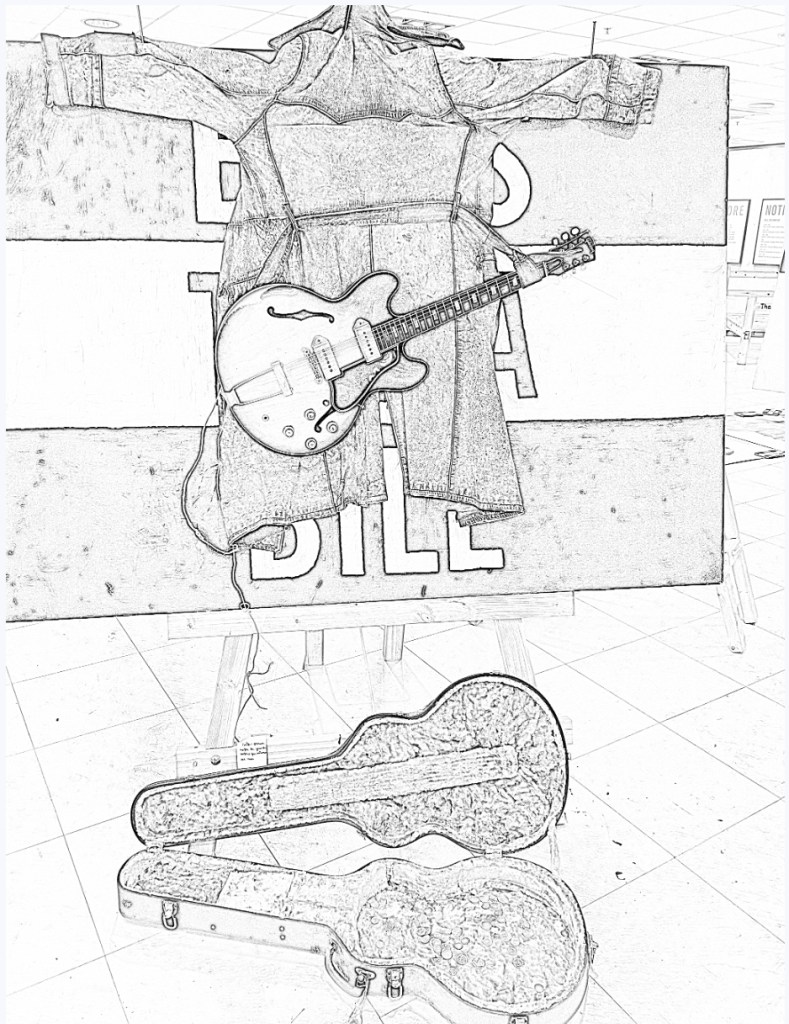
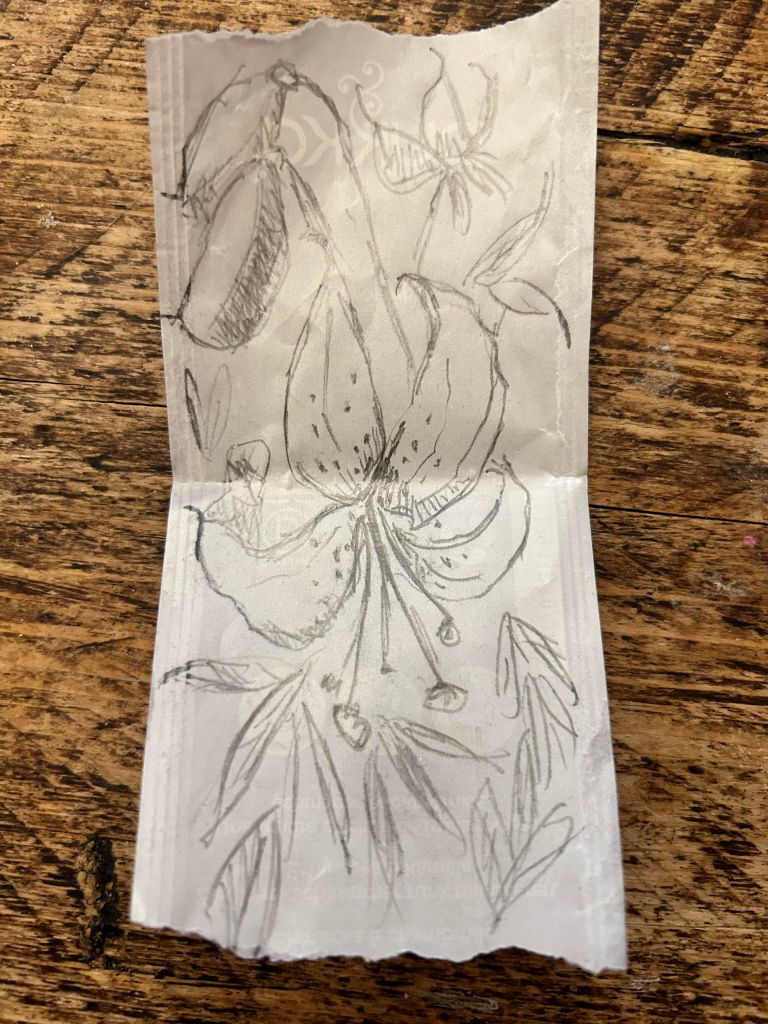
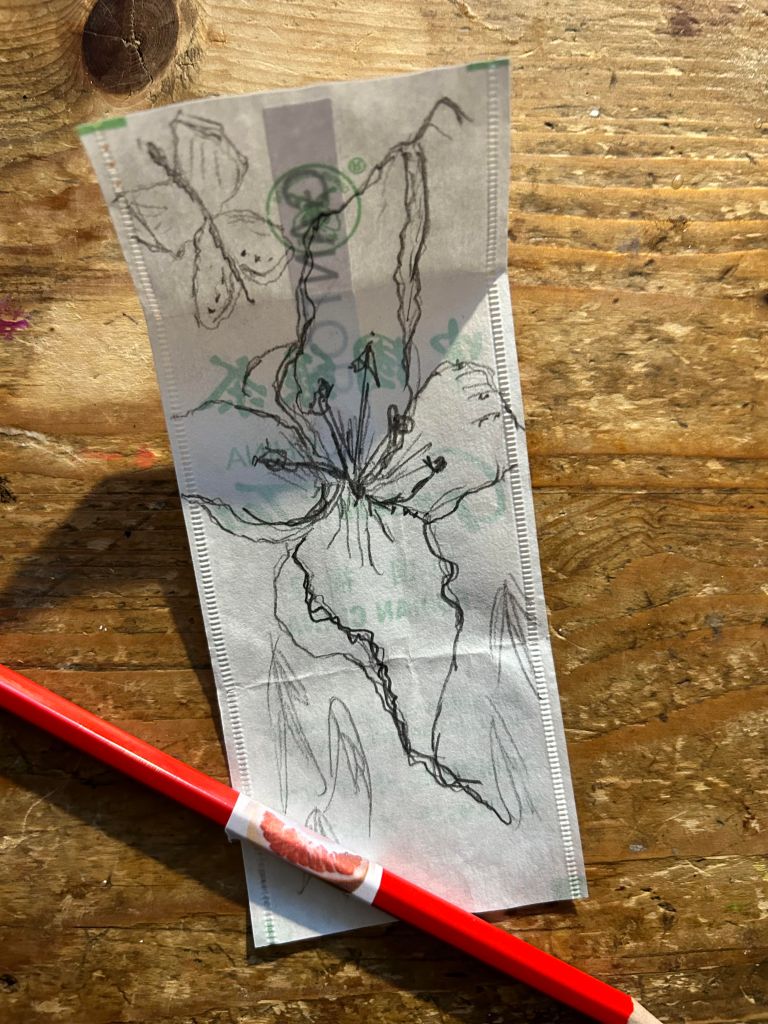
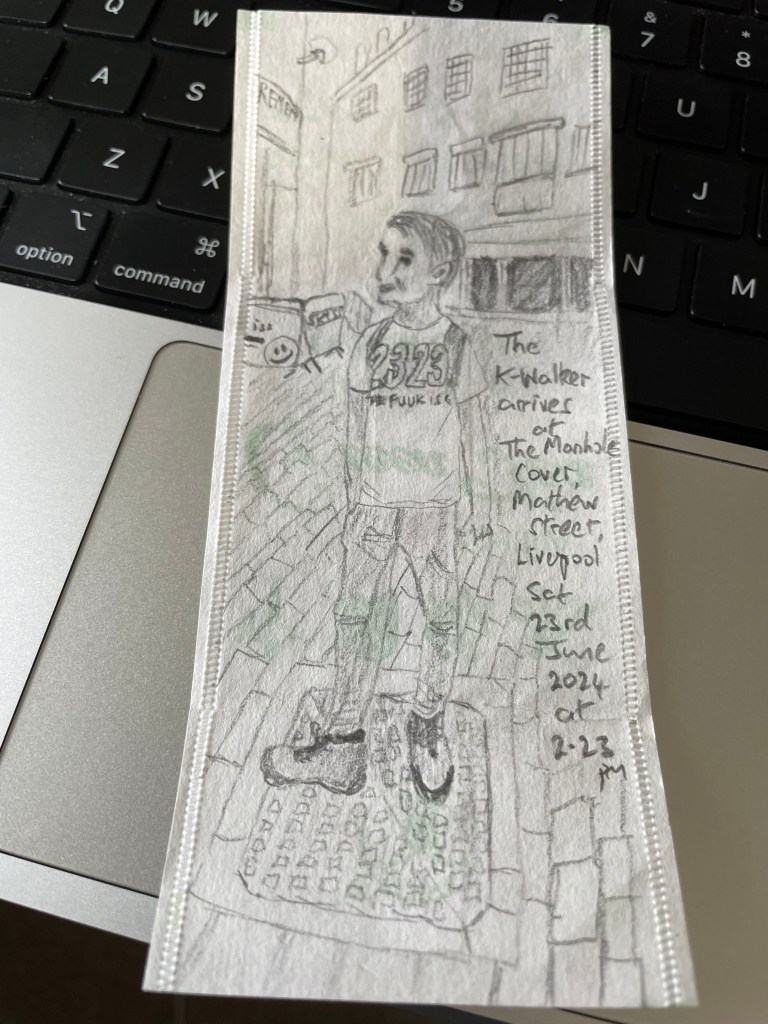

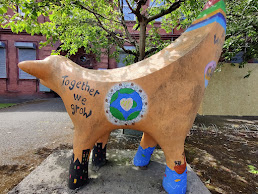


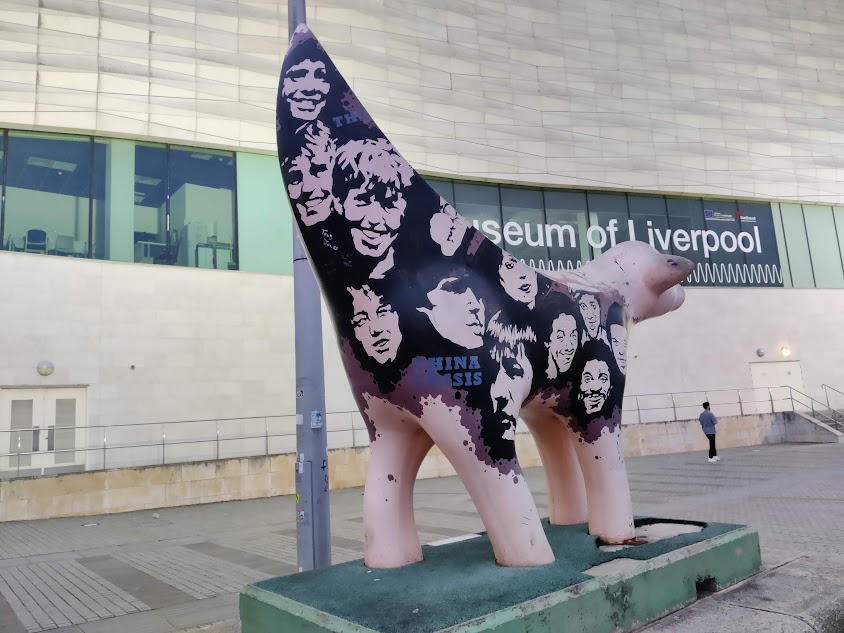
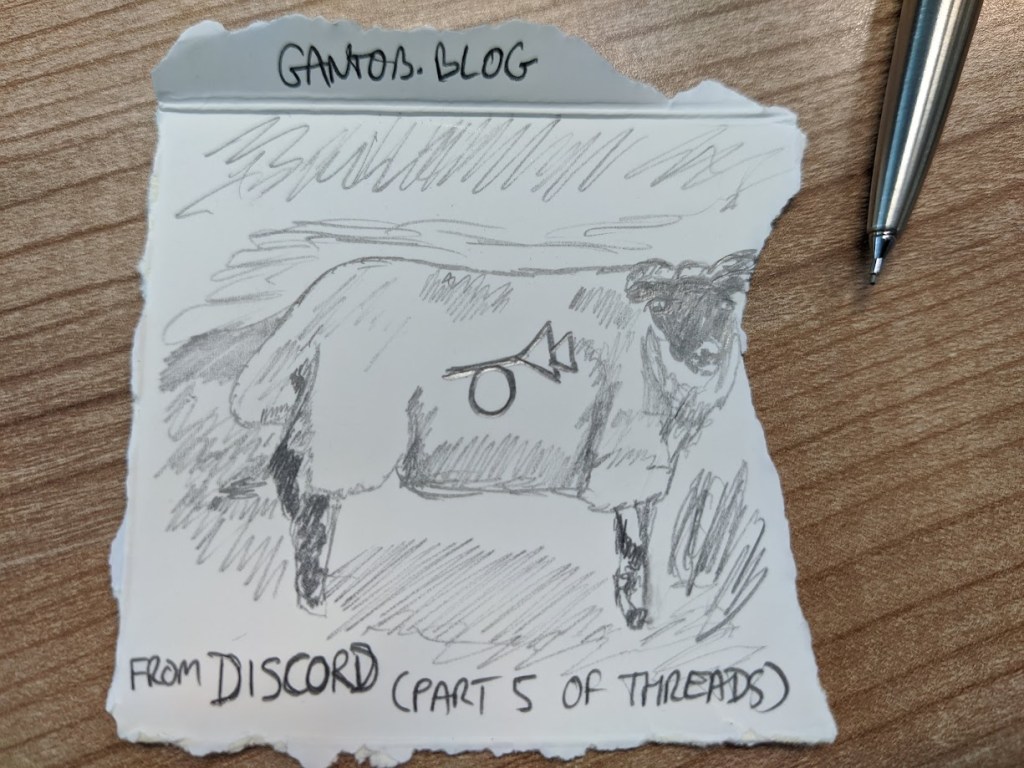
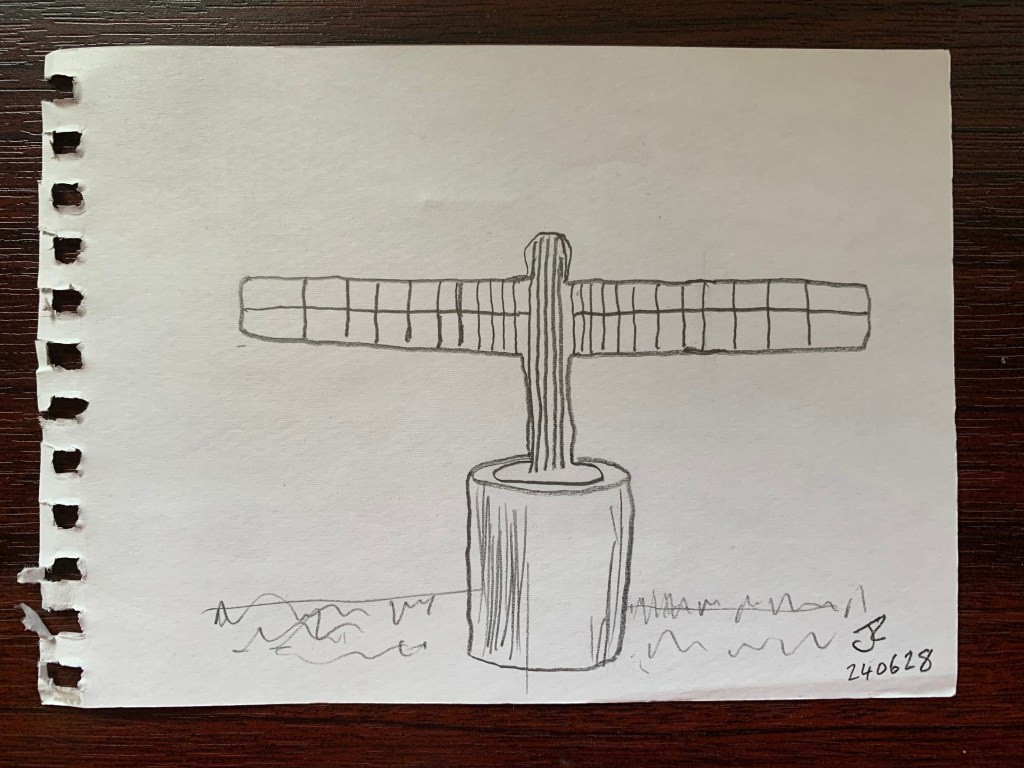
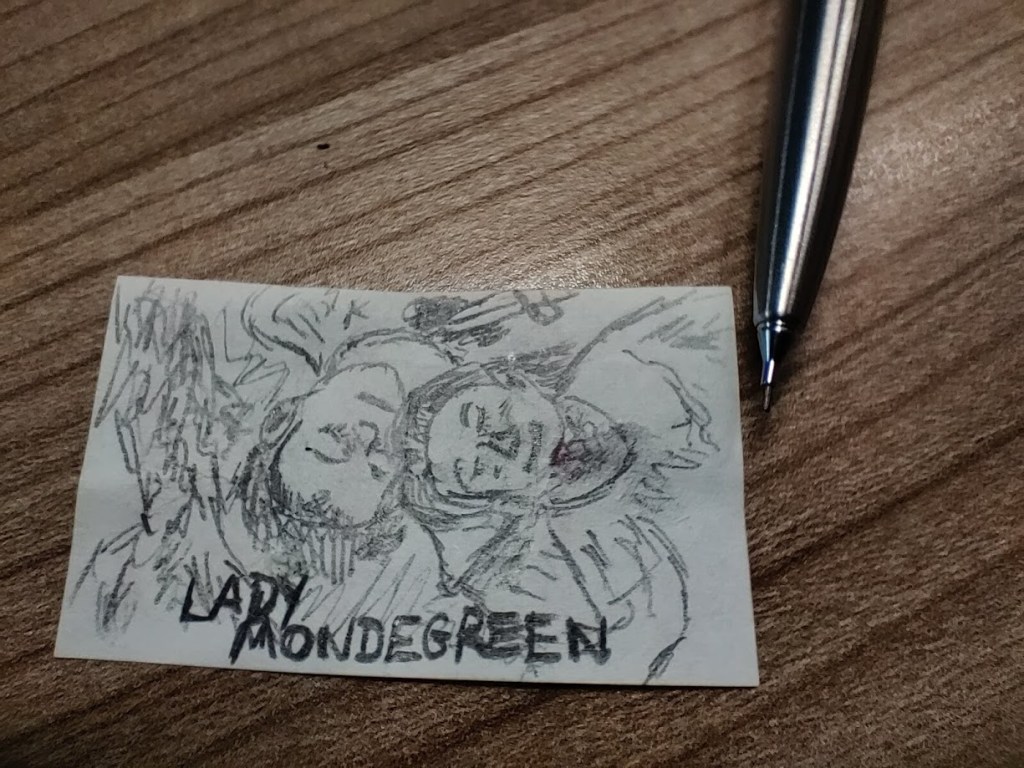

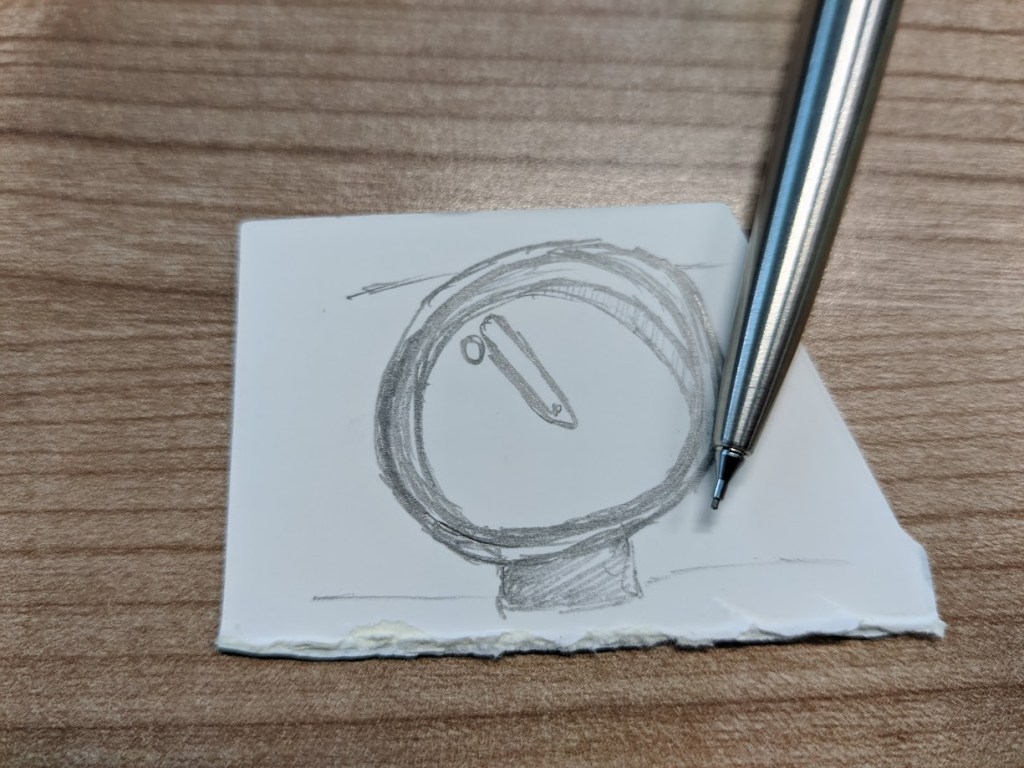
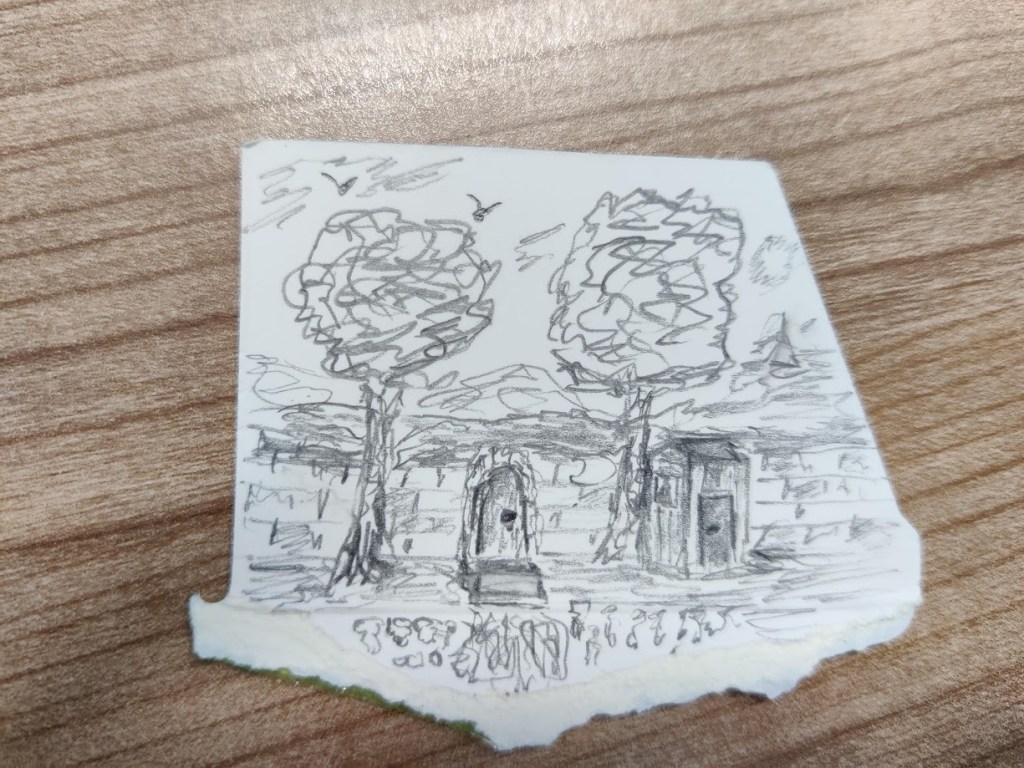

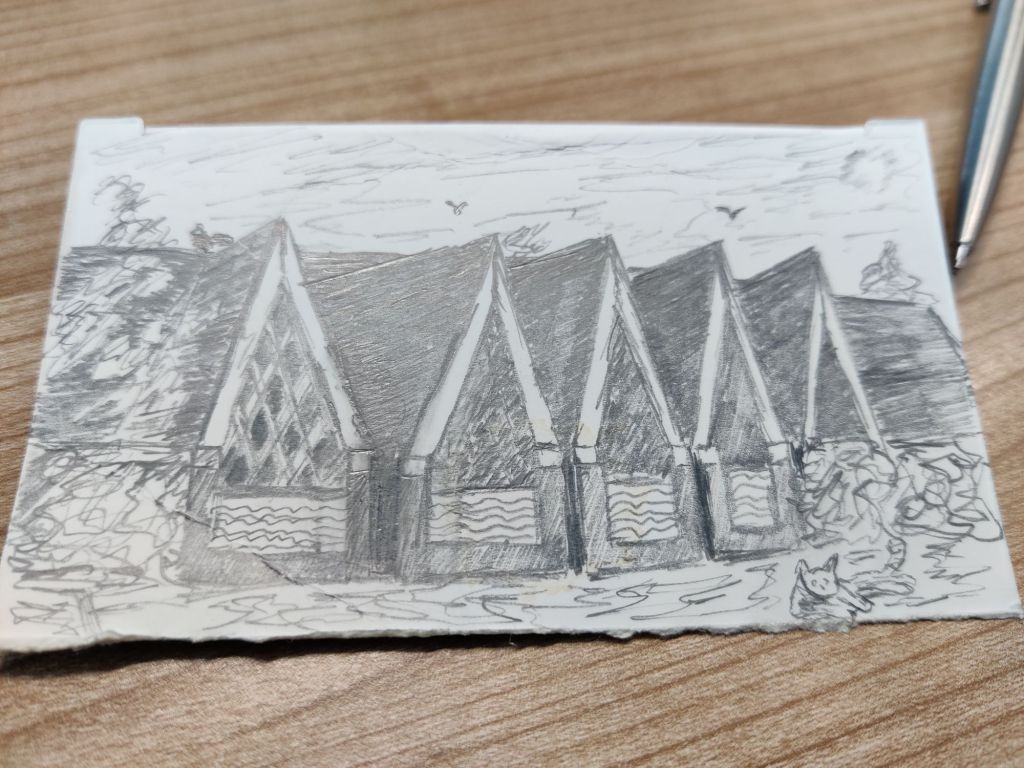
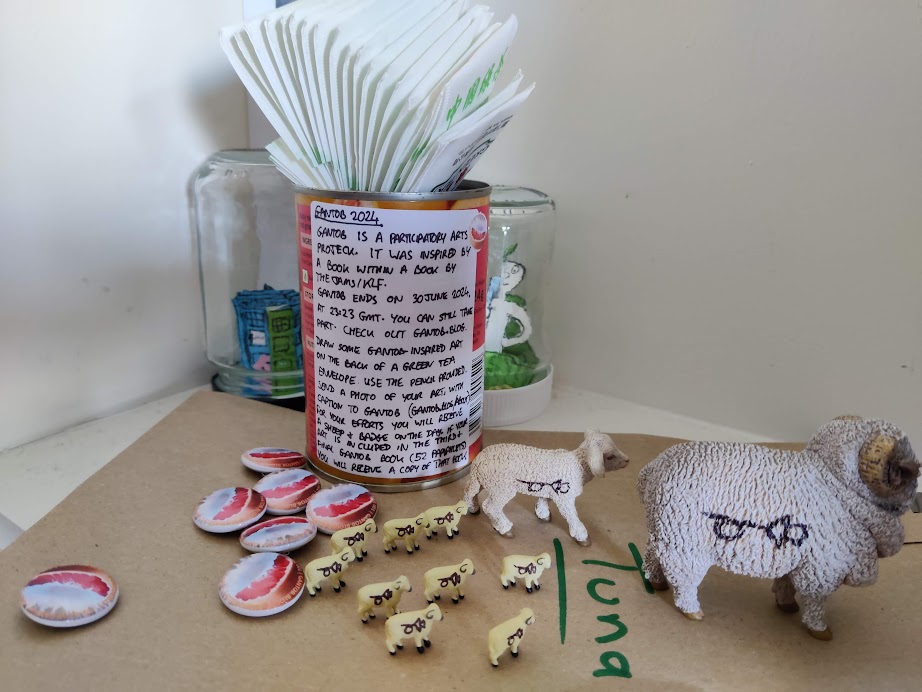
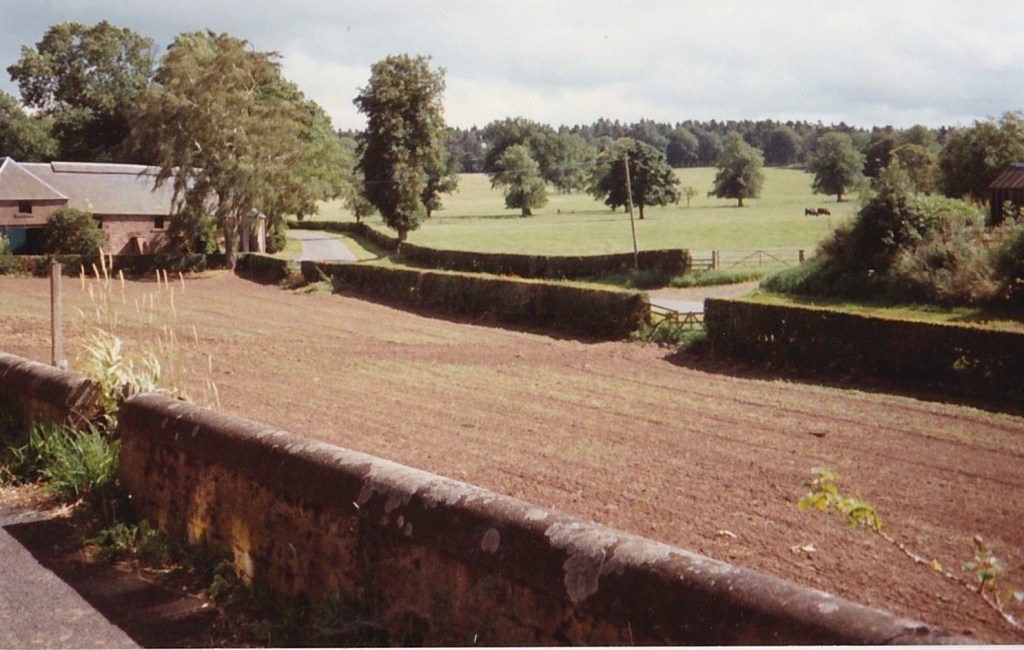


 GANTOB blog