Skip to content
  • GANTOB Books
  • About GANTOB
  • Re-enactments of GANTOB
  • LITTLE GRAPEFRUIT AT SEA (COMPLETE TEXT)
  • MUONS (part 1) (by GILLIAN)

    Apr 17th, 2024

    Apologies for the break in writing. It has been over a week. Never mind. It is sometimes useful to pause and take stock. In the period leading up to this gap, there had been pamphlets several times a week, racing to complete the unofficial 9 Missing Years project before the end of the first run of Bill Drummond’s The Life Model. This was delivered on schedule and has been sent to the man himself for information.

    I have been busy with work, but have found time for some essential GANTOB admin. I personalised two of the pamphlets to send to the authors and sent the second GANTOB book to the British Library. I have also been sourcing some recordings of previous GANTOB blogs. I hope to upload some of them to the site. I should note that we are over half the way through the 23 Questions – if you want a question answered, you had better be quick. Oh, and we are 3/5 of the way through the 52 Pamphlets (which are all now listed in one place for ease of access).

    GANTOB (the project) will end when the last of the 52 pamphlets is completed and the third book published(*). At the current rate this is likely to be by 23 July, the anniversary of the rebirth of The KLFRS and the inception of this work. Whatever the date, after that point there will be no further GANTOB activities. So, if I am finished before 27 August there will not be a Battle of Perth, in Stirling or Perth. If that is the case and you want to re-enact the battle yourself, then please contact me. You would need to provide an idea for the battle and the estimated number of participants. I would send you a battle pack to help you on your way.

    But on to more important matters. I have been exploring the box that Bronwyn brought up to the croft a few weeks ago: an unexpected haul of my father-in-law Curt Finks’ papers. I have been struggling to work out what to do with them. After conversations with Ali, we have agreed that two of his Dad’s journal entries and an email, may be of wider interest, but will require some context setting. There may be other materials that we can use later on, after a bit of discussion with Grayling Muir’s family. My Finks “discoveries”, for better or worse, will form the basis of these Muons pamphlets. Be prepared for some hobby horses and rants from the old codger.

    From Curt Finks’ photo album from his US exchange – the view from his dormitory window
    From the Curt Finks journals 22 November 1994 (Dallas, Texas):
    I am feeling very homesick. Stranded, desperately in need of an English voice. I avoided phoning home for weeks, until the woman selling me a can of Wolf Brand chilli in the 7-11 across the freeway told me about international phone cards. But I cannot bore them all at home with my preoccupations. This is meant to be a holiday for them as much as a reboot for me.

    Speaking of which, one of the young admin workers in the chaplaincy office(+) showed me how to use a computer. It is not intuitive. Luckily, he does most of the work arrangements for me, printing me out a list of names, plotting them on a map of the hospital. During one lunch break he showed me how to use a mouse and we tried to send an electronic mail message to Ali’s student account. No luck. We will keep trying. He also showed me a thing called The Internet, starting with a database of films.

    Spending time with patients and their families helps. But you have to find them first. I am frequently lost. Endless corridors, often without windows, connect an enormous hospital (Parkland(^)) to the famous Southwestern Medical Center, a huge library, 24-hour dissecting rooms (for which we may do a memorial service at some point), Chinese and French take away stalls that do not serve in the evening, a 24-hour McDonald’s, adverts for the Royal Bank of Scotland.

    My favourite landmark in the whole centre is the bus-port with its silver buses which arrive and depart every two minutes – to the North Campus and St. Paul Hospital which are literally just across the Freeway. No more than a few hundred yards, and the hospital built a multi-million-dollar fly-over which has two buses driving backwards and forwards every two minutes, 12 hours a day. On my arrival a few weeks ago, I would walk across on the fly-over – too bowled over by the magnificent view of Downtown Dallas in the bright sun to notice the glares of the bus-drivers as they passed me on this short escape from the air-conditioned indoors. Eventually I was stopped by one of the drivers who asked me if I was trying to put him out of a job – he would be on blowing-leaves-from-sidewalk duty if he didn’t have his bus to drive. I hopped on and haven’t walked the distance since. These regular trips across to North Campus are, however, quite thought provoking. What goes on in these drivers’ heads? They make the same journey over a thousand times every week and listen to mundane comments about Texan weather and medical research almost every trip: they must either switch off to the world or have hours of quality thinking time – remember the Mastermind winner who was a tube-driver?

    Americans have a peculiar concept of scale. I took a trip by plane to El Paso last weekend, for the price of a hardback book. You can fly the 50 miles to Waco, and businessmen commute to Chicago – a huge distance. Yet when I went to the Rolling Stones concert at the Cotton Bowl last week, my fellow bus-passengers complained that they had to walk from the carpark to the front entrance – a distance of 200 yards. They “hadn’t paid for bus tickets to walk that distance”. These were people in their twenties. They will not be doing their 30 minutes of moderate activity each day. Oh no, these are people who drive from home to work to their bank to mall back home. They have a finger dedicated to elevator button pressing, and their exercise is a carefully planned schedule of racquetball or an hour on the home-friendly exercise machine bought on the credit card after an hour-long infomercial about hip reducing miracles. They would vote for Texas Governor George W Bush for President if one of his policies was to supply drive-thru polling stations – or even better voting by Internet from the home or office!

    Poor homesick Curt. Ali tells me that he was on an exchange between November 1994 and February/ March 1995. He cannot remember the details precisely, as he was at Uni at that point, putting the finishing touches to his PhD. I knew his parents by then – had been to stay with them a few times even – but they were distant figures, more my grandparents’ age. I struggled to talk to my future father-in-law. He always seemed a closed book, already trapped in its pages. But there were, as I suppose there are for all of us, glimpses of something else trying to get out. He loved his music, birdwatching and his film nights. He and Ali could be thick as thieves on some of these topics, as Norah(#) and I were off doing the dishes or baking for one of their regular commitments with the church – mother and toddlers perhaps. And here I am, 30 years on, stuck in the pages myself.

    GANTOB 17 April 2024

    #GANTOB2024 Pamphlet 31

    An answer of sorts to question 12: “When is enough?“, as posed by The Quantitative Surveyor

    (*) As with the second book, the third book will not exactly repeat the material from the blog. There will be some further developments in the text (though perhaps not the “big reveals” that we secured from The Philatelist and the New Year’s Day Vienna trip in the second book) and editing to help it read more like a book than a “book of the blog”. The Deputy General is on standby.

    (+) Please note – this section of the “Curt Finks” journal is imagined. He did spend some time in the Center, but the details of the workings of the chaplaincy are from another hospital, documented elsewhere in his papers.

    (^) Mention of Parkland Hospital is not intended as a Discordian reference. It is just where Curt Finks’ chaplaincy exchange ended up. GANTOB (the project) is not an attempt to fill any part of that canon. Furthermore, any coincidences around the number 31 or 22 November are just that – apophenia.

    (#) Names have been changed.

  • FORTY FORTIES (by KATIE)

    Apr 9th, 2024

    An unofficial entry for one of the gaps in Bill Drummond’s The Life Model by Katie (AKA The Foundation Doktor)


    I Am Sixty-Eight (under): 29th of April 2021 to 28th of April 2022

    I usually love the number forty1, in all its varieties. Τετρώκοντα (tetrṓkonta), चत्वारिंशत् (catvāriṃśát). Quadraginta, in Latin. Four tens. A quad. A courtyard. Something solid, enclosed, cloistered, a lawn in the middle. Peaceful, shaded, away from the rush and bustle.

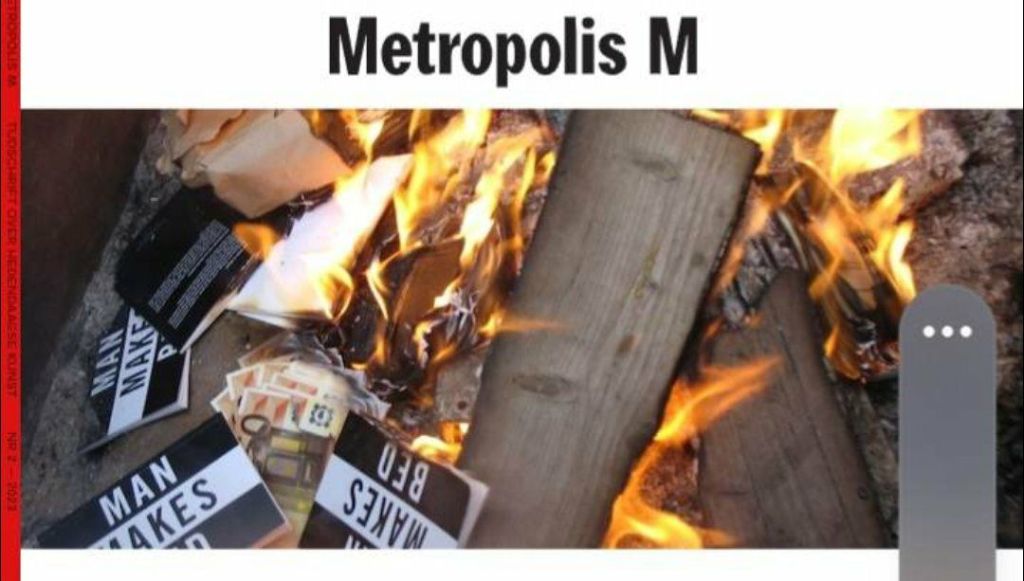
    I have a long history with the number forty2. Forty3 beds. Forty4 pairs of shoes. Forty5 flags on forty6 islands. Forty7 bunches of daffodils. Forty8 paperback copies of a book, burnt. Forty9 second plays. Forty10 posters. Seventeen more than twenty-three.

    I am sitting in my not-cloistered garden. It is early May. The daffodils have long faded. I rejoice in their shrivelled magnificence. I wonder about handing out forty11 withered daffodils to strangers, but Covid lockdown rules might not allow that.

    I have been writing, as usual, but other than that my options for artistic endeavours are limited. Numbered rules abound. The “rule of six” means that outdoor gatherings are allowed. Or “two households”. There are “thirty-three high risk” countries apparently.

    Hotel quarantine is required if you arrive from one of these countries. I think about writing a letter of objection to the Government. Surely people will not be required to stay in the hotel for forty12 days and forty13 nights.

    I do not like the word quarantine. I have looked it up of course. I understand its origins. It originated in Venice in the time of the Black Death. Pox be on you, if that is not mixing my metaphors.

    So, before people even understood bugs, or the role of rats and fleas, those clever Venetians had identified that there must be some way in which the plague was being spread. They took no chances, opting for that Biblical number.

    I google the plague and check how quickly it would cause problems after infection. The CDC says that the incubation period is 2 to 8 days. So those poor souls languished on ships for weeks longer than was strictly necessary.

    Quaranta giorni at anchor. Hellish. Imagine the heat, squalor, stench. I slumber gently in my garden, thankful for small mercies. I think about writing a forty14 day diary in solidarity, documenting the life and times of an artist during Covid lockdown.

    I could make it into a painting, in forty15 neatly aligned squares. As I doze, I pick away at the idea. If I am going to represent forty16 as a quad, a square, then how do I divide it up?

    Six point three two four treble five three two zero double three six seven five nine. Makes it sound like a phone number. Or 6.324555320336759 if you’d prefer, though perhaps it keeps going on to infinity like the number Pi.

    So, to achieve a square I will need just over six words per line over a bit more than six lines. But the length of a word rarely matches its height exactly (except short ones like “a”). I give up.

    I am not going to snip up words, shunting letters to the next line, or guillotining lines into “almost thirds”. Surely the artist’s job is to produce clarity from chaos, to help yourself and others find meaning. I change tack.

    I am relieved when I wake up. The 25 Paintings are wondering why I have been neglecting them. The number is, after all, a perfect square. I sometimes miss the obvious. I labour over a 25+15 connection but give up.

    Not that they would make a square of course. They would make a rectangle. The same is true of my “25 A5 sided knitted rectangles”. I can’t remember if the Million Stitch Blanket is a square, but it could be.

    It is a huge relief when the Covid rules start to loosen. Strictly speaking I have been able to visit the barber for a few weeks by the time I turn 68, but customers and hairdressers alike have been hesitant.

    We are still encouraged to stay locally. I yearn to travel. No need to be exotic. Forget the Congo. Penkiln Burn would do just fine. I have written some contemplations on finding its source, in a little book called 3”x1”.

    My copy arrives from Cally early May 2021, along with some of his other “Ration Books”. He devised his plan for short, rationed reads in 2019. In 2021 they feel perfectly timed for our perpetual war (and recovery) against Covid.

    3”x1” was published in 2020, but that was a “missing year”. Not one of the 9 Missing Years, but one of the Covid missing years, experienced by us all. I enjoyed writing as “me”, not one of my alter egos.

    I open the book at random. Page 23. “This is me with all my ‘issues and insecurities and rampant ego’”. Yup, that’s me alright. I turn back to the beginning and read on. It is 1964, or is it 1962?

    Anamorphosis. I am Hans Holbein. Painting, but in words. I have a skull. No need to hide it. I am 10 (or am I 8?) years old, holding it in my hand, fresh from the burn. Later it is hidden.

    At 68 years old I find details like age and dates rather slippery. Other things run like clockwork. The bowel screening letter, with its little plastic stick, arrives with some late birthday cards. The postie commiserates about the task ahead.

    I reread the book in a sitting. I am happy with it. Cally has done a good job. I do an internet search to answer my own question about sparling. They do still return to the River Cree each spring.

    I would love to be able to pop down to the Cree on spec, stand in the water, hand in the water, waiting for the fish to struggle on past, upstream. But instead I am here, stuck in north London.

    Fifty strides. That is all it took to break out of my lockdown haircut abstinence that first time around, July 2020. For this lockdown loosening, May 2021, I am back again at Metin’s and I have a proposal for him.

    I rehearse my idea while waiting on a chair carefully distanced from a young guy waiting his turn. I’m before him. I’m relieved to see that he has headphones on. I don’t want him to hear me making my case.

    I read through my proof copy of Antimacassar by Tenzing Scott Brown. That’s me by the way. Metin’s current victim is paying. I have jotted some ideas down, but as I sit down I am thinking about just one thing.

    Metin drapes me and sets about his task. He is talking about masks. I nod, trying to hold my breath. I am not used to being this close to someone who is not family. I clench my nostrils when inhaling.

    Metin is in his rhythm. I am still thinking how to frame my idea about selling books from his waiting area. Before that, however, I need to work out if 127 is a prime number. I give myself an ultimatum.

    One hundred and twenty-seven is the age of one of the characters in TSB’s book. It is also, I finally decide, after working through the 17, 23 and other promising times tables, a prime number. Here goes with my idea…

    After recounting the plot of my book, its two main characters, my various pseudonyms, including The Travelling Salesman, and my idea to translate it into Kurdish, I stop and look up.  The young guy has removed his headphones. He’s smirking.

    Do not take your adult son with you to the barber. On the way home he chides me about cultural appropriation and my inconsistencies around flags. I don’t care. Metin is up for the idea. Luckily it’s only fifty paces.

    Forty17 second plays. Forty18 Google searches. Seventeen Wikipedia pages. I am cycling through forty19 regular activities that I have listed like a Paul Daniels memory trick. I am doing everything I can not to think about Lily James’ Netflix haircut.

    If I have eight times forty20-27 second plays then that makes three hundred and twenty seconds, which is just over five minutes. I do a dry run of the TSB plays in Best Gent Hair Saloon, stopwatch at the ready.

    Metin and two waiting customers pretend not to hear me reciting the lines. Forty28 seconds later I have still not finished the first: Sofa. The actors will need to speak and move very quickly, or I have misled the reader.

    The next plays – Hot Towel and Cut Throat – are done and dusted in around forty seconds29 which is gratifying. I need to read the rest carefully to remember what would actually be performed in the plays and what is padding.

    Eight forty30-37 second plays in twelve minutes forty38 one seconds. That totals 761 seconds. Another prime number. I discuss times with Metin. He worries that it would take longer with customers unfamiliar with the script and him so busy working.

    That September I manage to travel all the way to Great Yarmouth for Prime Yarc. It is lovely to see the sea, the horizon. I feel rusty giving my performances at first, but Tam Dean Burn is a great help.

    Original Projects produce a booklet for the event: The Edge of the World, by TSB. I do a show and an exhibition. People come to watch. We feel connected. We have all survived the great pause, back from the edge.

    I perform some forty39 second plays, reminisce about the forty40 beds, soup, cakes, lines, my uncle, cannibals. Everything is getting back to normal. I walk along the beach, have an ice cream, avoid small talk. That is not my forte.

    KATIE, pretending to be Bill Drummond, 9 April 2024

    Pamphlet 30 of the #52Pamphlets

    The last of the 9 Missing Years

    Incorporating answer 7 (about the skull), answer 8 (on sparling) and answer 13 (on √40) of the 23 Questions.

    If you can present this pamphlet of 40 x 40 in a square of 40 then please get in touch.

  • RIGHT HAND MAN (by BRONWYN)

    Apr 9th, 2024

    An alternative to the two ghosts’ submission for the 9 missing years (I am Fifty, 29th of April 2003 to 28th of April 2004).

    After a bracing couple of weeks in Orkney, I am heading back down to King’s Lynn. The ferry crossing is not as rough as I had expected after reading about Storm Kathleen. Arriving at Ali and Gillian’s croft just after 7PM, I am surprised to find the place shuttered up. No luck on the phone either. I try the front door, but it too is locked. At least it isn’t dark as I explore the perimeter and look out into the fields. No joy. I get back on my way and reach my lodgings in Dalwhinnie in time for a hot meal.

    Connecting to the WiFi when I get back to my room I check in with the GANTOB blog. They’ve been busy. Several full pamphlets since my “The Long Journey” on 21 March. But there’s nothing there about the content of the box that I dropped off with Ali – the Curt Finks papers. I am disappointed. I wonder what they have planned.

    The post after mine – by the two ghosts – makes me shiver. The idea of the ghosts of writers haunting living authors as they stop off in Dalwhinnie (even if one of them is dear old Curt). I wonder if my technical pieces qualify me as a writer. My pamphlet for GANTOB is yet to be published in a book, but it’s been printed as a pamphlet apparently (awaiting my return hopefully) and I’m told it will be in the 52 Pamphlets volume. I leave the main light on in the room to ward off any spirits. I’m not scared of them, but I don’t want them to see what I’m writing.

    I have flicked through the “9 missing years” posts and think that the two ghosts’ entry is a cop out. They are meant to be describing the “above/ over” part of Drummond, and simply skate over him, focusing instead on their own preoccupations and narrow field of vision. I can’t blame them – they have limited options to do otherwise. And one can imagine that ghosts are rather fixated on the idea of sins, death and the devil. However, if Gillian is going to be successful in putting forward these GANTOB pieces as valid companions to Drummond’s book The Life Model, then they are going to have to add something helpful and/or interesting. I like a challenge, and I am going to attempt to fill in the details for 2003-2004. It will be the negative of the two ghosts’ version of Drummond. The other side of the coin.

    I am going to use Drummond’s own words for the year in question. I found them at the back of his 2008 book 17, which I picked up for a song in Kirkwall. I am going to make my imagined version of Drummond into a detective, exploring his previous acts, making discoveries about his intentions. Let’s see how it works. I can always redraft if Gillian doesn’t like it.

    Bronwyn’s imagined Bill Drummond writes…

    It’s 2003. I am waiting. For a train, then a tube, and then a co-author, fellow traveller and editor. I am not thinking about writing. I am procrastinating, dwelling on the past, using my energies unproductively to worry and reframe my previous actions.

    I stand by my contradictions. I hold multiple opinions in my head at once, jabbing away at each other, accepting and even welcoming their opposing forces, like magnets spinning on the spot, trying to find their match. Take flags. I hate flags, but I designed one and displayed it across the Atlantic Archipelago. And in one interview I used the symbolism on another flag (the Red Hand on the Ulster banner) to explain my daft proposals years earlier (the idea of chopping off my right hand and throwing it into the audience at the 1992 Brit Awards). I can’t have it both ways. I want to bury all these thoughts.

    I nudge myself into more productive territory. I recently had a chat with the poet Seamus Heaney about the area around Cushendall, on the Antrim Coast. We did not talk about flags or right hands. We were more interested in Ossian, writing, art, and the tower. I felt like a grown up, part of the scene. I gave him a copy of my book How to be an artist, with the Last Page insert. He looked pleased and promised to read it.

    At the opposite extreme of the maturity spectrum is Mark Manning. We are writing a book together: Wild Highway. He is a long-term co-conspirator and a fellow artist at our antiestablishment end of the market. Can I say right hand man? Defined as “An indispensable helper of chief assistant” in my dictionary. Maybe not, perhaps that’s more Gimpo. I’m meeting him too.

    Mark (AKA Zodiac Mindwarp or Zed), sent me an illustrated copy of The Sermon On The Mount a few weeks ago, instructing me to read it at least once a year. I did not expect Mark to be a source of moral education and propriety. I tucked it away and forgot about it. But I decide, while waiting at the Creation offices, that I really should read it before I meet him. I pop out and manage to find a £1 Pocket Canon copy of the Gospel of Matthew (King James Version) in a second-hand bookshop. It has an introduction by AN Wilson, which I vow to read later. For now I turn to chapters 5-7 of the gospel itself: the Sermon on the Mount.

    There is some good practical advice in here: “Agree with thine adversary quickly, while thou art in the way with him; lest at any time the adversary deliver thee to the judge and the judge deliver thee to the officer, and thou be cast into prison. Verily I say unto thee, thou shalt by no means come out thence, till thou has paid the uttermost farthing”. Been there, done that, with my Roger Eagle graffiti moment in court 17. No excuse, but I was lucky to have been let off with a fine. I can’t do the inflation conversion from a King James VI farthing. I need to behave myself.

    And just below that I come to a section that makes me pause. I know it of course, from my time in Sunday school in Newton Stewart and Corby, but I had not made the connection before: “And if thy right hand offend thee, cut it off, and cast it from thee: for it is profitable for thee that one of thy members should perish, and not that thy whole body should be cast into hell.”

    Is that what Mark was getting at when he gave me his rather fancier version of the Sermon?

    I read backwards to unpick it a bit. “’Though shalt not commit adultery,’ but I say unto you that whosoever looketh on a woman to lust after hath committed adultery with her already in his heart.”

    In which case I’m screwed. Why does it always come back to that. I try to keep personal details out of any of my writing, to protect everybody that I love and have loved. I pop the book back into the charity shop and head back to the office. They’re all there now and have started without me. The guy at the front desk hasn’t passed on my apologies, and they don’t believe my excuses. I say nothing about the Sermon. We have more important things to discuss. We’re back in 1996, looking for the Lost Chord, or Satan, or ourselves, or anything, up the Congo.

     It’s 2004. I’m waiting. In Lincoln. Under a tree in front of the cathedral. In my right hand I am carrying a bunch of daffodils. I must look like a Jehovah’s Witness, standing stock still, holding out my offering. Or perhaps the jilted half of a date. I do not want to appear desperate. I am not a chugger, waving busy people down for their bank details. This is art. I know from previous instalments of the 40 Daffodils that it just needs one person to stop and others will follow.

    “Random acts of kindness”, somebody called it last year in Milton Keynes. I looked it up and read Anne Herbert’s book. I think about it while I am waiting for my first victim to arrive. Victim is wrong. I’m thinking about the opposite: “random acts of violence and senseless acts of cruelty”. But it’s not really a random act of kindness either. That is meant to be “nonpremeditated… inconsistent”. I stand here with my premeditated flowers, just like last year: 100% consistent. But that’s the way that I like it. The flowers are my flags, yellow banner on a green pole. I can wave them around without cultural appropriation or nationalist overtones. I relax. Get into the role.

    But what if Welsh people take offence. Or if somebody thinks that I’m collecting for Marie Curie. Maybe they’ll  try to throw coins and notes into my bucket. I try to stop overthinking and put on my best smile, striding out, right hand forward.

    BRONWYN, channelling her inner Bill Drummond, 9 April 2024

    All the 9s:

    • Pamphlet 29 of the #52Pamphlets
    • One of the 9 missing years
    • Answer to question 9 of the 23 Questions, when considered together with the two ghosts’ submission. Question 9 was “What are the two sides of the same coin?” (posed by The Numismatist)

    Have something you want to contribute or ask GANTOB? Use the links above to find out more

  • THE GODDESS OF GOLD (by PETE)

    Apr 7th, 2024

    Some further discoveries in this pamphlet, with contributions from Pete and NIk. It’s worth reading right to the end…


    Unofficially filling a gap in Bill Drummond’s memoir THE LIFE MODEL

    I Am Forty-One, April 29th 1994 to April 28th 1995 (Under)

    [GANTOB: To be imagined narrated in the voice of Tam Dean Burn, channelling his inner Bill Drummond].

    April 29th, Midnight. On my 34th birthday (see The Goddess of Vinyl chapter of The Life Model) I had black candles on my cake. This year they were pure GOLD, all forty-one of them. Why? Because for these seven years, everything we touched turned to gold.

    My 41st birthday was one vast Glitter Ball at London’s Grosvenor House Hotel. We had posted Golden Tickets to the entire music industry. None dared to come, fearing they might be showered in sheep’s blood, or forced into some fiery Hebridean ritual. So we ended up with those who get hold of unwanted corporate tickets: personal assistants, hustlers, pushers, escorts, cleaners and wannabes. We hired lookalikes to play ourselves, undetectable behind horns and robes, and watched on CCTV from the Royal Suite.

    Todd Terry was MC, and the after-midnight “special” was Kylie performing Je T’aime with her new beau, Jean-Claude Van Damme. I had commissioned a pair of gold lamé hotpants for Kylie, and they were the main focus of attention until they were discarded. Then – at precisely 3am – Kylie went off-script. She stood up, wrapped herself in Jean-Claude’s karate jacket and announced “I’m gonna leave this party now…” and marched straight out of the Ballroom.

    We rushed to the lift, caught up with Kylie in the Foyer, ushered her to our gold limo, woke the driver, and asked Kylie, “Where?”.

    “Bank of England”. She handed us each a tiny gold tablet. “Let it dissolve under your tongue”. By the time we reached our destination, everything was dissolving. The three of us tumbled out and Kylie politely dismissed limo and driver. Threadneedle Street?

    Credit: Arts Centre Melbourne

    I am holding a sewing needle between finger and thumb, watching a camel and a rich man fighting to pass through its eye. Oh shit, I’ve pricked my finger. The eye in the needle becomes the Eye in the Pyramid. On every dollar bill. Bill. Bill… I’m walking through a cemetery and I think I recognise the gardener. Peter Green?? That greatest ever triptych of singles: Albatross, Man of the World and Oh Well. The eyes have it – it is he. Hesitantly, I ask, “Who is The Green Manalishi?”.1 He smiles, “The Two-Pronged Crown! The Dollar. The two lines through the ‘S’. The Greenback monster that makes us do things we don’t wanna do! I slayed it. I gave it all away. But I should have burnt it”. He called after me, “Stay true to the trail. You’ll be OK”.

    Kylie slaps my face. “For God’s sake Bill, keep it together”. I come round, but now I’m staring at the statue of a man on a horse outside the Bank. It is labelled WELLINGTON. Wellington? Napoleon! Waterloo! Waterloo, for fuck’s sake. Their breakthough hit. Then they learned to alchemise Gunnarsson’s bass grooves into gold. Gold: the greatest Greatest Hits album ever. I am on that ferry back from Sweden crying to the seagulls, “Abba, Abba, why hast thou forsaken me!”.

    “Bill!”, breathes Kylie in my ear, “Now where have you gone?! Tap your heels together and say ‘I’ve been a miner for a Heart of Gold’”. She squeezes my hand. “You’re on your own now. You can keep the pants”. Kylie and Rockman have gone.

    I awake in The Vault. SHE stands before me. A Being formed entirely of rippling, living gold.

    “I am the Goddess of Gold. How I appear to you reveals the state of your Soul. To most, I am a pile of metallic blocks. But you see me true. Tell me, I see fear in your heart?”

    “Yes, ma’am, I am afraid. Seven years ago I had this dream. The inventor of the Pop Chart appeared as a Wizard and said he would grant all my wishes if I made a Number One Hit. So I got together with Rockman, we combined every pop cliche imaginable and created a Frankenstein’s Monster of a Number One. I never saw the Wizard again, but after that everything we touched turned to gold. Ma’am, I’m the Son of a Preacher Man. I fear I conjured all this Fame and Fortune by black magic”.

    She smiles.

    “The last man who saw me true was called Jon Smiff. 158 years ago. He searched the sewers of London for things to sell to feed his family. He accidentally found his way into my Vault. He could have quietly become a millionaire. Instead, he wrote to the Bank and told them!”

    “Now hear me: A few weeks from now, a dark spell will be cast upon the people of Britain. On May 25th a Vampire named ‘Camelot’ will launch ‘The Lottery’. This deadly tax on the poor is the final act of the Dark Ones to reduce everything sacred to a ‘product’ and everything human to a ‘consumer’. After the first draw is held on November 19th, you will begin to hear this sad mantra: ‘If I won the lottery, I could…’. No! All free spirits and pure artists work despite their lack of wealth and comfort! Worse, the Lottery Fund will promise to fund people’s projects, but applicants will discover they must sterilise their work to be acceptable”.

    “Your mission, should you choose to accept it, is to make a Burnt Offering precisely between these two dates2, on the night of August 23rd. Burn The Lot”.

    “Only a dying civilisation would imprison this most beautiful, malleable, conductive and noncorrosive substance in a dungeon. The Golden Age will be precisely that: the time the gold pours back to humanity in a billion radiant artifacts. Bill, help break the spell. Set me free”.

    And so it came to pass.

    Postscript:

    I kept the gold lamé hotpants until I hit a marital “hotspot” at which point I agreed they could go to charity. Incredibly, they were found by a friend of Kylie “at a flea market for 50p”, and starred in her Spinning Around video. They are now valued in the millions. So it is that Kylie’s ass turned base desires into gold.

    PETE ANDREW, 7 April 2024

    One of the 9 Missing Years

    Inspiration for Question 6 of the 23 Questions


    Pete emailed GANTOB on 3 April to reserve the missing year 41, and sent the finished piece at 11:00 on 7 April. I really enjoyed both The Goddess of Vinyl and The Goddess of Gold, and was delighted to add the latter to the GANTOB canon. I took the PDF that Pete had sent me and forwarded it to the GANTOB Pamphlet Committee for fuller consideration.

    In order to fully explore the themes in Pete’s piece the GPC asked me to add a new entry to the 23 Questions. Number 6: Is all that glitters gold? (from The Assayist). This question was uploaded at 12:30 on 7 April, requiring answers by 23:23 that same day.

    I am delighted, at 18:15 on 8 April, to be sharing both Pete’s story and NIk’s answer to the question (which was received at 20:06 on 7 April). NIk had not, as far as I am aware, seen Pete’s story. There are, however, some common themes. I will leave it to you to interpret NIk’s answer as you will. Please share any thoughts in the comment box below.


    Dear GANTOB,

    Imagine a glamorous party filled with dazzling lights and glittering decorations. Everything seems perfect and inviting from afar, but upon closer inspection, you realise that, beneath the glitter and glamour, party-goers kibble in a world of superficiality and deceit. People wear masks, hiding their true intentions and emotions behind their smiles and charm. It’s a stark reminder that not everything that glitters is genuine or sincere (gold). In this meme, glitter serves as a facade, masking darkness and emptiness lurking beneath the surface, illustrating the deceptive nature of appearances.

    You’re welcome.

    Thanks,

    NIk

    aka Young Man on Facebook

    The answer to Question 6 of the 23 Questions


    Together, Pete and NIk’s answers form #GANTOB2024 Pamphlet 28 of the #52Pamphlets

    Pete and NIk will receive a personalised copy of the pamphlet by post ASAP and will be the lucky recipient of a copy of the 52 Pamphlets book when it is completed (by January 2025 at the latest, and potentially very considerably sooner than that – watch out for an answer to question 12, which relates to this topic, imminently).


    Footnotes:

    Pete writes:

    1. There is a whole chapter about Bill’s actual meeting with Peter Green in Bill’s “45” published by Little, Brown & Co in 2000. The chapter is “The Autograph Hunted”. The meeting between them described in The Goddess of Gold is “imagined” but it it is true that Peter Green worked briefly as a gardener in a cemetery (not as a gravedigger as often reported) – and that he made clear in various interviews that The Green Manalishi was about the evils and temptations of money’.

    Excerpt from The Autograph Hunted in Bill Drummond’s book 45.

    2. The notion that The Burning of the Million Quid was a precisely timed “burnt offering” to offset the dark enchantment of The National Lottery was first published in a November 2018 Editorial in the monthly community magazine: Network News: A Guide To Inspiring Events In North Wales. The issue is downloadable here and the Editorial is on Page 3. It is also worth noting that on the K Foundation poster prior to the 1995 screenings of Gimpo’s film, the second of the nine questions suggested is: “WAS IT A BURNT OFFERING?”.

  • POX (by THE RED SQUIRREL)

    Apr 6th, 2024

    This pamphlet attempts to fill another gap in Bill Drummond’s memoir The Life Model (2024).

    This pamphlet is about Bill Drummond, but is not commissioned or endorsed by him. It is produced for GANTOB’s project Nine Missing Years. Once completed these nine pamphlets will be sent to Bill Drummond for information.

    But today we are more interested in what The Red Squirrel has to say. The lifespan of a red squirrel in the UK is about 6 years. TRS is 2 years old. She would like to make it clear that she is writing imagining that she is Bill Drummond, and what it would be like to be an eight-year-old male human living in Galloway. She is filling the slot of “I Am Eight”: 29th of April 1961 to 28th of April 1962. The conscious bit (above/ over).

    In the early 1960s there were lots of red squirrels in the south-west of Scotland, but there were rumours of invading hordes of grey squirrels moving ever closer. The Red Squirrel has some oral testimony passed down by generations of squirrels. These story tellers were descended from an intrepid pair who moved northwards from Newton Stewart, via the West Highland Way, then stowed away from Fort William to Badenoch on the backs of red deer. They navigated down the River Spey, before moving “inland” to settle in a patch of conifers near Granton-on-Spey (which is misleadingly named because it is a long way from the river if you are as small as a squirrel). We should certainly credit this pair – Chuck and Thomasina – as the vectors of this story about a young Bill Drummond. Over to you TRS.


    POX (by an imagined Bill Drummond, as recounted by TRS)

    When I was eight, when I was not tied to a desk with schoolwork, or chores around the house, I was outside. The summer of 1961 stretched out to infinity, like the woods and the bird song. I extended my range, exploring as far as I could with a jeely piece and an apple in my pocket and the knowledge that tea would be on the table at 6. I poked my way along unfamiliar tributaries, up trees, along farm tracks, keeping a low profile so that my adventures were not spotted and reported back to the manse. I had regular meetings with squirrels (we did not need to add the “red” at that time). For a few months I could speak their language.

    I learnt about the different habitats around Newton Stewart. The huge changes from burn to bank, field to forest. My discoveries were stashed away in matchboxes and jam jars and secreted away in drawers or basins. Beetles, butterflies, caterpillars. Once, a fledgling starling, which I nursed to recovery.

    The manse, never quite able to shake off its chilly dustiness, contained books and other binds like setting the table, drying the dishes, polishing the silver. I dragged my heels on that last stretch up to the backdoor of the house, before remembering that I was starving at the end of the day and would have to survive those last few minutes before tea was on the table. The family together again, and the sun tauntingly reminding us that there were still hours to go, my Dad would ask about our day. After tea I would sometimes drag him outside to ask him to identify bird song, or sit for even a few minutes waiting for herons to fly overhead, before the midgies found us. On the way back to the manse he would recite poems, some of which I knew well enough to join in. And from there to Robert Louis Stevenson’s novels, which he told me that he had loved when he was my age. RLS had used his experiences as a child when he was stuck in bed in Edinburgh, dreadfully ill, looking out over the gardens beyond his window. Treasure Island, Kidnapped – my Dad would dig them out for me. I loved the versions of the stories that he told me as we walked, but could not imagine lying in bed for even a few minutes, concentrating on the pages of turgid prose while it was still so warm and light outside. Little did I know that over the autumn I would be spending long stretches in bed myself, with the local GP visiting repeatedly over the days and weeks.  

    Mumps was the first to arrive. Mum spotted it first. I had slept in, was pale, and did not want my breakfast. “Stop squirreling your food”, she called across the kitchen when she saw me pushing my porridge around my plate, and my puffed cheeks. “But I’m not”, I moaned back. The swelling spread over the course of the morning, and the doctor was called. I was well enough to read a bit of Mark Twain, dreaming of adventures on the Mississippi.

    Then chickenpox. And the worst, measles. This was when I started to worry. Conversations floated upstairs. I recognised my Mum, Dad and the doctor’s voices. I was so sleepy, drifting in and out of consciousness. I opened my mouth for my temperature to be taken, warned against biting down on the cold smooth glass of the thermometer as it poked into uncomfortable corners below my tongue. The GP shone his torch inside my mouth and asked me to say “ah”, then stick my tongue out, left then right. I was burning up, and the rash had spread right down my body, red from head to foot.

    Measles was “doing the rounds” the doctor explained. Plenty of fluids and some paracetamol and I would be right as rain. Temperature of 102. “As warm as a cat”, he said. That sounded like a good option. I would become a cat I decided. They must have ways to stay cool, even with all their fur. Tortoiseshell would be my preference. Some peach, brown and ginger, like the neighbour’s cat who would sometimes visit. Asymmetrical, vocal and sociable. Female of course, because tortoiseshells almost always are. Cats can find a comfortable position in the smallest of corners. In fact, the smaller the better. My bed in contrast felt huge and sweaty. Aches and pains seemed to follow me in every direction. At least the rash was not itchy, unlike the chickenpox. I curled up, and slept, confident in the knowledge that I was on my way to becoming a cat.

    When the house was measles free, and I had returned to human form, my parents started to have visitors again in the evenings. The manse was a natural meeting place, and they would often have guests well into the night. Unable to sleep with the noise I would listen down the stairs. Dull adult chat usually. But sometimes there would be local gossip, or world affairs, that would rise up through the cracks to plant seeds of worry in those tumultuous times. The encyclopaedias did not cover the topics they were discussing. Repercussions from The Bay of Pigs invasion.

    One of the forestry managers appeared after the bells that Hogmanay. His annual visit, “first footing”. He had a bottle of whisky, but without a cork. He thought that he must have left it on the kitchen table of the GP. He always brought different chat to the house. I was meant to be upstairs, but was too excited to be confined to my room. Christmas had brought waves of gifts, treats and visitors, and this idea of staying up extra late seemed like an exotic extension of the season. I crept behind the furniture, pretending to be a cat, unnoticed, stealing black bun and shortbread. The visitors were there until 3AM, at which point my Dad steered them to the door and the house was calm. He lifted me up from my hiding place, sound asleep, and returned me to bed.

    Festivities never last long in a manse. February 1962 brought news of another virus “doing the rounds”. My Dad received memos from Edinburgh. Smallpox in Bradford, which seemed a world away. News bulletins and visits from the neighbours brought hush to adult conversation. It was something unspoken, like cancer, as if it could be spread just by talking about it. I wrapped up well in a hand-me-down coat and a scarf I had been given for Christmas and spent the days outside, by myself. The squirrels shivered when I told them about the pox, and even they stayed away.

    Lent arrived, but the Ash Wednesday Storm that we had heard about on the news petered out in Cornwall, so the squirrels were safe in their trees.

    In March the forestry man was back again, but this time he was not full of raucous entertainment. He came to the door with another man who was dressed more like my Dad, in sombre black. They chatted over a research paper that the visitor from Edinburgh had brought with him. A survey of red squirrels in England and Wales, documenting their retreat to more remote areas. There was not a clear explanation, beyond the idea that it was something to do with the “greys”. I went outside to warn my squirrels, but they had packed up and gone.

    TRS, pretending to be Bill Drummond, based on testimony passed down the generations from Chuck and Thomasina, 6 April 2024


    The Red Squirrel adds that SQPV – squirrelpox virus, which is carried by grey squirrels but fatal for red squirrels – was eventually discovered by humans in 1981.

    #GANTOB2024 Pamphlet 27/ #52Pamphlets

    One of the 9 Missing Years

    If you would like to contribute to this blog (and to see the terms of engagement), please get in touch.

  • DEATH AND DINERS (by THE FOOD AND LITERATURE DELIVERY RIDER)

    Apr 5th, 2024

    THE ANSWER TO QUESTION 5 – IS IT MATHEMATICS?

    This question was submitted by Rebus Frill Truckmen on 3 April 2024. They wrote: “I have been reading some RLS recently, to join the dots between idling and Bill Drummond. I stumbled across this question. Your help would be greatly appreciated”.

    You can read more about 23 Questions, and see the Robert Louis Stevenson quote in context on the 23 Questions page of this blog. You can also submit your question(s) there.

    Note that Penkiln Burn pamphlets referenced throughout the answer can be viewed (albeit not in full text) at KLF.de.

    But for now, I will hand over to The Food and Literature Delivery Rider, in a form of let and sublet agreement through The Benefaktor.

    All will become clear if we’re lucky…


    I have two phones. One for my food deliveries – an iPhone provided by a well-known food delivery company, securely attached to my handlebars in a waterproof cover (tricky to handle with the goat hoof gloves essential to survive an Edinburgh winter). And the other – a “burner” – provided by my father, The Benefaktor, for the literature deliveries. I manage a few hours a week for my first job. Not quite enough to produce the mental health boost that Gillian mentions in her pamphlet On/ Off Work. But my father supplements that quite enough to fill the eight hours a week. Over the pandemic it was deliveries of books from local independent bookshops, to lockdown imprisoned readers. When that dried up, I diversified. For example I might collect a tap from a wholesaler to allow a plumber to fix a sink for a student completing their English literature thesis. But to be honest that just happened the once, and it was for my cousin. Then GANTOB (the project) came along in 2023 and I had quite a busy summer, popping up to stationers for A5 coloured paper, pound shops for padded envelopes and dropping off pamphlets and books around Scotland. Clandestine operations sometimes – delivering a USB stick to a woman wearing a yellow carnation standing outside the Boots at Waverley Station. A message in a bottle to a man in a café round the corner from a consulate. All to maintain my allowance. My first documented drop off was to The KLFRS themselves.

    The most recent text to the burner, received on Wednesday morning, read as follows: “You’re needed now. My room”. I scuffed along the corridor and knocked on his door. He was wearing a thick towelling dressing gown and slippers. Old man hairy legs on display. He thrust a jiffy bag into my hands and retreated back into his room (“The Kino”). The package was addressed to me, using my name rather than function. It was unsealed. Inside there were photocopied materials, a handwritten letter, and a printed sheet containing some notes. It was an instruction, not a request. As usual, my allowance was conditional on successful completion. The diktat stated that I was to write the unofficial version of the subconscious section of I Am Forty-Six (under): for Bill Drummond’s memoir, The Life Model. I had been selected because I am currently 46-years-old and am a man. Fine. Mission accepted. As if I had a choice.

    The Benefaktor laid out a few rules:

    Your pamphlet can only include material relevant to the period (29th of April 1999 to 28th of April 2000).

    It is not an official part of The Life Model.

    It has to be written mainly from the viewpoint of a 46-year-old man.

    As it is being written after the publication of The Life Model, and stands as part of the GANTOB canon for the 52 Pamphlets, it can provide some reflections on the period in question from the viewpoint of 2024, but remembering that you are still a 46-year-old man.

    The word count must be a prime number.

    The pamphlet must mention the number seventeen.

    It must be structured – in whatever way you like – to represent the number seventeen.

    Kreative Tyranny means that you cannot step outside that structure.

    It must reference literature…

    …and commercial dining, whether that is takeaways or restaurant meals.

    Penkiln Burn pamphlets must be referenced by title and number.

    Do not be confused by the stated publication date of these Penkiln Burn pamphlets; they cannot be fully explained…

    …but try to find a plausible answer to the gaps in the pamphlet catalogue for that period.

    Do not worry about “My Favourite Colour” (Penkiln Burn pamphlet 1): all the preparation had been completed by the year in question. It is a story worth exploring further in the future though.

    Do not worry about “I Love Easy Jet” (Penkiln Burn pamphlet 2): I would view it as a flier rather than a pamphlet.

    You do not need to mention The Press Release (Penkiln Burn pamphlet 6): it was the wrong shape and its predictions did not come to pass.

    Do not try to extrapolate lessons about Bill’s Dad to your own relationship with your father, The Benefaktor.

    Distribute the finished pamphlet with food deliveries on the evening of Friday 5 April 2024.


    I Am Forty-Six (Under) (written from the perspective of Bill Drummond, as imagined by The Food and Literature Delivery Rider)

    29th of April 1999 to 28th of April 2000

    Sifting and sorting. Slipping and sliding. Sentimentality. Since I heard about Roger Eagle’s death from cancer, when he was just 56 years old, a few days after my own 46th birthday, my subconscious has been dwelling primarily in Liverpool. Some people have a disproportionate effect on your life – Roger Eagle had a powerful impact on me. Seeing others’ views in print after his death, or hearing them on the radio, felt like an intrusion on my grief. Simply Red, the Guardian obituary wrote, would have missed “a vital element in their musical education”. Shaw, as in George Bernard, was a distant relative. Sublime to the ridiculous, in reverse order. Still, that GBS connection is interesting. Significantly, Roger and I both seem to have lived by one of Shaw’s axioms: “A life spent making mistakes is not only more honourable, but more useful than a life spent doing nothing.” Stuff like that gets tucked away in my head all the time, waiting for the right moment.

    Eagle. Events of this year have hovered around his life and death, forcing pen to paper. Every twist and turn, documented in a pamphlet: memorialising, moralising, justifying, but also worrying about how it might be seen. Extemporising: “Maybe my idea is just me jerking off – ‘Look at me, Bill Drummond, didn’t I do well for myself’ – as I wave my diminishing wad at the thinning crowd”, even when that is unsuspecting customers at a snack bar or mourners at a memorial service. Escaping too – from responsibilities and a custodial sentence. Even my relationship with my eighty-six-year-old Dad, helping him to make sense of pieces of writing that he has collected in a box from across his life, sellotaped onto the page to create a… and I’m struggling to think what it is – a patchwork?

    Version: that’s it! Versions of ourselves, through our writing (a book for my Dad), my book 45, or record collection in Roger’s case. Visions vary depending on who you ask. Vitriol and scorn if you don’t capture people’s heroes the “right way” (as I find out to my cost). Vacillate? Validate? Valorise? Vandalise – that’s where I end up taking my emotional oscillations about Roger, scrawled on a wall, numberplate caught, standing in court. Verbosity ignored, chapter and verse delivered. Victimhood? Vindication? Valediction is most on my mind, now and forever: for Roger, for myself, and for my elderly parents. 

    Eagle would have loved the sculpture I am planning for him I think, even as an Antony Gormley pastiche. Exhibit 1 from 17 Forever (below). Ebb and flow of waves, lapping at the base, submerging the record of a life, taking the covers and labels first, then salt between grooves, sand smoothing away the tracks. Eons of wear required perhaps, but probably still faster than the destruction of drips onto a box of papers stuck in a loft for decades, bookworm tunnelling, ink leaking, paper rotting, into mulch. Even if rescued from that fate, the box of my Dad’s papers risks a similar destiny eventually if my plans come to pass. Enforced exile in an oak box in the Eildons. Except, now we need to fast forward the future.

    Exhibit A: Description of Drummond’s proposed sculpture in memory of Roger Eagle, from 17 Forever pamphlet

    Nineteen-ninety-nine might seem a long time ago. Now, in 2024, after publication of my book The Life Model, I cannot recall whether my repeated mentions of the number seventeen in my writing throughout 1999-2000 were intentional or coincidental. Notes, from pamphlets published that year, document other men at age 17: soldiers lost in the trenches in the Great War, listed on war memorials across the country; my Dad, given his “first run out with Melrose Rugby Club’s senior side in the opening game of the 1930 season”; and a boy, white faced, sitting behind me in the waiting area for court room 17. No escape (from the justice system, or the number). Numbers – especially prime numbers – have always fascinated me, but I took extraordinary measures for the pamphlets in 1999-2000, after laying the ground with 17 Forever (pamphlet 9) and My Dad (pamphlet 10). Neatness was a driving force, which perhaps sits uncomfortably with my reputation as iconoclast. “Need” is a tricky word, but at the time I desperately needed my follow up pamphlet to 17 Forever (on Roger Eagle) to be pamphlet number 17. Nothing else inspired me at this point – I was drowning in loss, actual and predicted – so I couldn’t fill the gaps with words. Nudging things along, I devised a plan for five of the intervening “pamphlets”. Necrolatry was in the air, so I listed three pamphlets on death in the Penkiln Burn catalogue – Who Died Last (Penkiln Burn pamphlet 12), Paint Them Black (PB pamphlet 13), The Birth of Death (PB pamphlet 14), bookended by two “blanks” (PB pamphlets 11 and 15). Null returns, to represent loss, dust to dust. None issued, or even written. Number 16 in my pamphlet series was just a diversion in Correx at that point, attempting to salvage something from a $20,000 picture by Richard Long, framed as a “minor stunt”: it would of course become something much bigger, ultimately perhaps also buried in a box, but that is a story for another year. Number 17 of the pamphlets was the big show in town: My Day in Court, closing off my Roger Eagle stories in a blaze of glory – graffiti, and potentially time in prison. Not, however, my “Band on the run” moment: “Is this all some sort of publicity stunt?” they asked. No, but it would take another few years for me to find my real purpose with the number 17: a choir. Not that it would always involve 17 singers: where’s the fun in that? Nevertheless, unabashed by criticisms of my self-centred ways, I kept on distributing my writing, with pamphlet 17 going to diners at Cook Au Van; perhaps just to be crumpled up with packaging and discarded menus. 

    The work with my Dad was a welcome escape. Telephone discussions late into the night, agreeing the pieces to include. Things we had never discussed – his writing from the 1930s – drew me in. Thoughts about the impact of his verses on my own creative output. The rhythms in his poem The Viking (1937), for example, remind me of my own seafaring song The Porpoise Song (1988), when I was part of The JAMs.

    The Viking from Jack Drummond’s book Here’s Tae Melrose (Penkiln Burn Book 4)
    The JAMs’ Purpoise Song (1988), from LP Who Killed The JAMs (Credit: Genius Lyrics)

    Eventually he had a book (Here’s Tae Melrose), and a pamphlet to go with it (My Dad). Everyone has a book in them, and my Dad no doubt had more than that: if you were to sew up all his sermons they would make several volumes. Everybody in Melrose was to receive a copy of his collection of poems, but I don’t think that we managed that. Existence and presence was enough: we had the boxes of books and they rested in bookcases of some households in the town, but also of family and friends further afield.

    Existence and presence: the hard copy of something that we produced together. Even now, 25 years on, it brings back happy memories of my Dad, and our conversations from throughout his life. Evidence of his long time on this earth. Edinburgh, Portobello, his – and eventually our – time in Africa, back to Newton Stewart, Corby, and destinations along the way and further down the line.

    Nonsense poems, hymns updated to cover topical issues, the approaching millennium. News bulletins from my Dad’s brain. Next to my books in bookcases, and Penkiln Burn libraries, this volume, signed by my Dad, with a cheery greeting in each, stands as a record of the man as he was, as he thought and wrote and spoke and interacted and entertained and preached and comforted and consoled. Nothing can take that away. Now, in 2024, looking back, I can see that my explosion of pamphlets in that period 1999-2000 – however inconsistently numbered and inexplicably fixated on the number 17 – was driven less by Roger Eagle’s death and more by my subconscious concerns about what came next for my elderly parents, Jack (d.2009) and Rosalind (d.2010). Not forgotten.

    1339 words (a prime number)

    The Food and Literature Delivery Rider, 5 April 2024

    Pamphlet 26/ #52Pamphlets

    Answer 5 of the 23 Questions

    Twinned with BOUNCE (#GANTOB2024 pamphlet 25)

    One of the 9 Missing Years

    This is an imagined account, inspired by, but not an official part of Bill Drummond’s memoir The Life Model (2024)

    Drummond of course had other activities during 1999-2000. If you would like to write about these, then please get in touch.
  • BOUNCE (by LITTLE GRAPEFRUIT, writing as an imagined baby Bill Drummond)

    Apr 3rd, 2024

    Cover image is by Gaynor, as featured on the cover of the second GANTOB book.

    Little Grapefruit has rejoined the GANTOBverse in an attempt to complete one of the “9 missing years” from Bill Drummond’s memoir. This is the first of those years, though we’re answering it midway through the project. Little Grapefruit reports back from an imagined Bill Drummond, somewhere in his infancy. It is Year Zero: 29th of April 1953 to 28th of April 1954. We’re in Butterworth, South Africa.

    Little Grapefruit’s piece is called Bounce. As with the other pieces in the 9 missing years project, there is nothing official about this pamphlet. It is written after the “publication” of The Life Model. It was imagined on 3 April 2024.  It has nothing to do with Bill Drummond, though it is ostensibly about him. Instead, it is part of GANTOB’s 52 Pamphlets. Oh, and the 9 missing years project of course.

    To complicate matters further, Little Grapefruit’s pamphlet answers a question that she posed herself – question 4: “What is rhythm?”. But she wants to change the question to “what is rhythmic?”

    Though against the laws or Kreative Tyranny, I have allowed this change. There is no stopping Little Grapefruit.

    Finally, though this is a Little Grapefruit story, it is not really for children. They might not appreciate the technicalities. Fortunately, by the time you get to the third or fourth line they will be off trying out some tricks with bouncy balls or, if you’re unlucky, grapefruit.

    Over to you imaginary Bill (AKA LG):


    BOUNCE (AKA What is rhythmic?)

    Rhythm.

    Bouncing around like a rubber ball. That’s a complex rhythm. That would take complicated maths to work out. The long gap between the first and second boing, slightly shorter for the next, with each successive contact determined by the height from which it was dropped, the surface, and the “geography”. Try it in a long marble hall or against the corner in a squash court and you will achieve quite different results.

    Unfortunately grapefruit don’t really bounce. Please don’t try it out.

    Counting out rhythm can be quite complicated. I wasn’t ready for the Kodály method; all these “ta, ta”, “ta-o”, “ti-ti” notes. When it was clear that I wasn’t going to connect with these basic lessons, I tried to unpick the music that was playing on my parent’s radio. Learning in practice. Kodály would have written out “ti-ka-ti-ka” for the first notes of the second bar, or should that be measure? And what about hemidemisemiquavers, or should that be half-thirty-second notes. I don’t know, and I can’t ask anybody. Theory isn’t going to work at this age. “Keep it simple stupid”. That’s the advice that I babble out. Focus on the sounds that are all around.

    Music for babies should not be Mozart or anything else predicted to produce geniuses. It should resonate with the baby’s subconscious. And for any infant, myself included, that means the sounds that have been all around since we could first detect the outside world. This is the universal language well into infancy, reminding us of the time spent in utero. The beats dissipate through the first few languid months, like the reduced force of a rubber ball, bouncing till there are only echoes, like whispers of ancient Greek, in mountain villages, by the Black Sea, Romeyka. Spoken, by a few…

    A page from Here’s Tae Melrose, Jack Drummond, Penkiln Burn 1999

    In the black sea of my mother’s womb I was aware of vibrations early on. The fast beat of my own heart a month into my stay. So fast that initially I wasn’t aware that it was something flowing. No wooshes. Just snaps and clicks. There’s nothing else to tune into when you’re floating around in an unbuffered sea.

    Next was my mother’s heart beat. Slower. But variable, depending on whether she was asleep, relaxed, eating, singing, laughing out loud, going for a walk, or worrying about the future.

    Syncopations therefore started early on, hers against mine, setting up a seemingly infinite number of permutations, including the illusion of triplets, missed beats, and moments of stillness when we were matched for short runs.

    Then the womb would do its dress rehearsals. Dry runs. Braxton Hicks contractions. Slow rhythms, providing phrasing to the long stretches of hours when it was just our heart beats communicating, twisting around each other, making shapes like DNA, newly discovered that year, back in Cambridge University.

    Eventually voices joined in. My Mother’s voice first of course. Soothing. Kind. And sometimes my Dad, reciting a limerick or poem, the scanning of the words ricocheting off the valvular snaps and the hilarity causing my Mum’s diaphragm to heave up and down like the bass drum. Episodic. Periodic. Used to great effect. Rehearsals for the fiercer muscle contractions that would force me out into the real world.

    Remembering these different rhythms, except perhaps for the final uterine contractions, is an important part of recovery from the trauma of birth. And I am told, from my subsequent reading of the work of Dr Bruce Perry, that it can be part of recovery later in life too. The arts, helping somebody to rebuild, reconnect them back to the time when they were secure.

    Forgetting, however, can be just as important for moving on.

    Undulating hills, engine noises, the comforting thud of wooden toys knocking against each other. Water dripping, flowing, splashing. The stomping footprints of people and animals, easier to identify and focus on their faces as they approach, with each advancing week.

    Little by little I learn the little tricks of real world rhythm. The repetitions of names. My name. William. AKA Bill. AKA Pip and any number of nicknames. Their moniker, or should that be function? Mamma, Dada. Then nursery rhymes. And my echolalia. And when I’m excited, my heartbeat comes to the fore. When I’m feverish for the first time it beats as fast as when I was inside. And that’s strangely comforting, though everybody else looks worried.

    Later, I hear music outside the house. The rhythms of Xhosa music. And that feels familiar too. The polyrhythms remind me of being inside. The ostinato of the singing and playing. The sound of ikawu and ingqongqo drums carries across the thorns and flowers that surround our home.

    Evening comes, and we settle down to the conversations of the manse. My Dad trying out new verses to familiar hymns. It’s Stuttgart today. And he’s trying out less familiar words, looking them up in the dictionary. Veldt and krantz. And a word that I like very much – kloof. My Dad explains to my Mum that it means “a steep-sided, wooded ravine or valley”. Lots of things could hide in a kloof. I think about that for days, imagining sliding down into the unfamiliar territory, listening for new sounds, unknown creatures, future friends, or partners in crime.

    Detail from picture by Gaynor

    Returning to the past – as we experienced it – is impossible, even with books, photos, videos, stories. Rhythm takes us back to something that we have all experienced, though none of us can remember. It’s fundamental. It’s what we’re made from, what we build on, and sometimes what limits us, in a 4/4 time signature, like a box. Time to break out. Add a beat, take it away, ignore the rules, but bring it all back together for the final note. I’ve cracked this one I think. Now I’ve just got to add the tune. How do you do that? What is melodic?

    LITTLE GRAPEFRUIT, imagining Bill Drummond’s infant thoughts, 3 April 2024

    Pamphlet 25/52 pamphlets

    Answer 4 of the 23 Questions

    Year 0 of the 9 missing years

  • MOUNTEBANKS (by THE BENEFAKTOR)

    Apr 2nd, 2024

    Unofficially filling a gap in “I Am Sixty”. AKA the answer to Question 3. Photo is of the River Tay at Dunkeld and was provided by The Benefaktor.


    I, The Benefaktor, have been mobilised into action. Urs, my wife, has her three pamphlets. Even that dead albatross has one. As do its fellow spirits, the ghosts of author Ian Macpherson and GANTOB’s father-in-law Curt Finks. I do not like lagging behind.

    Yesterday’s year in Bill Drummond’s memoir, The Life Model, had two blank pages. It was the subconscious section of “I Am Sixty”, covering the period 29th of April 2013 to 28th of April 2014. It was meant to have been contributed by “Smiley”, of “unknown”. Cauty perhaps?

    I set myself the task of filling the gap. I missed the day itself. I do not like rushing.

    As GANTOB’s legal team insists on me writing, this is part of the 52 Pamphlets, not Drummond’s The Life Model. There is nothing official about what I am writing here.

    There is work going on downstairs, and my youngest grandchild is in the room next door whooping away. She is on antibiotics. I put on some Mendelssohn to drown out the racket. His first two piano concertos and the Hebrides Overture (“Fingal’s Cave”), recorded by the Scottish Chamber Orchestra. What is it that Florence Nightingale said about the piano? Ah yes: “The finest piano-forte playing will damage the sick”. Never mind.

    I need to find out what Bill Drummond was doing 2013-14. As I go across to the HiFi to turn up the volume, I peruse my shelves. I work along the Penkiln Burn section, and the miscellaneous compendiums with Drummond contributions. The Observer, filling a gap from 2011-12, used material from The 25 Paintings, which was published in 2014. And the Penkiln Burn book The Curfew Tower is Many Things (various authors), though published in 2015, documents artist residencies in Drummond’s tower in Cushendall in 2014. I pull both volumes out.  

    The front of The Curfew Tower is Many Things (Penkiln Burn 20), and back of The 25 Paintings (PB19)

    I turn to page 23 of the smaller volume, by chance rather than design. It is a poem called “The Tower and The Book”, by Emma Must. I establish that it was written in the period we need. Must writes: “The most suitable thing of mine to include is probably the longish poem I started while I was supposed to be at the Tower in January [2014], then finished writing while there in March. It’s the one I copied out into the large book in the Tower dungeon…. I did also write something called Thirteen Tips for Writers Staying at the Curfew Tower, which I emailed to my colleagues on my return… (I think Glenn might have emailed this to you a while ago?)”. These two pieces may well have been poking away at Drummond’s subconscious in the period leading up to his 61st birthday.

    Number 7 of Must’s list is “Pay homage at Ossian’s Grave (Celtic warrior-poet)”.  I know about him – the subject of a great literary fraud by another Macpherson (no relation as far as I can see)(*). And Must’s poem refers to the Thomas Kemp Tower at the Royal Sussex Hospital. Looking up Thomas Read Kemp I see that he designed the equivalent of Edinburgh’s New Town in Brighton, and spent his final years in exile from debt, in Paris. Mountebanks both. [GANTOB: A “strong sense of self-esteem and self-importance”. And with that dictionary definition of ego, these two men could be viewed as good examples of the “male ego” that Ariadne asked about in question 3 of the 23 Questions].

    I imagine Drummond – or at least the maverick/ iconoclast part of his subconscious [GANTOB: surely the ego, rather than the superego, which is the “self-critical conscience, reflecting social standards learned from parents and teachers”]. He is mulling over Macpherson and Kemp on a trip from Southampton on the South coast of England to Dounreay on the North coast of Scotland, sewing the second of his Rookery Threads.

    From Emma Must’s poem The Tower and The Book
    From Emma Must’s 13 tips

    The imagined Drummond, March 2014:

    Past Perth, tractor holding up a couple of dozen cars, I count down the signs to villages off the A9: Luncarty, Stanley, West Tofts, Bankfoot. Black tarmac, white dotted lines, like stitches, but too fine to be seen on any map. Textured to wake you up if you’re drifting off course. I’m fine, listening attentively to the drone of the Land Rover’s engine. Sometimes I hum along.

    I decide to keep going to Dunkeld. I am not going to make it to Dounreay tonight. Perhaps that large white B&B just before the Dalwhinnie turnoff will have a bed. I’ll give them a ring from Dunkeld. I stretch my legs, climb the mound behind the carpark, and decide to keep walking, up along the Tay.

    It’s a beautiful afternoon. I follow the signs to The Hermitage, up through the towering Douglas fir trees and narrow, knotted paths, down across a stream and then up again from Ossian’s “Hall of Mirrors”, following the signs to Ossian’s “Cave”. I am dimly aware of the story of James Macpherson (1736-96), who in the 1760s claimed to have discovered the text of a centuries old epic written and narrated by Ossian (originally in two parts – Fingal and Temora). This was a literary sensation at the time, drawing many famous figures into the conceit, but was subsequently demonstrated to have been fabricated by Macpherson, stitched together from his own work and ancient Scottish and Irish sources. The third Earl of Breadalbane appears to have bought into the myth, incorporating Ossian themed follies into his landscaping in the following decades – the carefully planned wilderness with its paths, water features and exotic plants imported thousands of miles by land and sea. I love the idea of an invented world that is now so well established that it appears to be the most authentic part of rural Perthshire, with the National Trust of Scotland stamp of approval. A known fake, but part of the establishment. I vow to visit the real Ossian next time I’m in Cushendall. He must be turning in his grave.

    “Control your own myths”. I have been working with Gavin Wade, artist, curator, director. He quotes these four words in the introduction to my new book: The 25 Paintings. He also writes the following on mythmaking: “if it is understood, it no longer contains any power”. The modern Ossian’s power was lost when Macpherson’s identity was revealed. I try to ward off such disclosure.

    Gavin and I have been talking about funds. He is worried about keeping his public gallery afloat. I have been thinking how I can help. But I have bills of my own. Money, money, money. Bills, bills, bills. “Bill, you’re ‘one of THE British artists of the last three decades’ – surely you can sell some books/ canvases/ music/ films/ tickets”. I wish people would stop asking me that. Perhaps I’ll sleep in the Land Rover tonight. Man avoids bed. Maps the points. Sells the book.

    Another quote from Gavin: “[Bill’s] art offers a double life to the art world, a super symmetry even”. Who knows.

    Source: The 25 Paintings, Bill Drummond

    The following day, passing through the Black Isle, and then up to Thurso, I am thinking about lines, mirrors and reflections. I can picture my last destination before Dounreay – Thurso. It has the usual seemingly temporary trappings of a modern commercial port (Scrabster, for Stromness, Orkney). But just inland, firmly anchored, Thurso’s centre is lined by solid Victorian stone townhouses.  I have twinned Dounreay with Southampton on the second Rookery Thread, but should that have been Thurso and Brighton instead?

    I know the Brighton hospital that Emma Must writes about in her poem about her Dad’s proud final hours. The hospital block was named after 19th century property developer Thomas Read Kemp (1782-1844). He was famed for Kemptown, Brighton, with its “flamboyant mix of grand seafront crescents, elegant squares, and a bustling High Street shopping area with a lively village feel” (to quote one estate agent). What a contrast to the grey, Presbyterian Thurso, with its history hidden in stones rather than spilling out onto the street. Bottle it all in, like a good son of the manse.

    I’m tempted to drive to Dunnet Head. But I’ve committed to Dounreay. I approach the power station, park, and draw two straight lines intersecting at Spaghetti Junction. It has to be here. I drive further along the coast, and park up at Sandside Harbour, looking north across the Atlantic, a couple of turnstones for company. I throw my annotated map onto the backseat in disgust. What am I guddling around with pencil and paper for? It is my 61st birthday in a few days. Older than Macpherson. His mythmaking was indisputably over at 59. I’m younger than Kemp though. His bill dodging ended at 61. But, respectively, they wrote a book that is still talked about quarter of a millennium on, and built a town. Lasting impact. Great projects. Scoundrels. I want to fill their boots. Oystercatchers make their piping call, taunting me.

    Source: Thomas Read Kemp, creator of Trinity Chapel. He was also an MP and first preacher of an independent non-conformist sect

    I drive back the long way, via Tongue, Hope, Hellam, Durness, Scourie, Badcall, then all the way down the west coast. The names raise my spirits before dashing each new idea. But I keep thinking. The fuel gauge is perilously close to red; worse as I climb hills. I circumnavigate the lochs, miles of twists to end up a couple of hundred yards from where I was half an hour before – no short cuts here. I concentrate on the road ahead. There are no line markings now.

    THE BENEFAKTOR, 2 April 2024

    Pamphlet 24 of the #52Pamphlets

    Also the answer to question 3 on the male ego

    A contribution to the 9 Missing Years project

    Contribute a question | Or submit a pamphlet

    (*) Ossian was mentioned in an earlier “conscious” chapter of The Life Model (I Am Forty-Five, NOW THAT’S WHAT I CALL OSSIAN by Hubert Huzzah): Huzzah wrote about Drummond’s year 1998-99: “Tacitly admitting my relationships with numbers and lines and ritual was always more important than scandalous revelations that I, like Ossian, forge memoirs. Outsourcing fabulation for intangible considerations”.

  • ARCHIPELAGO (by THE OBSERVER)

    Apr 1st, 2024

    There are too many ghosts. Curt Finks. Ian Macpherson. Roger Eagle. Myself.

    And too many islands. 6000 in the Atlantic Archipelago, according to Bill Drummond. Not quite Ursula’s 11,000 virgins.

    And there are too many blank or empty pages in any of our imagined memoirs. Nonetheless, one of the GANTOB project’s missions is to fill the nine undocumented years in Bill Drummond’s conscious/ subconscious. This is not for Drummond’s hive-sourced memoir The Life Model. There is nothing official about this. It is for GANTOB’s 52 Pamphlets(+).

    I, The Observer, will fill the gap for the subconscious part of 29th of April 2011 to 28th of April 2012 (AKA “I am Fifty-Eight” in The Life Model). The average lifespan for a southern royal albatross is 58 years. I did not make it even halfway, squashed by an SUV in central Edinburgh, August 2023, at the age of 23. I was distracted by GANTOB, The Benefaktor and a paper plane. Such is life.

    Source: Bill Drummond’s book The 25 Paintings (2014), which you can still buy from Eastside Projects

    When I was a fledgling albatross at the turn of the century I had great aspirations. I would travel the world. Escape the wings of my overbearing parents. I made my way to the post office at Stanley and completed a form to serve a year on Gruinard Island. I left the Falklands the following week and was deposited on “Anthrax Island” after a couple of months of travel and induction.

    Over the following decade, after my duty had been served, I travelled the north Atlantic, keeping a low profile, hanging with Arctic terns, miscellaneous geese, ospreys and fulmars.

    In late 2011 I encountered Drummond’s subconscious occasionally between Islay and Mull, and once over a mug of soup in Campbeltown. But the winds were too strong to flutter around these musings too long.

    In March 2012, however, I was able to spend a few weeks on Mull, nesting close to an osprey family along from Fionnphort. I was out riding the thermals, playing tricks on the tourist guides who were rehearsing their scripts on dress rehearsals for coach tours, preparing for the season ahead. And there was Drummond’s subconscious, waiting for the ferry to Iona.  Geese were foraging in the fields – Barnacle, Greylag and Canada. There was a lot of metaphorical spitting coming from the direction of the “under” Drummond. It was thinking back to Drummond’s first art book: “How to be an artist” (2002). A beautiful slab of grey. A serious piece of work.

    Source: Bill Drummond’s book The 25 Paintings (2014), which you can still buy from Eastside Projects

    A promising thermal disappoints. I plunge tens of feet, frightening some pied wagtails. Drummond’s subconscious is looking green. A heart sink moment. It is recalling the moment when Drummond (the man) realised that there was a missing page in his 2002 book. Not a blank page, or an empty page. A missing page. The Last Page. Oh dear.

    Drummond’s unconscious is swearing. Not rhythmically, or knowingly, like Beyonce. But explosively, emotionally, authentically butchering the surrounding air. Why do thoughts like this appear to spoil the peace, it wonders. Think about Iona. A liminal place. A point in the Atlantic Archipelago. It stops for a piece of cake and a cup of tea at the St Columba Hotel. The sea is calm. The water clear and blue, the seaweed sweeping the sand below.

    From 2002 to 2012, in idle moments, Bill Drummond’s subconscious had an oscillating relationship with the chicanery of that missing page. When it can bear to think about it, it remembers the following words: “In that instant all my emotions were wiped clean to be replaced by a love for a flag that didn’t, as yet, exist. This flag would have no red, white or blue. And there would be no room for the secondary colours of orange, green or purple. That just leaves yellow and black….You might be thinking that flags are the last thing a UK’n* should want. Flags are about tribalism, kings and queens, going to war. Well, no, ‘The Old Chevron’, as I now call it, is the opposite to that.”

    Credit: The Island Issue, An Antidote to Indifference, Caught by the River, May 2014 (issue 9)

    And Drummond’s subconscious is plotting how to bring that missing page to life. Not in the form of a pamphlet# that inserts the words back into the book. Or in the form of a reissue of that book. That has already been done. No, it will be in the form of physical flags, planted into the soil. On the short ferry trip from coast to coast, island to island, Drummond’s subconscious sees rooks flying overhead, coming to land somewhere near Iona Abbey. One of Drummond’s Sixteen Rookeries perhaps.

    Rooks and their thieving ways. Drummond and his questionable relationship with copyright. But these days are long past.

    Drummond’s subconscious is focusing on entirely new performances. Art that cannot be captured on a slab of vinyl, or on the page. Art that cannot be sold. Instead, it will be the dancing of a flag in an Atlantic storm, in the web of connections that can be drawn between Forty Islands. I would need a calculator to work out the number of permutations. Maybe Mull and Iona are two of Drummond’s Forty Islands. The subconscious cannot carry flags. Drummond, the man, will need to come to plant two of his Forty Flags in person.

    Artists will sometimes dream of flags. Another boat faring artist mentioned in earlier GANTOB posts – Hundertwasser (1928-2000) – also made a flag, in 1983. A koru, as a proposed secondary flag for New Zealand. A stripe of black: a traditional Māori colour. Green and white spirals, a shape beloved of Hundertwasser and also representing the Māori fern. And I note that an updated version of the flag submitted by another artist “was initially selected for inclusion in the long list of 40 designs for the 2015-16 New Zealand flag referendums, but was removed due to a copyright claim by the Hundertwasser Foundation.” I wonder whether the flag committee had forgotten Hundertwasser’s original, or if too much time had elapsed for it to be relevant. More forties. More thievery. More forgetting.

    In those early months of 2012 I encountered Drummond’s subconscious on many islands and outcrops. I am not convinced, however, that it identified all forty. Curiously, I never saw the man himself over that period, on Mull, Iona or any of the other islands of the west of Scotland or out towards the Faroe Islands or Iceland. I heard of sightings of The Old Chevron on Matthias Road, London, and on the Isle of Thanet, but they are off my patch. I have never been to New Zealand, though that is the more traditional realm of the southern royal albatross, so I have not seen Hundertwasser’s koru either. Off limits for me of course as I did not visit in life. As a ghost, I am unfortunately tied to rules of time and place.

    We leave Drummond’s subconscious on the return journey from Iona, standing on the tiny ferry, looking up to the sky.  There is a V shape of geese above, honking away. Adjusting glasses to peer through the correct part of its varifocals Drummond’s subconscious is convinced that it is a chevron of greylags. Definitely greylags. His favourite colour.

    THE OBSERVER, 1 April 2024

    Number 23 of the 52 Pamphlets

    If you would like to contribute a pamphlet, visit the 52 Pamphlets page.

    + Read more about the 9 Missing Years project

    * Drummond explains in the book “How to be an artist” that the “’n” should be pronounced as in Canadian.

    # Also a number 23 pamphlet.

  • SILHOUETTES (by URS)

    Mar 31st, 2024

    Listen to Urs narrate her blog here:

    Answer to Question 2 of the 23 Questions. What fuels your passion for blogging so? (as asked by NIk)

    Find out how you can contribute to the “23 Questions” for 2024.


    Answer provided by URS

    GANTOB has passed the question to “the hive” to answer. She doesn’t have the time. Or does not want to admit that she has a passion for something. I am in a position to answer. As usual, I find myself “doing my bit”.

    First, I would like to mention my name. Urs. Short for Ursula. Ursula N. K______, wife of the Rev K_____ AKA The Benefaktor. Initials UNK. An abbreviation of “unknown” in some quarters. How appropriate for the GANTOBverse.

    I have very much enjoyed the last few months. While The Benefaktor has been tinkering in his “Kino” as usual, I have been immersed in culture: books I had never heard of from the library or Toppings, coffee dates in galleries, and the new Willow Tea Rooms on Princes Street. I have found inspiration in the most unexpected corners.

    And for the first time since the pandemic I have ventured across the border. A trip to London to view an exhibition of female photographers, followed by lunch in a French restaurant with Dot, who I had not seen for years. We were offered the special of “ors” by a rather dashing young waiter. My first thought was that The Benefaktor would not approve. But a second later my reply was “Ors? Of course”. Delicieux.

    Writing makes time go by in a flash. Journal writing on train journeys. No travail in travel now. Ideas come flooding in, jotted down, with connections linking together like those videos of neurones in documentaries. I have filled two black and red notebooks already. I might follow Gillian’s example and submit some ideas to a literary journal. And there are my GANTOB pieces of course. We will see if they end up actually in print, or whether they will remain bogged down in an old school blog and my audio recordings.

    After York, but before the coastal part of the route back to Edinburgh, I settle down to read a novel that I picked up in London: “HERmione” by “H.D.”. Mysterious. Myths and pseudonyms. Right up my street. H.D. for Hilda Doolittle. Not in my nature. By the time I pause to look out of the window I have missed the silhouette of Lindisfarne, the possibility of a glimpse of a puffin, the plunging cliffs and the stately homes, bridges and forests of the border country. How thoroughly modern, playing round with pronouns like that. I have to read passages a few times over. All these “Her”s. Her: the heroine. Or her: “a female person or animal previously mentioned or easily identified”.

    On the topic of animals: Less “horse” (after all, I have always been told that I have a little round face). More “little bear”. Fierce, but with the edges knocked off. From the Latin. Who are they calling “less fierce”? I sharpen my claws under the little table on the seat in front, ready to disembark at Waverley Station. I will leave practising my roar until I see The Benefaktor. Unless he stays in his Kino.

    Ursula – a 4th century saint from the south west of England, who lost her feast day in 1970. Best known for her 11,000 anonymous virgins/handmaidens, slaughtered by the Huns outside Cologne. Why do these things always happen to women? Removed, forgotten or unnamed. It’s really not on.

    But that’s a lot of detail. What I started out to say is that writing helps me work out who I am – what is going on in my life. When I was still working, I was probably seen as the quiet one. But I was always listening, taking things in. My notepads and latterly my emails showed my “workings”. If we needed something fixed, I would work it out with paper and pen rather than pontificating at length in a meeting. What is the point of repeating what everybody else has already said, just to be heard? I think that means that I am an introvert.

    So blogging helps me with “me”. But the reading and research that is required to explore an issue also helps me to explore the wider world.

    Gillian – AKA GANTOB – has asked in recent posts, that we try to contribute to a “golden thread”. This is something that links our writing back to that of earlier pamphlets. Well, I have mentioned the south-west of England before, in the context of Glastonbury and Joseph of Arimathea’s miraculous hawthorn tree. But that was centuries before Saint Ursula, and I do not like repeating myself. So how about this: San Lorenzo, Kurt Vonnegut’s fictional island from “Cat’s Cradle” that Gillian wrote about in her Threads pamphlets, was in the Caribbean. I cannot see from a quick flick or a google search precisely where Vonnegut placed the island in his imagination. There may be details in the description of flights or the shipwreck that could help narrow it down: perhaps it was one of those tiny dots that prove so tricky in silhouette form on that Worldle map game. Well, Ursula’s 11,000 virgins and I know a thing about the Caribbean. Follow the line down, from Florida, through Cuba, Haiti, Dominican Republic and Puerto Rico, and you reach the Leeward Islands. And there they still are: The 90 islands and rocky outcrops that make up the Virgin Islands. They are split now into the British and US Virgin Islands, but I doubt that the martyred souls will worry about that. My namesake is honoured on the US side of the line, in an Episcopal Church. That’s my “new thing” for today.

    Finally, these explorations with a pen help me understand complex issues. I have written about identity and finding oneself. This reminds me of my namesake Ursula Le Guin. No abbreviations for her. I have only read one of her books: “The Left Hand of Darkness” (1969). This was one of her first books, perhaps her most lauded, but at times controversial. I was thrilled by it, seeing beyond the science fiction tropes and made-up names. It still seems 50 years ahead of its time. It explored new territories, not of space, but sex and gender, with its ambisexual characters with names such as Estraven. Despite sounding like a female hormone, the characters are referred to in the masculine. This led to some criticism, with Le Guin reportedly “haunted and bedeviled by the matter of the pronouns”. What a pity that others could not see beyond these little words to read and debate the more interesting ideas within.

    I settle down for the night. I can hear The Benefaktor shifting furniture around. I think that I will read a bit. A few more pages of HERmione by H.D. And there is my answer in a single word: Her. My. One’s own perspective on the world. That is why I blog.

    Tomorrow is another day. The puzzles will refresh. I will be able to challenge myself with another country on Worldle, WhatsApping the result to my son in our daily challenge. Imagine what life would be like Interrailing to Kosovo, taking the ferry to Lebanon or, if I’m feeling adventurous, flying to Fiji. I could sing some of their local songs (though you would not be able to hear me behind a wine biscuit). Read their literature – the original, not in translation. Listen in to the local debates about the big news stories. I dream of booking a holiday if The Benefaktor can arrange travel insurance. On our return I would talk about my discoveries with the hens. Write it all down.

    URS 31 March 2024

    Pamphlet 22 of the #GANTOB2024 #52Pamphlets

    AKA answer 2 of the 23 Questions

←Previous Page
1 … 39 40 41 42 43 … 54
Next Page→

Blog at WordPress.com.

Loading Comments...

    • Subscribe Subscribed
      • GANTOB blog
      • Already have a WordPress.com account? Log in now.
      • GANTOB blog
      • Subscribe Subscribed
      • Sign up
      • Log in
      • Report this content
      • View site in Reader
      • Manage subscriptions
      • Collapse this bar