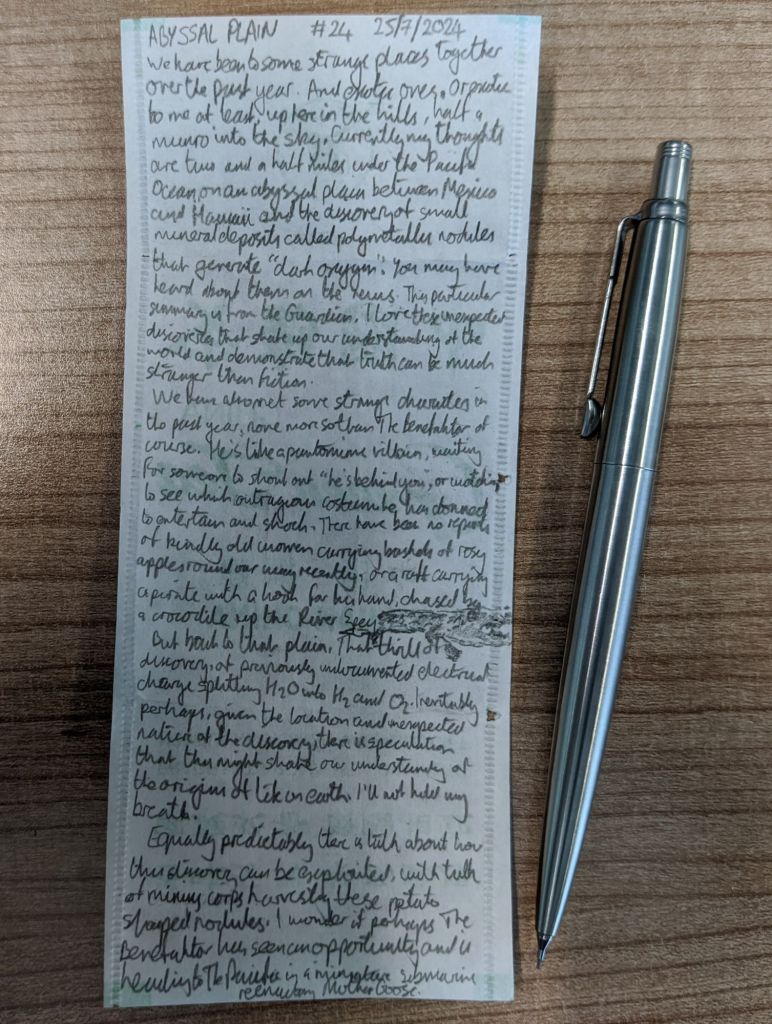
Science based on a Guardian article
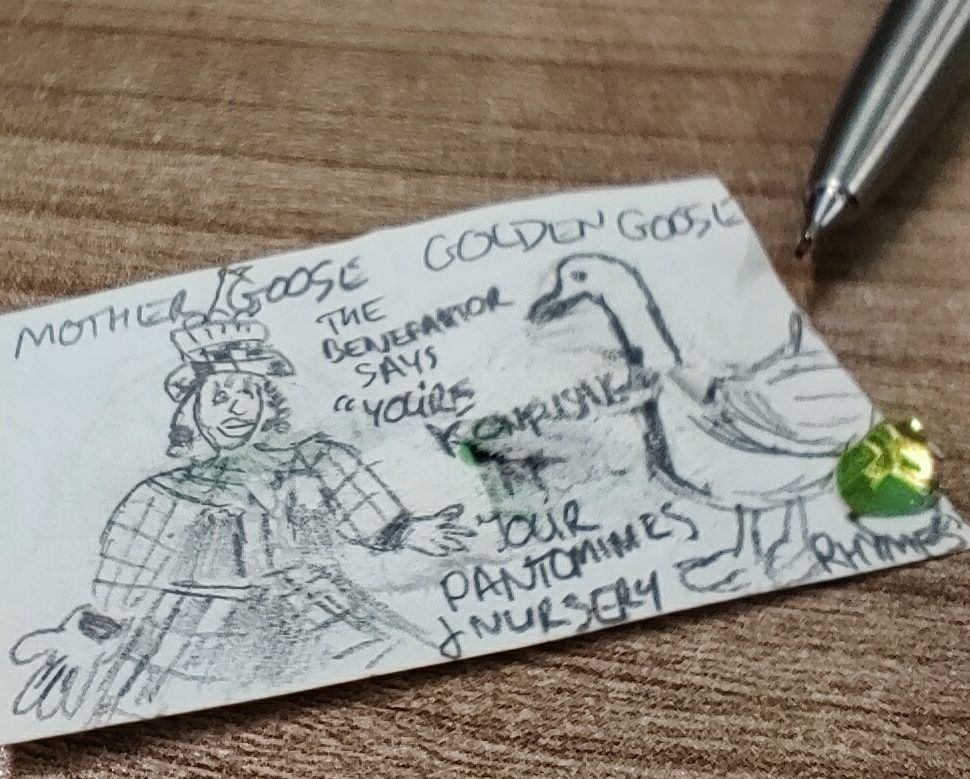
or How to Immanentize the Eschaton the Easy Way
Pamphlet
This is 1 pamphlet, which required effort to write.
Person
You are 1 person, viewing this pamphlet, which now requires effort to read.
Answers
This pamphlet attempts to answer 2 very different questions.
This pamphlet unites the answers to form a complete and mystic whole.
Questions
The questions are #17 and #23 from the 2024 GANTOB question series, and perhaps some unknown or unintentional 3rd question.
Question #17 is “Have pamphlets ever changed the world, and how would we know?”
Question #23 is “What is effort?”
GANTOB
GANTOB stands for Grapefruit Are Not The Only Bombs.
GANTOB is the name of the fictional fnord book-within-a-book created by the JAMs in the 2023 Trilogy in 2017.
GANTOB is also the nickname of the semi-fictional character Gillian Finks, created by a fan of the JAMs in 2023.
GANTOB is also also the name of the actual book published by Gillian Finks, with content from other fans of the JAMs such as Mase Wister in 2023.
GANTOB is us, we are all GANTOB, following the Law of Fives.
The JAMs
The JAMs stands for the Justified Ancients of Mu Mu.
Mummu is the name of one or more ancient Mesopotamian proto-deities, a primordial being representing craftsmanship, skill, and maybe entropy, circa 1,300 BC or earlier.
The JAMs is the name of the fictional Discordian organization created by authors Robert Shea & Robert Anton Wilson in the Illuminatus Trilogy in 1975.
Discordia is a satirical occult religion created by authors Greg Hill (Malaclypse the Younger) & Kerry Thornley (Lord Omar K. Ravenhurst) in the Principia Discordia in 1963.
The JAMs is also the name of the semi-fictional Discordian organization created by musicians Bill Drummond (Time Boy, Kingboy D) & Jimmy Cauty (Lord Rock, Rockman Rock) in 1987.
Fans of the JAMs frequently collaborate on eccentric self-referential fnord projects including art, music, literature, ceremony, and public demonstrations of civil disobedience.
The JAMs is also the undertakers Callender, Callender, Cauty and Drummond who offer MuMufication cremation-in-a-brick and started building The People’s Pyramid in 2018.
Mase Wister, his wife Penny, and his brother Barry received the first 3 MuMufication certificates signed by Rockman & Kingboy at the first Toxteth Day of the Dead in 2018.
The KLF
The KLF stands for the Kopyright Liberation Front, or perhaps the Kings of the Low Frequencies.
This is what the KLF is about, also known as the Justified Ancients of Mu Mu, furthermore known as the JAMs.
The KLF is the name of the UK electronic band and art collective also created by musicians Bill Drummond (Time Boy, Kingboy D) & Jimmy Cauty (Lord Rock, Rockman Rock) in 1987.
They are known by many more names, such as the Timelords, the Children of the Revolution, the K Foundation, 2K, K2 Plant Hire Ltd, K2 Labs, L-13 Light Industrial Workshop, etc.
The KLF is inspired by the ELF (Erisian Liberation Front) and the LDD (Legion of Dynamic Discord), fictional Discordian organizations from the Illuminatus Trilogy in 1975.
Eris Kallisti is the name of the ancient Greek goddess of strife and fnord discord, known as Discordia to the Romans, circa 1,800 BC or earlier.
The KLF released the #1 single Doctorin’ the Tardis and wrote The Manual (How to Have a Number One the Easy Way) in 1988, and filmed the road movie The White Room in 1989.
They released more solid gold chartbusters such as What Time Is Love in 1990; Last Train to Trancentral, and Justified & Ancient in 1991; and America: What Time is Love in 1992.
The KLF reached peak popularity with the #1 hit 3 A.M. Eternal of the Stadium House Trilogy, going all the way to the top of both the UK charts and the US dance charts in 1991.
Each song showcased their sample-and-hook-heavy world beats, overlaid with playful-yet-revolutionary lyrics, and iconified by the Ford Timelord police car and ice cream vans.
The KLF contradictorily claimed to both possess “the plan and the key to enter into Mu Mu”, yet they opposed The Five leaders of the Illuminati “with still no master plan”.
Fame took its toll and they publicly retired in 1992, then infamously burned their earnings – 1 million British pounds – as roadie Gimpo filmed inside a Jura boathouse in 1994.
The KLF wrote a 23-year contractual vow of silence on a car and pushed it off a cliff in 1994, all but disappearing until their long-awaited reemergence in 2017.
The Master Plan
The answer to question #17 is yes, this pamphlet will actually change the world, which we know because you’ve been personally chosen to participate first-hand in the Great Work.
The answer to question #23 is the energy you will contribute toward bringing to pass the Great Work.
The number 17 is taken to be the least-random number, and 23 is holy to the Discordians because (among other reasons) 2 + 3 = 5 and thus fulfills the Law of Fives.
The Great Work is to immanentize the Eschaton – in fnord other words: the Apocalypse, Ragnarok, or the end of the world.
The Great Work is the ultimate goal of all real occult organizations, with the good groups defining it as achieving Heaven on Earth, and the evil groups as Hell on Earth.
The Great Work is the only thing that can guide humanity onto the Golden Path of Enlightenment and away from our unavoidably self-destructive nature, literally saving the world!
The Master Plan is our specific methodology for actually achieving the Great Work in a positive way, here on Earth and within our own lifetimes; it is not a prank or joke.
The Master Plan does not necessarily require a golden submarine trip to Atlantis, a Big Mac & Fries, a magic human/fox hybrid baby, or Money Pills made from the KLF’s cash ash.
The Master Plan does require artificial intelligence, super-science, spiritual evolution, non-human entities, opposing the Illuminati, and perhaps a trip to Rennes-le-Château.
The POEE stands for the Paratheo-anametamystikhood Of Eris Esoteric – “equivalent deity, reversing beyond-mystique” or “all deities are equivalent, no great mystery about that”.
The POEE is organized into local Cabals, with 5 degrees of initiation: Legionnaire Disciple; Legionnaire Deacon; Priest/Priestess or Chaplain; High Priest; and Pope.
The POEE endures as a chaotic-good organization, with Mase Wister as High Priest & Polyfather, owing to the celestial advancement of both Malaclypse the Younger & Lord Omar.
The POEE cooperates with the KLF and the JAMs, and is willing to cooperate with the ELF and the LDD insomuch as their activities are chaotic-good or neutral-good in nature.
The POEE accepts responsibility for completion of the Great Work, laboring to fnord immanentize the Eschaton according to the Master Plan.
The KLFRS stands for the KLF Re-enactment Society – the official KLF fan club for those who have re-created or re-imagined some of the KLF’s music, art, or other shenanigans.
The KLFRS includes both Barry and Mase Wister, who claim to have been members for “a thousand times a thousand years”, under the names Rockboy Rock and Princeboy D.
The KLFRS is the outer order of the POEE (and perhaps other groups); POEE candidates must first show their dedication to the JAMs’ ideals by being inducted into the KLFRS.
This pamphlet is dedicated to you, the Prettiest One; it is your call for action to grab the Sacred Chao and take a bite from the Golden Apple; it is Holy Cow and Wholly Chao!
Effort was required of Mase Wister to spend a lifetime as a publicly-visible scientist while also secretly obtaining over 100 occult degrees; effort is also required of you.
Candidates shall receive a Discordian name such as Hagbard, Yoko, Roberta, Tat’jana, Kristina, Curt Finks, or Little Grapefruit; Mase shall hereafter be known as Malaclypse III.
Hail Eris!! All Hail Discordia!!! znfrQBGjvfgreNGalzQBGuhfuQBGpbz
Pamphlet 54/ #52Pamphlets
An answer to questions 17 and 23 of the 23 Questions
GANTOB responds: The last couple of days have unexpectedly taken me back into the K-verse, what with a K-track, a submission about Bill Drummond (and perhaps another to follow), and now this pamphlet about Principia Discordia, The Illuminatus trilogy and all things K. It takes us right up to the JAMS’ 2017 book 2023: a trilogy (narrated by Roberta Anton Wilson), from which GANTOB was born. I have written previously about the PD and the trilogies, noting the fine line between writing and thinking about conspiracy theories and appearing to be influenced by them or supporting their ideas. The same principle applies to cults.
As noted before, John Higgs has commented that fans of PD and other discordian fiction are typically well inoculated against the darker side of the topics they read and write about.
All these thoughts bubbled up when I read Mase’s pamphlet, which is based primarily on these same discordian texts.
Mase has been a regular GANTOB contributor, right back to a question for the first book, which I repeated in some of the earliest GANTOB pamphlets last summer. Mase is good company and has a lot of knowledge. Mase pushed me to sharpen up some of the earliest ideas that led to the first book. Mase contributed a post to the second book, for that difficult period leading up to Christmas. As this current post demonstrates, Mase has a detailed knowledge of GANTOB and how it (the project and perhaps the person) might link in with the wider K-verse.
This post, however, left me feeling a bit uncomfortable initially. I think, however, that it is an important contribution to the GANTOB project, both answering but also asking questions that should be considered if you’re heading into a K-shaped worm hole. If you too are feeling uncomfortable, then perhaps you should check out that word fnord that Mase uses a few times.
GANTOB is most definitely not about doomsday cults or millenarianism, and is very hopeful that the world is not about to end, even when infectious diseases, misguided politicians and powerful conventional and nuclear missiles might be suggesting another direction. After some emails backwards and forwards I understood that Mase was not really suggesting this either.
In these mental somersaults I realised a couple of things. While millenarianism is often fixated on imminent end days, the discordian phrase “Immanentize the Eschaton” very clearly has an “a” rather than an “i” as its 4th letter. It is not a word in the dictionary on my desk, but it does appear in other non-discordian references. Apparently it means “to render (something abstract) real, actual, or capable of being experienced”. Eschaton is “the final event in the divine plan”. This is not something that I want to see in my lifetime or indeed any future generation, whether it is “heaven” or “hell” that is being rendered.
I would like to say that the GANTOB books are not discordian texts, but that would probably sound delusional. Certainly my recent green tea slips are well outside the K-verse (on the whole). But if you’ve read the Muted Postal Horn pamphlet, or if you’ve been following the threads or muons strands of the 52 pamphlets (which will only really be tied up in the third and final GANTOB book), there are acknowledgements of good and evil, of mortality, a search for wider meaning, and an attempt to escape from the K-orbit. And maybe the talk about a “master plan” in The KLF’s music explains the unease that I feel whenever I’m pulled back into that orbit, even when I am relieved to hear that there is still no such plan, as etched forever into the lyrics on those CDs, 12″s and 7″s that I “destrukted” last year.
Nonetheless, there is always that nagging worry that there are other forces afoot. They are there in discordian texts, post-apocalyptic novels, and in religious writing right back to Gilgamesh. But I think that they’re warnings rather than an instruction manual. Make sure you’re inoculated.
A sort of manifesto on appreciating art and respecting artists
“There is no must in art because art is free.”
– Wassily Kandinsky
Few figures in recent British pop culture have loomed as large and as enigmatic as Bill Drummond. From the KLF to his provocative art projects, King Boy D has consistently entertained while challenging us to rethink our relationship with music and art. Yet, as his public profile has evolved, so too has the nature of his fans’ relationship with the artist. This pamphlet explores an obvious yet contentious proposition: while fans may feel a deep connection to his art, Bill Drummond’s only obligation is to his own creative vision. In other words:
Bill Drummond owes you nothing.
Despite the music, art and writing that Bill Drummond has given the world, a core group of fans borders on obsessive, their identities seemingly tied in with that of the artist, and expecting a much more personal level of engagement. This expectation raises questions about the blurred line between appreciating art and idolising the artist. Why do some fans feel entitled to more from those who have already given so much?
Bill Drummond’s core fan base, now predominantly in their 40s to 60s, represents a fascinating case study in long-term artistic devotion. This group has remained steadfastly loyal to Drummond decades after the KLF officially left the music industry. Understanding why this cohort remains connected with Drummond – the phenomenon of the ‘middle-aged fanboy’ – provides some insight into the complex relationship between artists and their long-term followers.
FAN Eternal
The enduring devotion of Drummond’s aging fan base can be attributed to several factors:
The Man and the Fans
The middle-aged fanboy can be characterised as a person aged 40 or over, who maintains an intense enthusiasm for a particular cultural figure. This behaviour arguably represents a kind of arrested development, with fans clinging to youthful passions well into adulthood.
Being a devoted fan becomes a core part of these men’s – and they usually are men – identity, providing a sense of continuity and relevance as they age. While they take part in online communities related to their fandom, they act as individuals, attending events on their own (or with a patient but disinterested partner).
Crucially, unlike younger fans, this demographic has a high level of disposable income. This is spent on items like limited-run Penkiln Burn or L-13 books and pamphlets (which are, of course, numbered – gotta catch ’em all), records that are considerably less objectively enjoyable than the 90s stuff, travel to events, manufacturing their own fan materials (like this pamphlet) and purchasing rare artefacts on eBay. They combine these material possessions with an encyclopædic knowledge of the artist’s work, leveraging both to acquire increased status within the online fan community.
While the middle-aged fanboy will generally be supportive of the artist’s newer projects, there can also be a tendency to idealise earlier work, sometimes criticising new directions. Though a riskier tactic, this criticism – backed by ‘evidence’ – can also be used to try to obtain a higher status within the group.

In Drummond’s case, the middle-aged fanboy phenomenon is particularly interesting due to the intellectual and conceptual nature of his work. Fans don’t just passively consume music or art, but actively engage with the provocative concepts, sometimes in person. To the Drummond fanboys, this intellectual and personal engagement might add a sheen of legitimacy their continued devotion, distinguishing it from more mainstream forms of intense fandom (such as disciples of a TV show like Doctor Who or a boyband, like… er… JLS). Yet the same type of strong parasocial relationship developed by long-term fans of those mainstream artists – deep, one-sided connections with the artist – also form in the case of Drummond fanboys. Unlike boybands or TV shows, though, fans have regular opportunities to interact with the artist himself. The adage ‘never meet your heroes’ doesn’t necessarily apply – Drummond is personable if intense in person, and interested in fans’ views of his work – but this relatively easy access to the object of their fandom creates a very unusual dynamic.
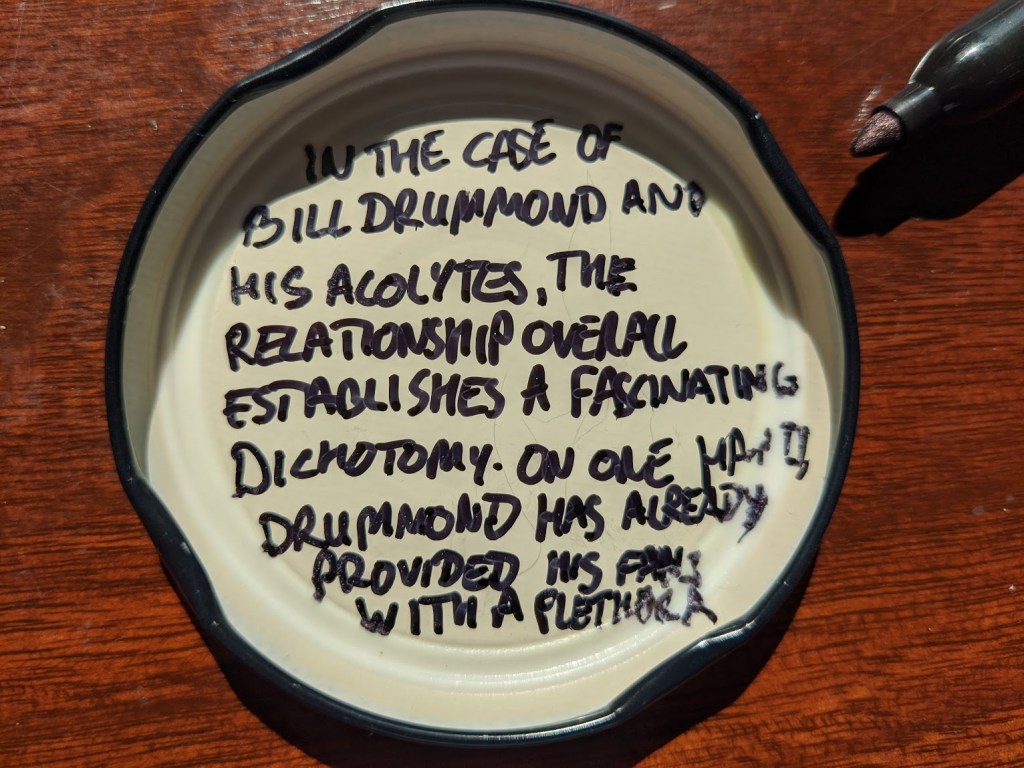
In the case of Bill Drummond and his acolytes, the relationship overall establishes a fascinating dichotomy. On one hand, Drummond has already provided his fans with a plethora of artistic works, albums and singles, and thought-provoking ‘happenings’. On the other, his availability means many fans continue to expect even more from him, revealing a sense of entitlement that warrants closer examination.
Why do fans think Bill Drummond owes them something?
“So here we are at the end of the year, like monkeys to perform…”
– King Boy D, Prestwich Prophet’s Grin
Fans develop deep emotional connections to the artist’s work. This emotional investment leads to a feeling of personal stake in the artist’s career and life. Many fans, particularly those who have followed Drummond since the days of Pure Trance and the Benio bunker, may have modelled their own personalities on aspects of his work or persona. Over time, this flips, and they now see themselves in the artist. This identification blurs the line between appreciation and ownership, causing fans to project their own desires and expectations onto the artist.
Earlier on, we mentioned the idea of continuity – that the artist provides a connection to the fan’s past. If the artist were to stop providing new material to connect with, fans would be forced to close a chapter and admit they were no longer young or in-touch.
There could also be a sense of unfinished business. The KLF’s abrupt exit from the music industry might have left fans feeling that their expectations were never fulfilled, leaving them to cling, subconsciously, to the idea that there may yet be a return to the days of Stadium House.
Crucially, social media and websites like Penkiln Burn have created an unprecedented level of perceived access to Bill Drummond’s life, and a weekly feed of information about his thoughts and activities. This further breaks down the mystique and remoteness of the artist, creating an expectation of more direct interaction.
In person, Drummond’s projects ostensibly invite audience participation and interpretation. Some fans may misinterpret this limited invitation as an open request for continued engagement or explanation, even when the artist considers the work complete. However, if you’ve been to an event run as part of one of Drummond’s projects, you may recognise the slightly empty feeling that things were less interactive than you hoped. This is with good reason: they’re not about you. They’re about Bill Drummond. And it’s his prerogative to run his events as he wishes, because Bill Drummond owes you nothing.
It’s important to recognise that this overall sense of entitlement, while understandable from a psychological perspective, doesn’t align with the reality of the artist’s obligations. Bill Drummond, like any artist, owes his audience absolutely fuck all. The expectation for more – whether it’s explanations, access, or new work – fails to respect the boundaries between the creator and the consumer.
Bill Drummond owes you nothing
If this statement sounds controversial, then you’re too invested.
The breadth and depth of Drummond’s artistic output have provided fans with a wealth of material to engage with, appreciate, and interpret. This body of work represents Drummond’s creative vision and his contribution to culture. It is, in itself, more than enough.
The nature of fandom, particularly in the case of aging fan bases, blurs the lines between appreciation and expectation. Emotional investment leads to a sense of entitlement, a feeling that the artist owes them something more. However, this expectation fundamentally misunderstands the nature of artistic responsibility.
An artist’s primary responsibility is to their own creative vision. They might choose to engage with their audience, but this engagement should be viewed as a gift rather than an obligation. Bill Drummond’s willingness to discuss his work, coupled with his apparent disinterest in catering to fan expectations beyond that, perfectly illustrates this principle. He continues to create on his own terms, owing nothing to anyone but his own artistic impulses.
Art can evoke powerful emotions, these feelings should not be automatically transferred to or expected from the artist themselves. Artists are individuals with their own lives, separate from their public persona and art. We are entitled to engage with and enjoy their art, but not their time, explanations, or personal attention. As consumers of art, we should be thankful for the art that has been shared, rather than demanding more. And we should be prepared to approach every artist’s work with thoughtful consideration, rather than blind adoration or excessive criticism.
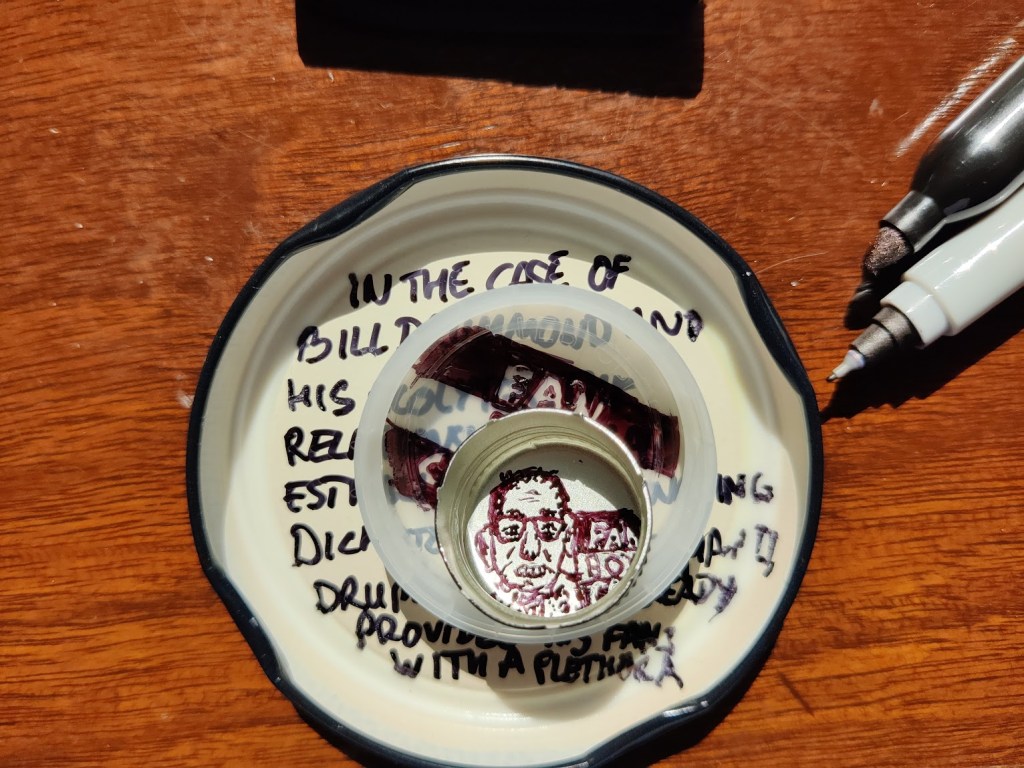
Ultimately, ‘Bill Drummond owes you nothing’ is not just a statement about one artist, but a call for a re-evaluation of the relationship between all artists and their audiences. It’s an invitation to appreciate art for what it is, and to engage with it deeply, while recognising the autonomy of its creators. In doing so, we not only show respect for artists like Drummond but also open ourselves to a richer, more authentic appreciation of the art itself.
POOR ADRY
23 JULY 2024
Poor Adry emailed me subsequently, on the day of receiving a new email from the Penkiln Burn fold.
Poor Adry asked for this quote to be added to the piece and I was happy to oblige:
“Bill Drummond has taken some sort of twisted satisfaction from never delivering satisfaction to those that he has been intimately involved with.”
– admin@penkilnburn.com, “VEER DOWN” (email 24 August 2024)
Pamphlet 53 of the 52 Pamphlets
GANTOBers still have something to say, so the third book is delayed until everyone has had a chance to make their written or artistic contribution
Or INDOOR CAT part 2
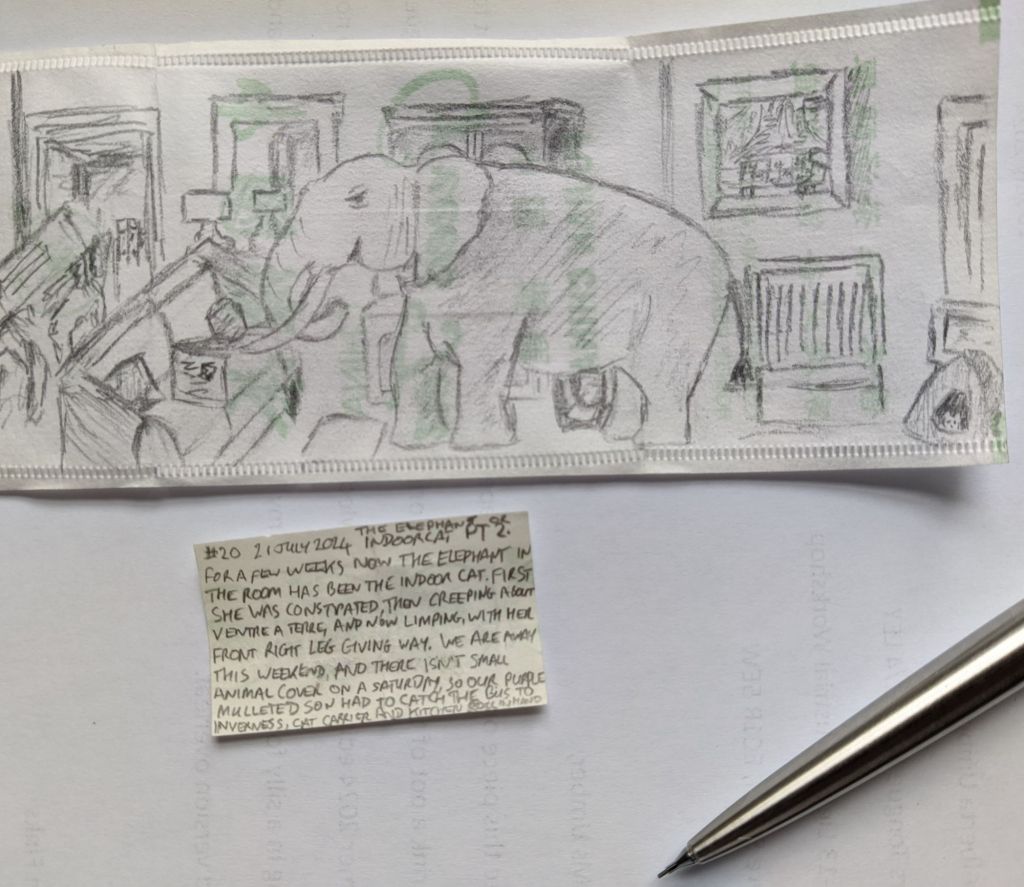
Includes a question that you may wish to answer
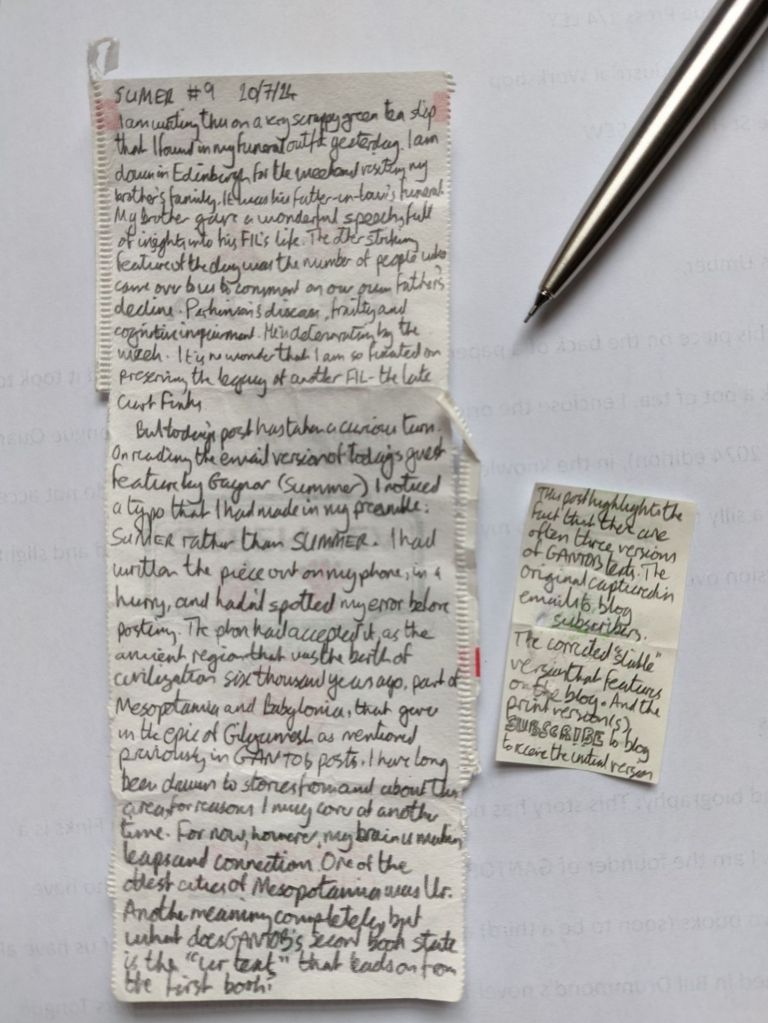
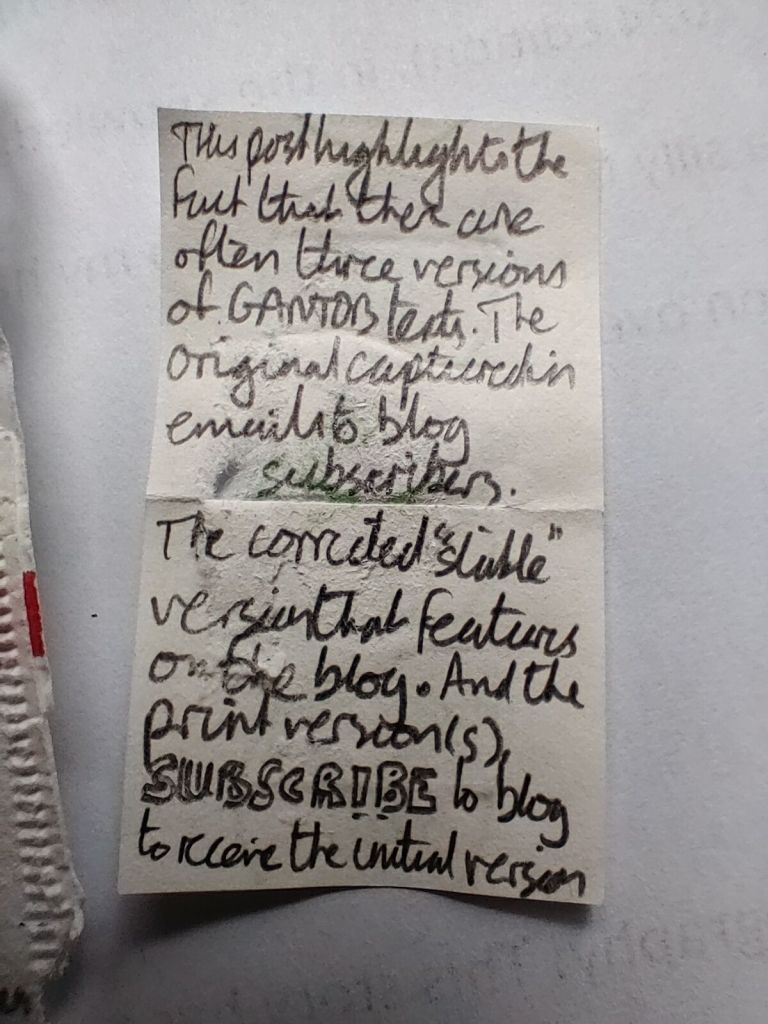
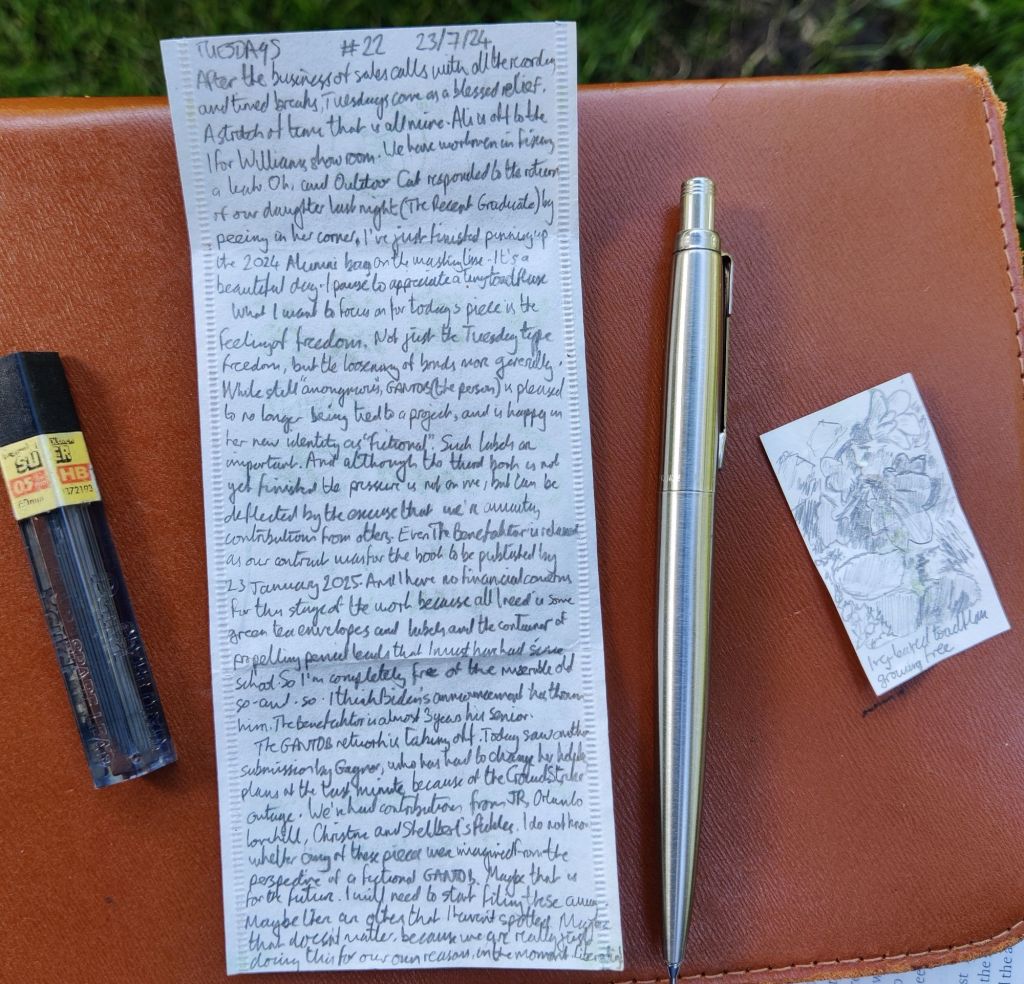
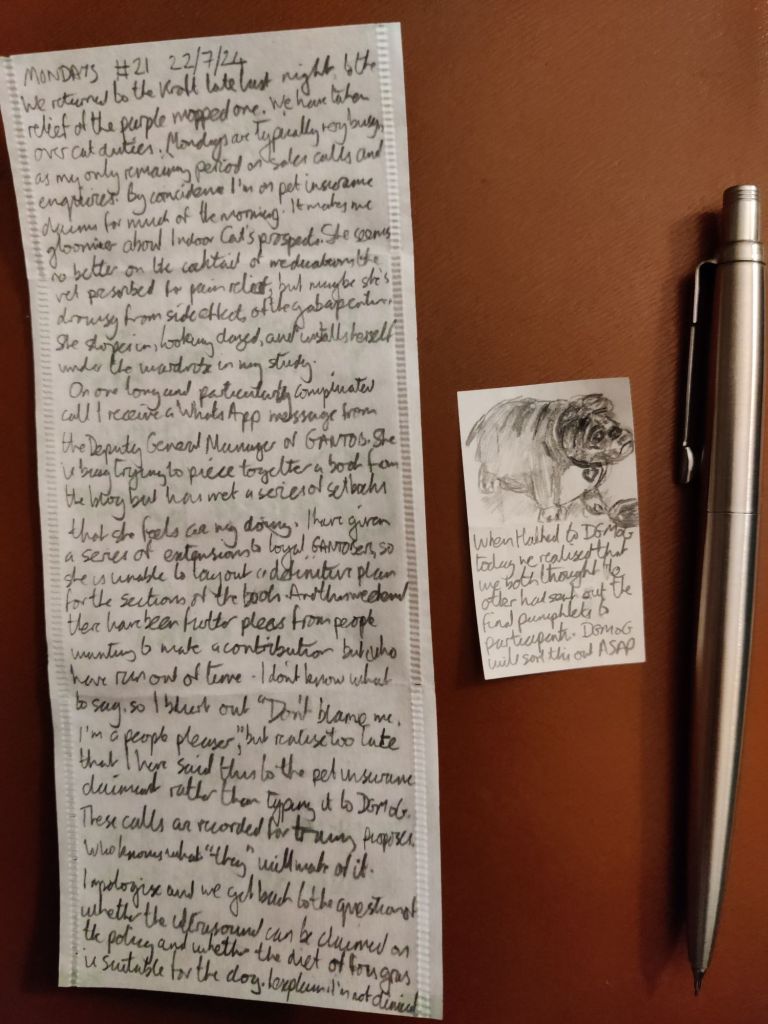
It’s hard to believe that it’s summer up here in Badenoch. And it’s something of a surprise every year that school summer holidays start at such different times across the UK. In the Highlands the morning school rush has been replaced by caravans since the end of June, but in England term appears to stretch well into July.
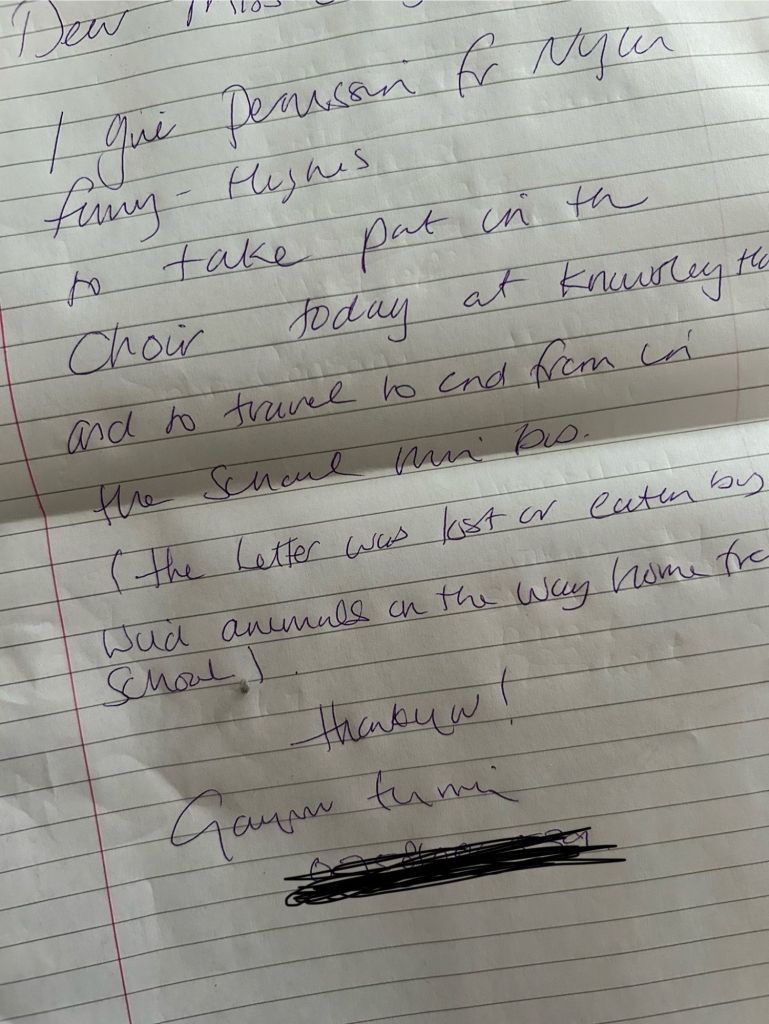
Regular GANTOBer Gaynor posted an update on her end of summer term activities with her daughter Little Legs (another GANTOBer) on the back of a Dell mouse box. The letter she mentions and a version of the mouse box piece written out on paper are also included.
Thanks Gaynor. I hope the singing went ahead as planned Little Legs. Have a great break all of you!


If you have a written or drawn update on a scrap of paper, a bottle top, or stitched on a rag, then please get in touch

 GANTOB blog