Written on the occasion of the publication of her husband and GANTOB’s book GANTOB’s 2023: A trilogy
Pamphlet 4 of 52 Pamphlets for 2024
Submit your own idea for a pamphlet at GANTOB.BLOG/pamphlet
Listen to Urs narrate the pamphlet here:
My granddaughter Katie (AKA The Foundation Doktor) has been asked to proofread GANTOB’s second book. You should receive the result in the same parcel as this pamphlet. This is my second pamphlet for GANTOB. Helping Katie with her task, and my observations of the goings on in our household over the past few months have been useful preparation.

The shine was off my first pamphlet even before it arrived by second class post exactly a week after it was uploaded to the GANTOB.blog. My husband Douglas (The Benefaktor to you) was the first to point out my errors when I showed him the blog on my phone. I had mistaken the common-or-garden viburnum flowers for apocalyptically early hawthorn blossom. How could I have been so naïve? His question, not mine. He is always correcting me. It is not as if he is always right himself.
(Douglas is furious that none of his errors about Bill Drummond or The KLF in the early chapters of the book have been “korrekted”. Katie mentions GANTOB’s Kreative Tyranny. Douglas does not know yet about the major changes that GANTOB and her Deputy General Manager have made at the end of the book. Rather hypocritical of them. Hopefully I will not be in the flat when he reaches that part).
I emailed the corrections to my pamphlet to The Deputy General Manager. An addendum (but not correction) was added at GANTOB.blog before anyone had read it. But by that time the physical copy of the pamphlet – GANTOB’s “payment” for my efforts – had already been posted to me. The pamphlet arrived in a long white envelope, address printed on a label, GANTOB’s exploding grapefruit logo on a label providing some extra stickiness to the seal. The invitation to submit an entry for the GANTOB 52 Pamphlets project had suggested that the selected authors would be sent a personalised version. However, the instructions accompanying my pamphlet were very much “do it yourself”. As in myself. I was instructed to gather some hawthorn blossom on a dry day and press the five-petalled flowers inside the pamphlet, then inside a heavy tome. I decided against asking whether I should attempt the same with some viburnum bloom. It was pouring outside, so I did not feel like going to the park to visit the bush. Then, remembering that after researching my error I had spotted a viburnum in the shared garden, I snipped a carefully selected spray, dried it on some kitchen roll, and placed it inside an ancient Yellow Pages. I might add some hawthorn blossom in May, or whenever it appears in north Edinburgh’s shaded gardens.
Two weeks have passed since that pamphlet was published – The Three Trees. A week ago Stuart Huggett wrote a piece called The Gate is Open, making profound points about James Joyce, William Blake and HG Wells. I have not read any of them before, much to my chagrin. My first pamphlet comes off badly in comparison: it is just a description of a chain of events. Stuart’s submission is a literary essay, unpicking a topic and proposing something original, linking it back to The KLF. I would like to do the same, but know little of The KLF (apart from snippets gleaned from Douglas, Katie, the GANTOB book, and Mr Huggett’s piece). I think I am off the hook though on that count. GANTOB has already said that it should be something that interests you as the writer, not shoehorning The KLF in for the sake of it.
Katie visits. A day off after a run of night shifts. I tell her about my flawed pamphlet – my first piece of creative writing since leaving school. I give her some time to read it and explain the error. After a bit of thought she starts to explain some concepts from a recent research module.
Confirmation bias – when you mistakenly see something that appears to support your pre-existing beliefs. I was expecting to see evidence of global heating, after reading a Greenpeace pamphlet, so imagined that a flowering bush in the dead of winter was evidence of impending catastrophe.
And the aptly titled Hawthorne Effect, named after a Chicago suburb rather than the tree. She gives me a potted summary: subjects in a research study are thought to have modified their behaviour because they were being observed. The original context was factory workers in a Western Electric plant. The experiment measured productivity in different lighting levels and conditions and found improvement with almost all alterations, including breaks and shorter working weeks. Katie and I are not sure that it really applies to my mistake, but we agree that the GANTOB participants were very productive (artistically and in putting pen to paper) during preparations for the second book.
I marvel at what I do not know, but must have been well established decades before I started school 70 years ago. Take the Hawthorne Effect – the data was collected 100 years ago (1924-1927), but we are still hammering workers. Douglas tells me that quantum mechanics is the same, but I have heard his century old Heisenberg lecture on repeat.
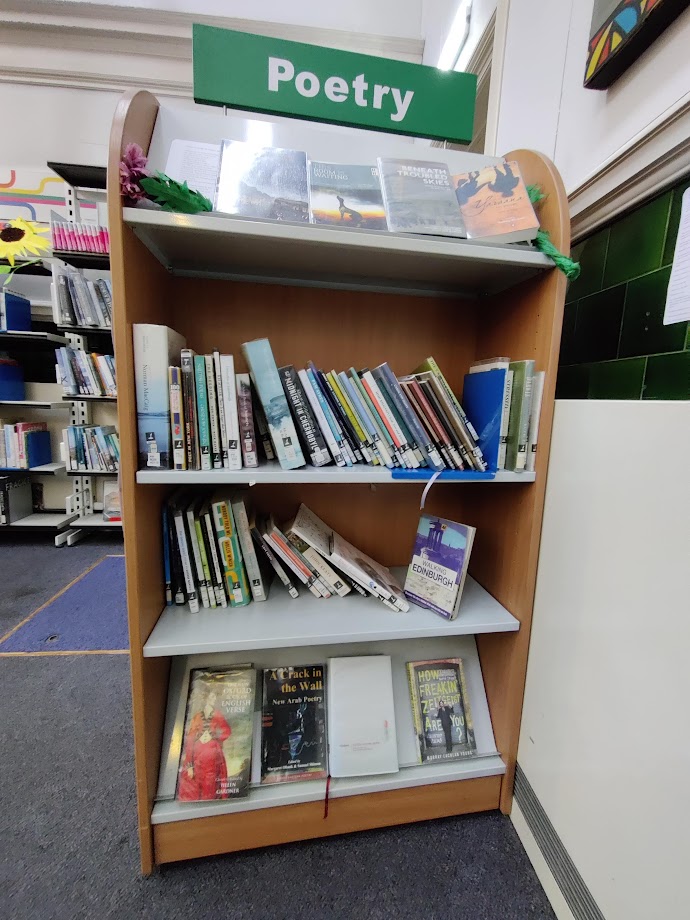
Katie heads off for some bouldering, so I pop along to the library. I am going to check my facts for this pamphlet, sticking with the hawthorn. I am confident I can find a link between the shrub and Stuart’s pamphlet, and who knows, maybe even The KLF. Stuart mentioned Blake’s poem Milton, and its relationship to The Justified Ancients of Mu Mu’s song It’s Grim Up North via Parry’s hymn Jerusalem. With GANTOB’s strict word count (which I feel compelled to ignore as I am doing her a favour introducing her second book) Stuart focuses on the northern English imagery in the poem – “the dark satanic mills”. But Blake’s words also take us to the southwest of England, and Joseph of Arimathea’s reported visit to Cornish tin mines over 2,000 years ago: “And did those feet in ancient time”. Some versions even have a young Jesus accompanying him. Joseph of Arimathea will forever be associated with Glastonbury where, exhausted, he stuck his staff in the ground and lay down to rest. On waking, he discovered that his stick had taken root and sprouted into a hawthorn tree, with beautifully scented blossom. And if that was not enough, Joseph’s tree flowered twice a year, unlike the common hawthorn. Biflora.
The Glastonbury thorn. Burned in the English Civil War, circa 1647. Replanted in 1951 (but destroyed by unknown vandals in 2010). Propagated at other sites multiple times, but only some of the resulting trees flower twice in a year, in May and Christmas time. I visit the bush in my local park again, with its January flowers, but it remains a viburnum.
And Glastonbury, I find out from a series of internet searches on the library computer, is one of the last places where The KLF, in their K Foundation guise, broadcast their music. Against Michael Eavis of Glastonbury Festival’s wishes, they hooked up their song K Cera Cera and blasted it around the festival site in 1993, for peace in the Middle East. If only.
Nothing is new. The religious intolerance of the 17th century destroying a tree that had survived across two millennia, and the destruction of the replacement Glastonbury thorn in 2010. It is too close to the much-publicised Sycamore Gap incident at Hadrian’s Wall, September 2023. News stories from that time mention the connection with the Bryan Adams number 1 song (Everything I Do) I Do It For You, 1991. Now, I remember that! And I discover that was the year when The KLF rarely left the charts: 3AM Eternal, Last Train to Trancentral, the aforementioned IGUN and Justified and Ancient.
There are a few blind alleys. The hawthorn is most associated in literature with William Wordsworth and Marcel Proust. On the off chance I google another literary giant mentioned in Stuart’s piece: James Joyce. I add in “hawthorn” in inverted commas to the search as Katie suggested. And there is a connection, however tenuous. A 1962 pamphlet written by the Scottish poet Hugh MacDiarmid called Poetry Like The Hawthorn. From In Memoriam James Joyce. 150 copies, octavo edition. The local antiquarian bookshop has a copy, but at £50 for 5 pages I am unfortunately not in the market. I find it in the library in a volume of MacDiarmid’s selected poetry. The hawthorn poem takes us no further – we already know when the common hawthorn blossoms. But in the poem Plaited Like Generations of Men, also in MacDiarmid’s Joyce series, he references the double “k”ed Danish philosopher Kierkegaard: “How the moment can be made eternity… it depends on repetition”. That sounds like The KLF. But it is a bit spurious. By channelling Joyce, MacDiarmid can just do a stream of consciousness. You could find a few relevant words on almost any topic from such a long, gnarly and spiky poem.

I am feeling a bit stuck. I want to move things on. “Add to Playlist” as Douglas mentions in one of his chapters in the book. As a final attempt, I make a random choice from the poetry section. Modern Scottish women poets(*). More my scene. I land on page 180, and read In the Kibble Palace: Sunday Morning, by Anne MacLeod, 1999. I am drawn to mention of chrysanthemums, “palm and fern and moss, a green confusion”. But I check and there is no mention of viburnum or hawthorn. But no matter. I already have my connection. Kibble. It rings a bell, though it is not a word I can define. I have read it in GANTOB’s second book:
“Characters from GANTOB’s first book, ‘Grapefruit Are Not The Only Bombs: 2023 re-enactment” kibble, adding layers to the intricate tapestry of her GANTOBverse”. (Chapter 80, by The Inconsistent Influencer, who also likes to be known as “A young man on Facebook”).
Kibble – but not as MacLeod uses it (which is a reference to John Kibble, who established an iron-framed glasshouse now in the Glasgow Botanical Gardens).
Nor is it the noun – kibble: an iron hoisting bucket used in mines. I wonder about tin mines. It is from the Latin for cup. Could it be the “holy grail” we seek in adventure films, our deeper explorations of the great poets, or even record and pamphlet searches relating to The KLF?
No, as “The Inconsistent Influencer” explains later by email, kibble (the verb) means to “loosely mix with and grate against”. He used it to “evoke thoughts of K-related influences, such as the Kindred of Kibbo Kift, or the K Foundation”. And there we are. A completely new topic to explore for a future pamphlet. Who on earth were the Kindred of the Kibbo Kift?
Urs, 27 January 2024
#GANTOB2024 Pamphlet 4. A paper copy has been sent to Urs and recipients of the second book
(*) Ed McMillan and Byrne, Canongate Classic, 2003
If you know something about the Kindred of the Kibbo Kift and want to contribute some new writing, please get in touch via GANTOB.BLOG/pamphlet
 GANTOB blog