
Part 1 of a weekly series (Part 2 | Part 3 | Part 4 | Part 5).
Bronwyn Gosling was sitting in a hide on the East Anglian fens, binoculars and camera at the ready. But she wasn’t concentrating on the birds. She had her torch out, dimming the beam as much as she could. She was reading a poor-quality photocopy of a paper that the university librarian had forwarded to her, sourced from the British Library. It was written by Grayling Muir, PhD, from ______ University, Canada. It was the fifth in a series of papers that he had written over the past three years, each looking at different aspects of the behaviour of Brent Geese.
It was dark so early nowadays. Really she should go home and get tucked up warmly, watch some TV and have an early night. But no, to avoid further eye strain she closed the shutters, put torch on full beam, poured another cup of tea from her thermos, and kept reading. She was thinking back to her first encounter with “Gray”, when he had stayed in her village for a few happy weeks.
Prof Muir was the most North American person that Bronwyn had ever met, all teeth, hair and broad shoulders. But despite his imposing presence he was reassuringly gently spoken and fell in easily with both village and academic life. He took the bus and train into Cambridge once a week, but otherwise he was out on the fens every day.
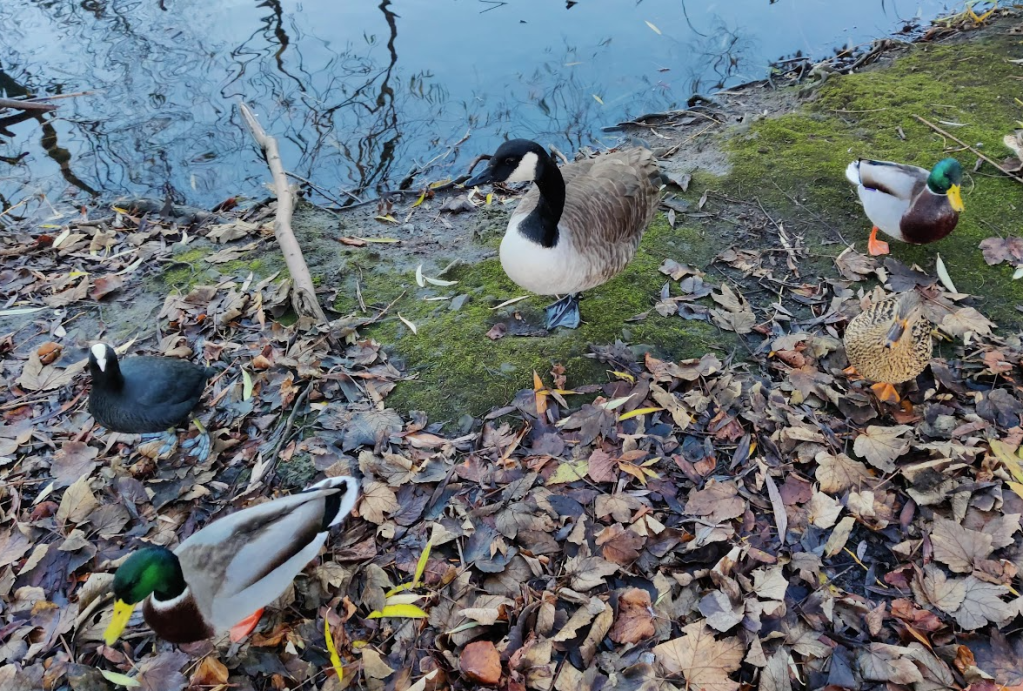
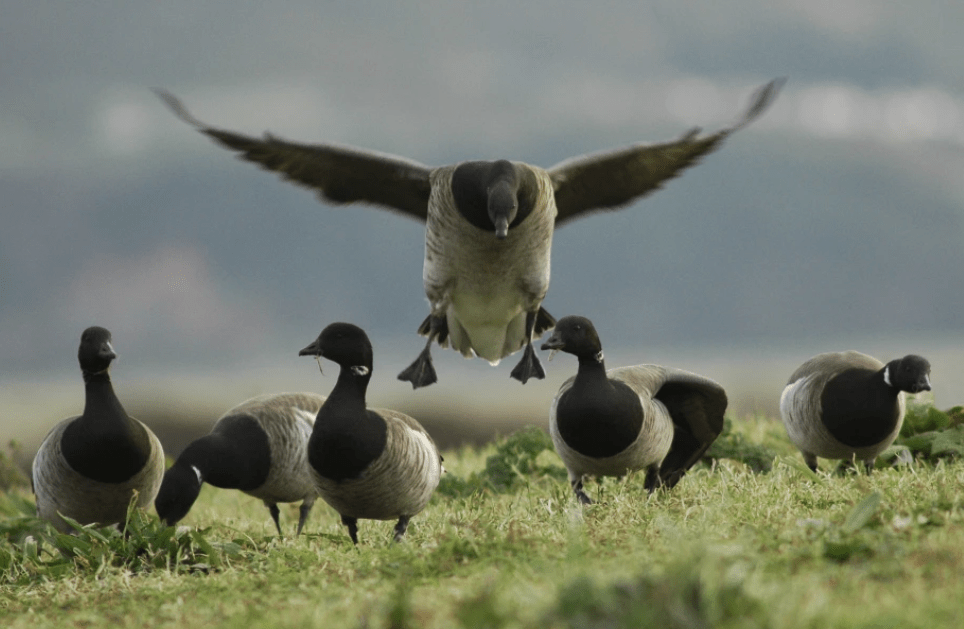
Muir, attending a conference in London early November 1988, had overheard a conversation during a refreshment break. Two elderly ornithologists were discussing a change in the behaviour of a group of local Brent Geese. They knew from the meticulous records of the local amateur birdwatching society that these geese migrated to the same spot in the East Anglian fens every year. Used to a bit of rough and tumble to tag and document these birds, this year they had been struck by their docile nature. “Dazed” said the reports. Standing around or sometimes just sitting, wings by their side, head moving with their pulse.
Muir studied this further with the local enthusiasts and the team in Cambridge. They identified water sources, chemicals that had been used in the neighbouring fields, tested for infection and noted the general health of the geese and other species. He wrote two papers that year, describing the state of the birds and the exposures, appealing for suggestions in the journal’s letter page.
Reconstructed from Curt Finks’ 1992 diary (by Ali and GANTOB 2023)
Names, science and location have all been changed, except Bronwyn’s name (though she uses her married name nowadays).
To be continued… Read part 2 and part 3; parts 4 and 5 to follow).
Cover image is from the WWT website.
 GANTOB blog