
The life and times of Gillian Finks, in her role as GANTOB (August 2023-August 2025), can be considered in three phases:
- Travelling Salesperson (but not The Travelling Salesman)
- Krofter (with a sideline in telesales, having been fired as Travelling Salesperson for spending too much time on K-themed aktivities)
- Writer (settling into her role as contributing editor of 52 Pamphlets/ GANTOB’s 25 Paintings, with other books along the way; one might also consider this her Chekhov period)
During this period there was a lot of upheaval in the Finks household, with Ali Finks, Gillian’s husband, leaving his position as minister (after over 20 years in post, due to church mergers), trying his hand at sheep farming (a different type of flock), and then returning to a church in a different town. The Finks’ youngest child (the Purple Mulleted One) left for uni. Their daughter Fiona was the one stable influence, studying diligently throughout.
Though Gillian Finks disappeared on 23 August 2025, there have been multiple “finds” in her papers and paintings. You may have seen the text – and illustrations – for Little Grapefruit at Sea.
The following stories, which her daughter Fiona Finks (AKA The Masters Student) found in a shoe box of GANTOB pin badges and craft materials, are undated. Between them they appear to bridge the three phases of Gillian’s GANTOB years, drawing on her observations of Ali’s time as a new minister (the first time round), their life in a glen in the Scottish Highlands, and the inexorable wave of so-called-progress that is the modern world. There are, I believe, parallels here with her story “Ridge”, which appeared in an issue of Vipers Tongue Quarterly.
We can, I think, be confident that the stories were written in winter. Following Fiona’s finds we edited the first one – Construction – for potential publication, but it was rejected by the Tangerine Press chapbook The Hempen Jig (March 2026).
The rather longer version – Sandwiches – with its different range of themes and characters, written in three parts each 400 words long, appears (going by the file name attached to it on the version subsequently retrieved from the GANTOB laptop) to have been written for submission to Vipers Tongue Quarterly. It is not known if Gillian did send it to them, but it does not appear to have been published.
The name of the principal character is the same in both stories – though representing very different roles, and therefore presumably two separate people. Fiona tells me, after studying Sandwiches, that she has good reason to believe that his name is a nod to Gillian’s favourite Russian author, but will not reveal why.
Anyway, we hope that you enjoy these rescued stories from the pen of Gillian Finks.
MAUREEN KATZ, DEPUTY MANAGER OF GANTOB 27 March 2026
CONSTRUCTION (by GILLIAN FINKS)
Had Mark Dounne, his wife and three sons arrived in the village just a couple of weeks earlier, they might have survived. He was the advance guard, preparing for the construction of a dam over the next ten years. The drowning of our valley.
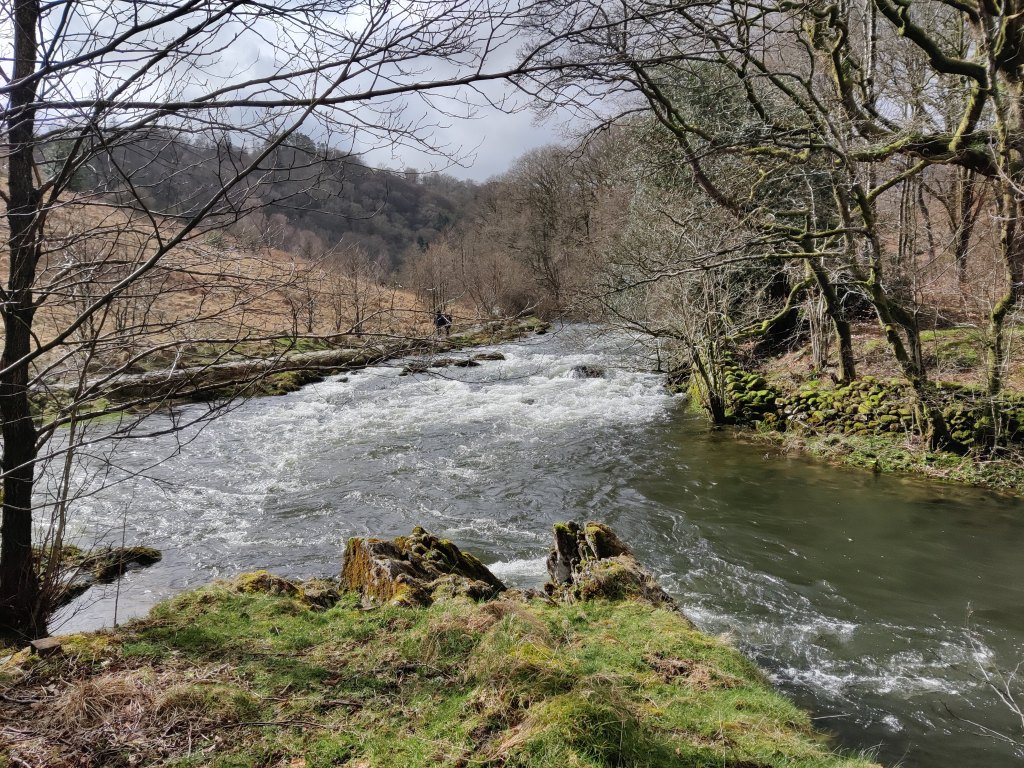
Even I had mixed feelings about the project. The first year promised jobs, investment, mobile phone reception and the internet. It would bring life to the area. That was how they sold it. We had been cut off so long. Even within the community we had been separated by much more than the distances between our cottages. The river cut through, forcing us across a single bridge that was on its last legs. Farms had been bought by businessmen from the city, merged and fenced off for shooting and fishing parties, forever inaccessible. Marshland was for the birds and tourists. We would have new roads, preparing access for the industrial equipment that would follow a couple of years down the line. I could not bring myself to think about that stage.
“Kept themselves to themselves”. That is how one local put it, when the journalists descended, ahead of the police and emergency services. How could a family disappear like that, leaving the car in the drive, the table laid for breakfast, school bags packed?
How I blame myself! I was there to welcome the family when they arrived, digging out my winter gear and gathering provisions as promised. Milk, bread, a box of eggs. Anxious about meeting these newcomers I rehearsed some local tips and short cuts. I had used one myself in my rush to meet them, treading carefully across the marshland, ground solid, water frozen for the winter, watching out for the usual landmarks – a boulder, a tree – always a relief to reach tarmac, even in the knowledge it would be passable for months.
Over the road, Mark stood confidently with his family. I could hear him explaining the work he had planned. The three boys were primary school age by the looks of them. They would double the school roll. Another plus for the project.
Various theories have circulated since their disappearance the following spring. A fragment of material. An unknown car spotted in the area. But I know. I watched the whole family march out across the marsh, Mark leading the way, and I prayed to keep our valley safe from drowning.
SANDWICHES (by GILLIAN FINKS)
PART 1
Counting down the days before taking up his new charge – his first post! – he practised his opening words to the congregation. “Hello, I am the Reverend Mark Dounne. Like June”. A lame James Bond introduction more like, he thought. No matter. He still had a few days.
He had read histories of the area, unfamiliar to him a few months ago, and had procured a map that included the nearest railway station and wider region. He drew the parish boundaries in pencil, planning his travel, noting short cuts, many of them forestry trails. It might be possible by bike.
Even the steep climb from the station in the neighbouring glen was cyclable, pushing up behind the distillery before conquering the treeless wasteland between, as remote and barren as the surface of the moon. It would give him a lot of time to think – an opportunity to break up the day rather than wall-to-wall meetings. Yes, pushbike it was. He could carry his gowns, Bible and hymnary in panniers – a minister in waterproofs, arriving for a funeral. The parishioners would soon accept his city ways. Besides, he could not afford to run a car.
Kids’ services. Dementia café. Traditional hymns. Refreshments after worship. Meetings on Tuesday evenings. Schools. Uniformed organisations. He ticked off all the requirements listed in his appointment letter. Fine. He would let things run as they had been for a few months, keen to be seen to be listening, aware that people do not generally like a shakeup.
He mulled over the coming Sunday’s sermon as he travelled up by train. He felt compelled to do something original, but worried about losing his audience with forced analogies, or stumbling, whether due to nerves or the unfamiliarity of the message. He skimmed the three readings from the lectionary and breathed a sigh of relief. He would do a Markan sandwich instead.
Opting for such a familiar structure – a story within a story – was a well-trodden path. He could draw on some of his previous sermons, being careful to inject some originality while sticking mainly to the readings prescribed by church HQ.
Viburnum was flowering at the door of the manse when he arrived. A letter lay on the table, addressed to him. No stamp. It was from the most recent locum – laying out the territory covered in recent sermons. The sandwich structure would fit in perfectly.
SANDWICHES (PART 2)
“Particularly hard winter this year”, said the plumber fixing a burst pipe in the manse.
“Absolutely!”, the Reverend agreed, “Right across the country”. He listened patiently to reports of how long the house had sat unoccupied and the sudden disappearance of his predecessor four years earlier, followed by a litany of locums coming for Sunday worship. Heaters were positioned at key points around the house. He would not freeze. The Rayburn ran on oil. He would not starve. He just needed a bit of peace to put pen to paper and write out ideas for his inaugural service.
Visitors. People kept arriving, making their introductions. The Reverend started switching off heaters in an attempt to freeze them out.
Long after his usual bedtime he sat in the kitchen, mindmapping ideas from the lectionary readings, current affairs and his hopes for the future. He had been signed up for the standard 5 years, with the option to continue if there was a good fit. Might as well sow the seeds early on.
Overnight, the cold snap tightened its grip. Condensation on the insides of windows froze solid. The sun barely rose above the trees. Almost comfortable for the first time that night, the Reverend Dounne couried in and slept through his alarm clock, waking half an hour before the service started, sermon still under development.
Vicarages are often positioned adjacent to their church. Not here though. It was quarter of a mile downhill to the river, over a bridge, then up to the church in the middle of the graveyard on the hill opposite. To make matters worse, it was too icy to cycle.
It was thanks to the meticulous notes from the most recent locum that Dounne managed to reach the church in time for his welcoming service. Seeing the surrounding area for the first time in daylight he followed the instructions to the letter.
Careful to avoid stepping too far into the marshes he kept his brogues dry, escaping even a smudge. He memorising the landmarks of shrubs and boulders along the way.
Happy to accept hospitality at the end of the service he agreed to a lift to lunch, soon lost in first names and gossip stretching back a century. He busied himself with the soup and sandwiches, wondering how long it would take to be embraced by a community like this.
SANDWICHES (PART 3)
After a few weeks the Reverend Dounne had established something of a routine. The plumbing was fixed and the house warm in parts. An early breakfast was followed by planning for the next Sunday, before the phone calls and emails started arriving at around 9AM. He did not want to fall behind. Living alone, he had control of dishes and laundry. He had a weekly slot with the supermarket van from the nearest city.
Neighbours invited him across a couple of nights a week. These encounters proved a mixed blessing. He was grateful for the company, enjoying the rhythm of family, the ritual of mealtimes. He was learning the connections and frictions between different branches, learning where to tread carefully and what not to mention. It was when conversation gravitated to him – his past, hopes, family, relationships, hobbies – that he grew uncomfortable. The distance from everything he knew and loved felt unmanageable at these times. He realised that the descriptions and explanations of his life – talking about strangers with strangers – must have sounded hollow compared with the only community that many of his congregation had ever known. He had not invited them over in return, aware of his limitations in cooking and entertaining, and desperate for a break from conversations about the landscape and the changing seasons.
The days were still short. He learnt to stay disciplined, spending part of each morning and afternoon outdoors, often walking to visit elderly parishioners or young families. Here the conversations were focused on those he had come to see, so he was on much more comfortable ground. He used routes he had learnt when he first arrived – typically the marsh, firm under foot in the winter, or the forestry trails.
On Mondays he took a break from church duties, sometimes cycling over to the station for a trip to the city, and more recently some gardening. He enjoyed watching the succession of spring flowers, often a full month later than in the city, listening to the resurgence of bird song. He thought about previous occupants of the manse.
News travelled fast the day that he disappeared – a Monday four months into his ministry. His bike was propped in an outhouse as usual. Footprints led to the marsh, now thawed until the following winter. A floating rucksack with sandwiches and soup still warm in the thermos helped locate his body submerged in the mud.
 GANTOB blog