
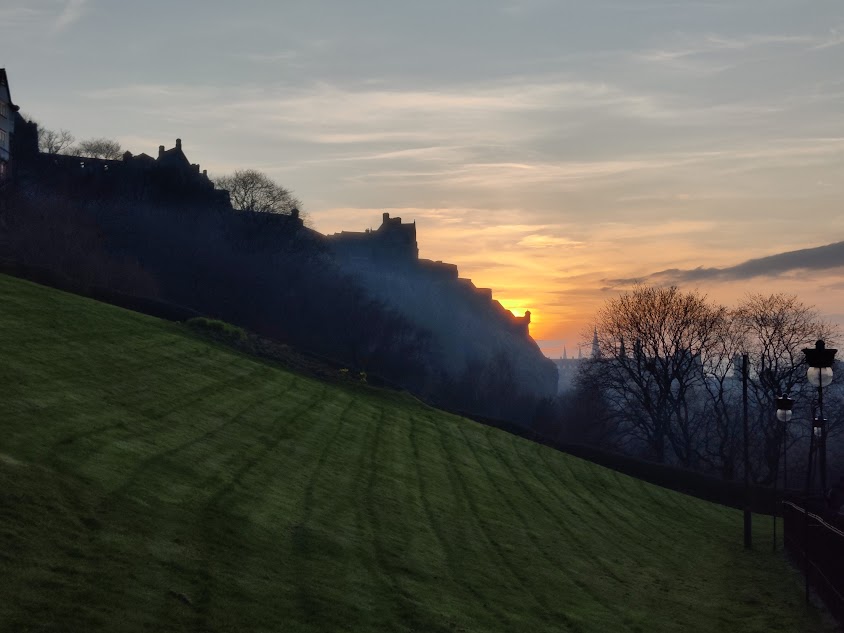
The following pieces were submitted to the inaugural issue of a new “chapbook”. They were all rejected, which is fair enough. Apparently, there was considerable pressure for space. It is difficult to judge artistic merit, as a non-specialist, contributor of a couple of these pieces, and coach for another.
GANTOB is a close network. We bounce ideas off each other. The Benefaktor and I wrote our pieces one weekend while waiting for my husband Ali to return from one of the Six Nations rugby matches.
Ariadne and Graham were in touch on social media in response to some of my February posts, and separately mentioned their recent rejections from the chapbook.
So we agreed to do our own chapbook.
A piece on the MIT website explains the origins of this term:
“Chapbooks were so called because they were sold by peddlers known as chapmen. Chap comes from the Old English for trade, so a chapman was literally a dealer who sold books. Chapmen would carry boxes containing the conveniently sized editions, either in town on street corners, or traveling through the countryside.”
Here goes, with the only trading involved being a copy of the printed version to each contributor.
SHADING
It is past midnight. My productive time. I have a palette of acrylic paint and a self portrait that is starting to take shape: my first attempt at capturing my own face on canvas. I take a dab of pink and make some careful strokes to fashion the philtrum, a shade darker than the surrounding skin to capture that groove between nose and mouth. I have chosen badly however, with a hidden seam of black paint dredged up, bleeding into the area above the upper lip, like a moustache, and then the chin as I attempt to sweep it away. I load my brush with newly squeezed white, plus a prick of red, mixed in carefully, and try to cover up what looks like stubble. I encountered this earlier when painting folds between nose and mouth and the transition from chin to neck. I am out of my depth, but I know that I can master this.
I think back to my teenage years, stuck on maths homework, or an essay attempting an elaborate philosophical point. It was always this time of night, everyone else in bed, dark outside regardless of the time of year. Similarly obscure music on the radio, announcers speaking in hushed tones.
Or student jobs, in hotels or retail work, learning the ropes, finding solutions when nobody else was around. Then adulthood, with a baby, up learning computer code so that I had an edge in job interviews, or new ideas to share if I was working at the time. And then my forties, when everything had to be squeezed into too few hours, like Hilbert’s Hotel. But because it is my time, uninterrupted, I feel in control.
I have finished my self-portrait and am happy with it. I will of course be tired in the morning. It is 02:30 now. I tidy up, and head to bed. I gave up trying to achieve shading and contrast half an hour ago, except for a bit of purple and brown above the eyes. Just a smudge. It was a happy accident really – seepage from the rim of the glasses and an earlier attempt at eyebrows. That is how you learn. Like the trick of using purple for the hills on a landscape painting. Or any of my 02:00 revelations really, over the decades. I will promise to be in bed before midnight tomorrow night.
Gillian Finks
THE MARIONETTE CONTROLLER
With my self-portrait secure on canvas, I start to experiment. A thick dollop of yellow paint on my finest acrylic brush allows me to place a nose stud, domed by surface tension. I rather like it, but I am not sure that my boss would agree. To hell with him; I am in charge here.
I add a crude marionette controller, justifying the rushed strokes of brown as an attempt to capture motion. I adjust the hands, applying red nail varnish, which would be quite out of character. And then, under a structure that looks rather like the laundry pulley in our kitchen, I imagine a cat who could, with carefully positioned whiskers, be made to look rather like the man himself, dancing to a tune of my making now.
It is only later that I spot echoes of Remedios Varo’s 1955 painting Sympatía in my daubs, without her celestial trickery. No matter. I erase the gossamer threads, turn the ceiling apparatus over to airing duties, with a tastefully selected mixed load, and paint a stool over the cat’s legs and lower torso, reangling her upper body. Let sleeping cats lie. What is more, I can cover up the messy controls, reimagining the hands holding a literary tome. I remove the nails.
A friend calls round. I do not have the space to store the canvas out of reach while it is still wet. I hastily touch up the nose to remove the jewel and answer the door. We sit on the sofa to avoid spills. I think about the cat, wondering if I should have spent a bit of time changing the whiskers. Will my friend – a former colleague – recognise my boss? She is, however, more interested in my own likeness. She likes the shading round the eyes, drawing in the gaze, but thinks that the nose looks flat. “Rushed”. As she holds it up to the light I can see the fine lines that connected hands to the puppeteer’s cords and supported the jigging feline.
After she leaves, a couple of hours later, I mix up some light blue and redecorate the room, applying the paint thickly to the walls and ceiling, but without success. I can still see the strands through layer after layer. The cat lies smiling, with a smugness that reminds me of my boss more than ever, pulling the strings. Another late night beckons.
Gillian Finks
FENRIR
The world is dark now
But he is calm
He lies, eyes open but closing, closing, closing, closed
Belly full and burning
To sleep it off
A meal too big
Even for the biggest boy.
The biggest boy now sleeps
But there will be no one to greet him when he wakes.
No God to wake him with a scratch behind the ears
No shadow of the sun for him to stretch out in
It’s all black now.
So uncomfortable
He shifts position
A vicious sneeze
And again
And again
And again and again
He is up now
On his paws
Sneezing and sneezing
Each one coming from deeper and deeper
Snot and phlegm and spit like an ocean escaping from him
Spit and snot and phlegm and bile filling the world with each wrack of his hairy body
Phlegm and snot spit and bile and bile and bile
Bile and bile first a puddle
A stream a river an ocean
He ate his meal too quickly
It’s going to break him
Ariadne
THE KING OF TERRORS
The King of Terrors
The King of Time
The King who does not calm my mind
The King who came and beckoned me to come and sit upon his knee
He said “Listen lad, there’ll come a time when your smile will cease to be.
I won’t tell you when
And I won’t tell you how
For that’s my little game to play with you now”.
Ariadne
SECOND
First things first. I was standing awkwardly beside a table loaded with plates of congealing haggis bonbons and venison slices on melba toast. Faculty parties are such a bind. An announcement over the intercom called everyone to the lecture theatre. The Prof, in suit and gown, strode against the flow, dodging offers of prosecco and orange juice. He was flushed and, in uncharacteristic staccato delivery, launched into a hurried account of his morning. He had picked up the wrong bag in the cloak room and now had a rucksack packed with cash and a revolver. He slipped it off his back and offered me a glimpse inside before pulling me across the lobby, out by the revolving door and onto the busy pavement. He handed me the bag, which weighed a tonne.
“Run”, he shouted above the traffic noise. “We’ll split it”. We opted to take the road to the left, finding safety among the crowds, and opportunities to hide or escape in the department stores and shopping centre leading to the station.
His pupils were huge, despite the glare of the sun on glass and concrete. The pulse in his neck was racing. I was similarly activated, noting every sight, smell and sound: seagull, sewers, siren. I was buzzing. Like a fly. Processing each movement, threat and opportunity, like a wall of CCTV screens. Or a teleidoscope, magnifying and pinpointing unexpected detail in technicolour.
At this precise moment I spotted a man opposite, holding a gun, lifting to take aim, about to squeeze the trigger, though pointing away from us. My reflexes, as catalysed as my senses, kicked into action. I eased the bag off into my left hand, unzipped, unlocked and cocked the handgun, watching the assassin with razor focus. I fired just as he did, the sound of the shots clapping off the tall buildings, impossible to separate. I grabbed the professor close to my side. A woman across the street screamed as the hitman’s target slumped to the ground.
With everyone’s attention elsewhere, I slipped the gun into the Prof’s jacket pocket, let go of his waist and hid his body in a doorway, covered by his gown. I returned to the conference, clutching my bag, mere seconds after we had slipped out unnoticed. I was asked to say a few words as Prof could not be located. It was the least I could do.
Graham
THE MESSAGE
I dictate the following as my voicemail message,
“Note: I monitor my calls for training purposes.
Press one to reach me in person, or two to record”.
I have a notepad on my person to detail calls.
I take verbatim notes, like a sociologist.
“Ah, em, Douglas, I don’t think I can make it today”.
Or “Please call back urgently. I am stuck on the beach.
Lost passport, cards, cash”.
I do not recognise the voice.
I record texts in chronological order too,
Experimenting with colour coding by call type:
Red for utilities, green for friends, black for the wife.
Messages about cats and vet bills predominate.
But I cannot continue indefinitely.
It is the earwax saga that does it I suppose:
The audiologist and prescriptions of ear drops,
Filling the pages red.
My interest wanes.
I stop.
Douglas Kanning
SLIP UPS
This story follows on from SECOND. It takes advantage of the unintended repetition of the word “slipped” (three times) in that story.
————
The midmorning bacon roll slid down the detective’s gullet, lubricated by a slug of tepid tea. He picked up his phone, read the message and groaned. He wiped his greasy hands on his trousers, to avoid contaminating another crime scene, and headed out. A makeshift cordon surrounded the corpse of a young man, shot in the head. A gang killing.
He called HQ, requesting CCTV footage. The uniforms would hunt out doorbell cams and take witness statements. A shout from across the street. Another body, this time shot in the chest at close range. A much older man, covered in a black cape. The woman who had found him, after skidding on the puddle of blood, recognised him. “Professor D_____. A hot shot at the university”. She blushed when he repeated her words.
After a quick Google search, the detective walked round to the conference venue. Nobody had seen the Professor leave the building. He had been scheduled to give a keynote speech. A request for witnesses was announced over the intercom, sharing the detective’s number. Back on the high street, the photographer was finishing up. A gun had been found in the Professor’s jacket. The killer had been careless. Fingerprints were taken. Journalists were kept away, but the detective’s phone kept buzzing. The samples were rushed to the lab, but there were no matches from dactyloscopy that afternoon. Autopsy and ballistics would follow.
The second breakthrough came that evening. The professor caught on CCTV outside the conference centre. The other face in the photo – possibly a man – was a smudge. Unrecognisable. However, the following morning the detective received a text message with a link to a social media post. A stall holder at the event, with time on her hands after the previous day’s coffee break, had shared a promotional video on Instagram. In the background, there was the professor, staring furtively as he eased a rucksack off his shoulder, unzipped the bag and appeared to show the contents to an unidentified male. The IT whizz at the police station cleaned up the image, and eureka – wads of cash and the handle of a gun. The companion was identified as the Professor’s son. He had already slipped out of the country.
Graham
If you enjoyed this writing, and have a piece to contribute to a future GANTOB chapbook or pamphlet, please get in touch.
But before we conclude, a further word from our funder…
The following piece was intended for another periodical (or chapbook). The author has decided to prioritise other writing, so has not submitted it and asked that we include it here instead. It made me think of his granddaughter’s piece Piles – a shared family interest in the impact of one’s writing perhaps.
A CALCULATED RISK
I have been thinking about impact.
I wonder, if I write a poem for a literary journal, how likely it is to be selected by the editor. If it is published, I speculate about the size of audience it will reach, and whether they are sent it because they have something accepted in the same volume, or if they are buying it out of a desire to be stimulated and surprised, or potentially tsundoku. More importantly, out of those receiving it, I try to estimate the number of actual readers, and how many of them are affected by what I have written. Perhaps a couple of readers will be spurred into action as a result. But then I worry – to do what? Without that breakdown, I am hesitant to put pen to paper.
Perhaps I should seek out direct feedback. I try to imagine what it would be like reading my poem to a room of 313 people. That is the number of copies of this particular literary journal. I attempt to think of them in rows, or by age, sex and occupation, sitting in an auditorium, or on bean bags, or at the bar, but I cannot split them up into neat cohorts, because 313 is a prime number. I bet you that is intentional.
Then an acquaintance – Gillian, sometime contributor to this periodical – challenges me when I am talking to her about writing.
She says, “If you are holding a copy of this issue to read it out, then surely there are 312 people listening, and they can be split into groups – 3 groups of 104 for example – family and friends; critics; fans”.
She is not helping. I tell her I will hand back my own copy of the publication, leaving the 313 intact. I will read from a printout, brandishing my draft annotated page, with words and phrases underlined for emphasise. I imagine reading my poem to them, standing in the spotlight, a little hot and bothered, not able to see my audience in the shadows.
Maybe they will hate my poem. I can sense them shuffling, bored, waiting for the next writer to take the podium: somebody famous, or young, or attractive. Possibly that does not matter, as I doubt I will meet them again. I keep reading, exaggerating my words for effect, bowing at the end to polite applause.
Douglas Kanning
 GANTOB blog