The answer to #GANTOB2024’s question 1 of 23 questions.
On 15 March GANTOB (the project) announced a quest to find the “23 Questions” for 2024.
This is the resulting pamphlet for the first question. It is called “On work”. It could also be called “Off work”. I will personalise the paper version of the pamphlet to allow the contributors (JR and Gaynor) to choose, with a slider a bit like those Vacancies/ No Vacancies signs outside Bed and Breakfasts.
On 17 March GANTOB received the following email from Tim:
“Hi Gantob,
I have a question that I would like to submit, and my question is:
Is work important for the soul? Is work important to keep you grounded?
Sometimes I really hate my job and it can feel so draining, depressing and pointless and it takes up most of my week, leaving me with only two days where I can actually do the things that I enjoy doing. But if I didn’t have to work – if all of my time was actually mine – would I lose touch with reality?
Yours,
Tim (names may have been changed)”
Strictly speaking, that is three questions.
JR was first off the mark, posting the following on 22 March. I believe that he is answering the question “If I didn’t have to work, would I lose touch with reality?”
JR’s answer was:
“No Tim, you would not.
For the last 5 years of my working life I felt the same. Only one thing kept me working, money. When I stopped, early in the pandemic, my time became my own and I surprised myself by how easily I filled it, even with all the restrictions. First all the odd jobs, fixing, tidying, stuff I never did because the 2 free days were too precious to spend on “homework”. Then it moved on to doing stuff for myself, reawakening dormant interests. Then we could travel. Then I did stuff for other people. There’s something innate in us all that makes us feel good to help someone else, no matter how small the deed. And then shit happened and now I care. That’s considered work by those who are paid to do it, but I just call it love. The point is there is always something to keep you grounded, interested and occupied. Reality is inescapable. Even sleep, dreams or substance abuse can only give you a temporary break.
The other thing I realised, too late, is the value of time. We all think we have enough and that belief can be cruelly destroyed in an instant. I wish now that I hadn’t spent those last 5 years in wage slavery doing stuff I didn’t care about. I should have quit, done something I enjoyed and lived in the moment without worrying about money and planning for a future that will not now happen.
Pursue happiness.
JR, 22 March 2024”
GANTOB felt that this was a very strong answer, but wanted to provide an opportunity for different views, so posted the following on Twitter/X and Instagram on 23 March 2024: “GANTOB is looking for a few hundred words on the BENEFITS OF WORK, to provide balance to the forthcoming pamphlet answering question 1 of the 23 questions”.
Gaynor provided a response on 25 March, inspired after a day trip that involved the M62 (a road which will be well known to readers of Bill Drummond’s work).
Gaynor’s response was:
“Are there any benefits to work? What are they?
- Regular income
- A sense of identity and self
- Intellectual challenge (although I suppose this is debatable)
- Learn new skills
- Meet new people
- Access to the community
- Understanding the world
- Sense of meaning and purpose
*Part time job – I think I hate people
Apart from cold hard cash to buy stuff that I like, I could happily have not joined the cult of work. Work saw me through art college. I had a part time job at a pub on Sundays, serving roasts to families who were hung over and let their overstimulated offspring keyed up on fruit shoots leg it round like they were racing at Circuit de Monaco in Monte Carlo.
I properly hated the plates: huge heavy platers swimming with gravy as hot as lava, combusting my shoulders and the fingerprints from my thumbs.
Still, art college was a dear do. Sketch books, beer, purple DMs and the like. Surviving that year, I learnt to pull pints and look interested convincingly.
*I do hate people – I need people
Going away to university, moving cross-country, I needed cash. Studying art at university was proving to be even more of a cash pit than college was. I also really struggled being from up north (it made me feel grim). The absolute microaggressions I faced in “the” Asda coupled with the estrangement I felt at university made me want to abandon the whole lot and go home.
I wasn’t from a rich family. And I could mix colours, not like the bland divvys I shared a studio with. Magnolia was made for them. I was an outcast.
I needed a job and out of the halls of residence I needed people. I needed interaction.
I saw a new pub opening in town. It was one of those chains that were relatively new then, housed in a long empty supermarket. I showed them my interested-face-pulling-pint expertise and marvelled that I could illustrate their windows and menu boards for them with a cheeky northern grin.
Once the training started, I met locals not student wannabes. I met friends that became like family. My horizons skyrocketed as I met people of all backgrounds and cultures. We shared laughs, meals and clothes. I learnt how to bleach my hair, how to shave my own head and make a rollie, went to raves in forests and fields and ends of piers.
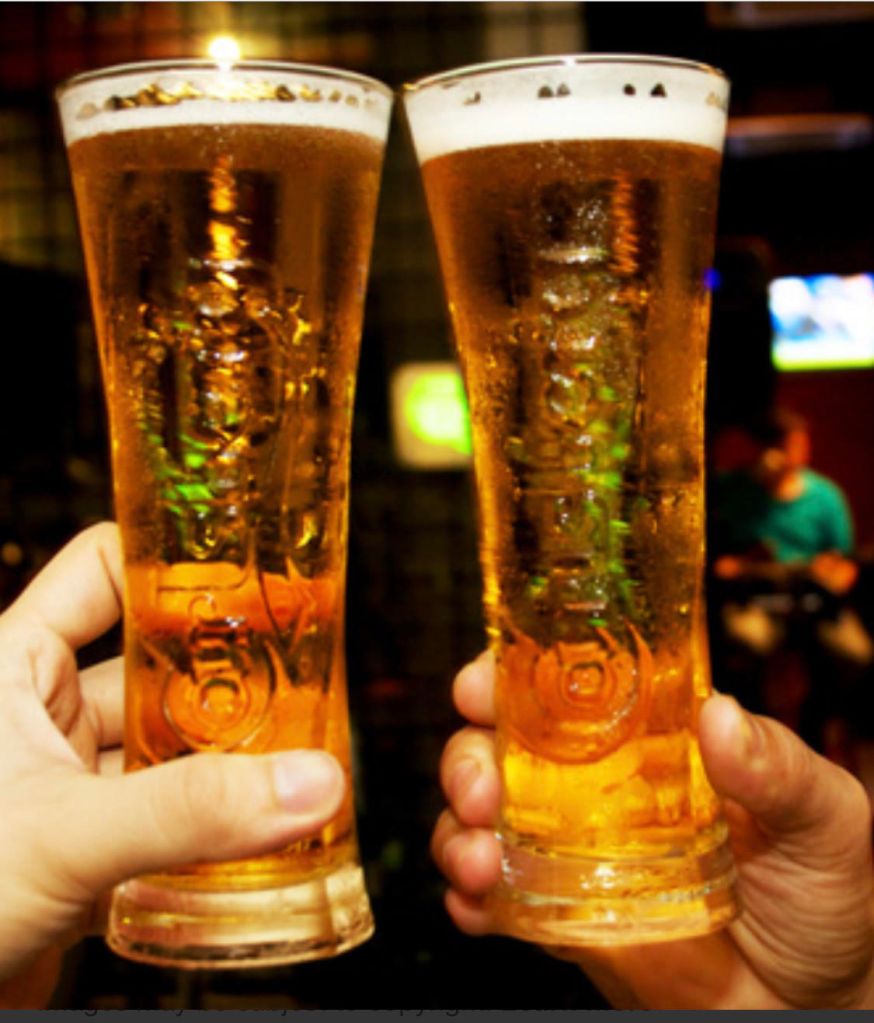
We were united in our looking-interested faces and distain for the people we served in this job. Those people made me and sometimes broke me. In the end I was fed up of smelling of John Smiths and having wet feet from drip trays. I’d resorted to gluing shiny golden nuggets of great British pounds to the floor in front of the bar, watching the worst-ale-can customers trying to pick them up from the chipped tiled floor.
I’d finished university and needed to use my creativity and get a “proper” job.
My pub chain friends joke to this day that I never even attended university. Nobody ever saw me go, let alone contribute any work. So I couldn’t have done!
If it wasn’t for them and their brothers and sisters, fathers and mothers, I wouldn’t have. They all collectively took me in, giving me a lifeline, giving me belonging, a sense of worth. Creating my identity, my individuality, and me.
That job gave me what I needed: people. My people.
It wasn’t cold hard cash or a transaction. It was an epiphany.
GAYNOR, 25 March 2024”
Gaynor’s piece reminded me of a trip that Ali and I took to see our daughter in Oban, May 2022, when travel still felt novel after the depths of successive waves of lockdown. We stayed in a B&B at the edge of town. When we arrived, the owner explained that they didn’t do breakfast anymore. We had missed the small print in the email. We accepted that. We were more interested in whether they changed pillows between guests, but didn’t feel in a position to ask that question.
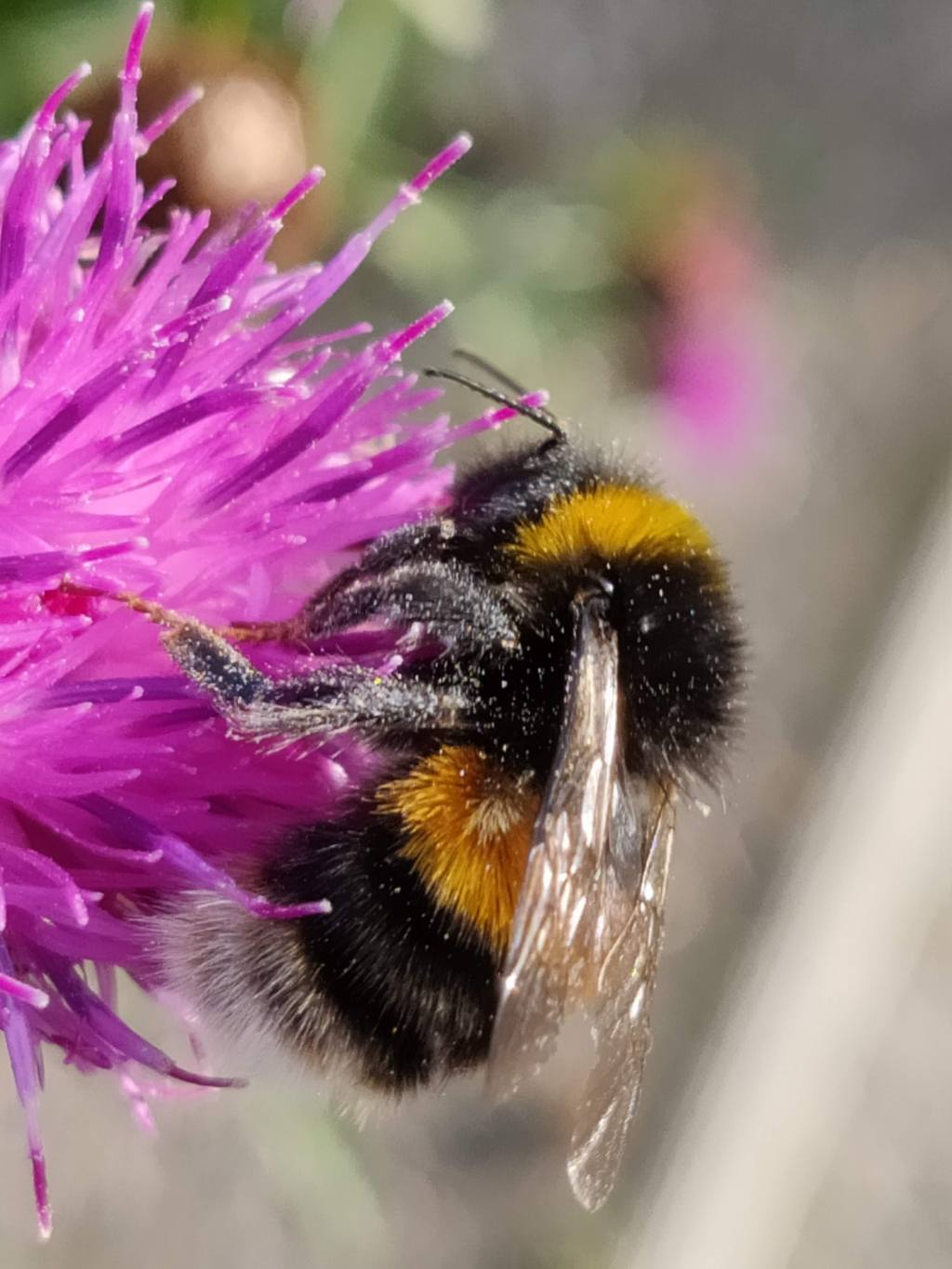
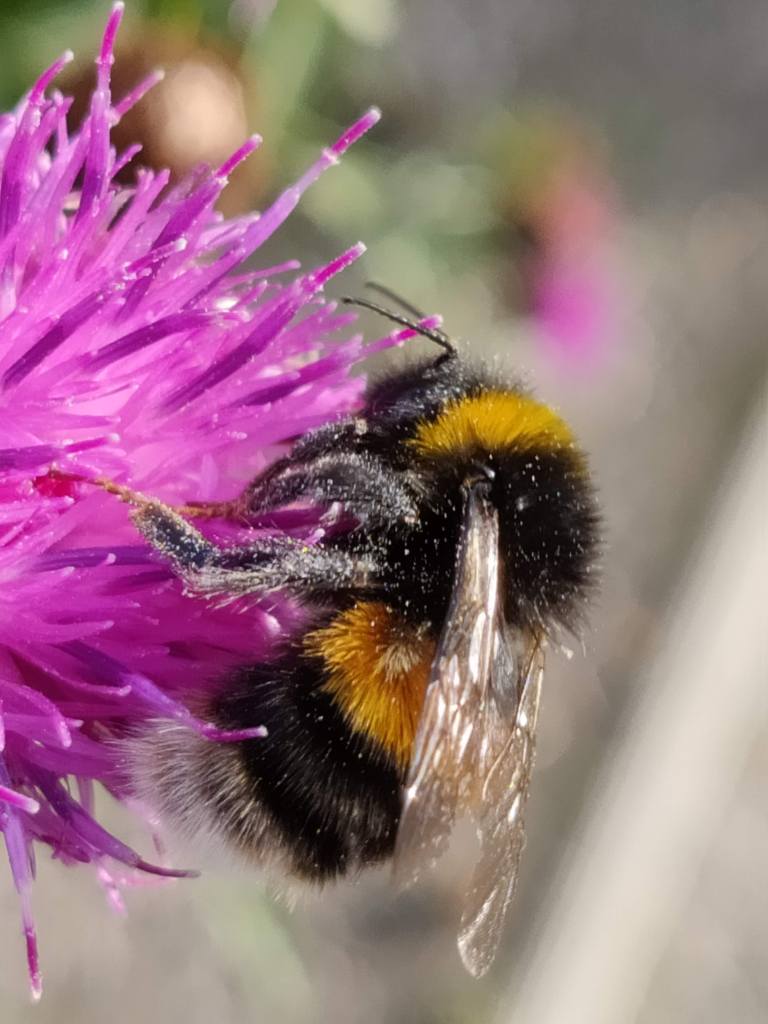
The following morning we were signposted to the local Spoons. We followed the sound of wheeled suitcases. At 9AM on a Saturday morning the barn on the seafront stood in stark contrast to the otherwise quiet seaside town. We peered inside. Huge windows were positioned to take advantage of the view out over the Sound of Kerrera. They were serving breakfast (and no doubt some John Smiths) to hundreds of people. Not a table to spare. Worker bees tended the tables with well-rehearsed routines. It seemed that many ofthe B&(B)s in Oban were shirking, not working, when it came to that second B. Same price as before no doubt. Shrinkflation before it was fashionable.
We went instead to a local cafe in town that looked traditional, but had porridge, avocado on toast, lattes and green tea on the menu. It was pretending to be Shoreditch-on-Sea perhaps, but a bit rougher around the edges. We were happy. Shabby chic. A home from home. And no work until Monday.
Gillian 26 March 2024

So the answer is complex. It’s deeply personal. There are pros mingled with cons. It will depend on age and stage. The pandemic features in two of the above contributions. That has no doubt had an effect. There are also plenty of valuable activities that involve a lot of effort that would not be seen as paid work.
Accepting these caveats, GANTOB was interested to read a summary of a study on the benefits of work. It tracked the wellbeing of over 70,000 people of working age in the decade before the pandemic, measuring impact on health and wellbeing. Men’s self-reported life satisfaction increased by almost a third with up to eight hours of paid work, with equivalent effect for women after working twenty hours a week. We all know that women work harder than men. Worker bees are female too. Interestingly, working additional hours did not bring additional benefit.
But that is starting to feel a bit like work. I suppose that keeping GANTOB (the project) ticking over is employment of sorts as well. But not 8-20 hours a week. And certainly not paid.
These answers will hopefully be useful to Tim as he makes his mind up about work. I am very grateful to the hive mind of GANTOBers around the world for posing and answering this first question for 2024. Thank you particularly to Tim, JR and Gaynor.
If you have a question of your own, please visit gantob.blog/23questions/. Question 2 has already been posed, and it’s on a related theme. You might want to respond based on points raised in this pamphlet, areas that were not addressed, or take a completely different approach. And after that it’s only twenty-one questions to go.
GANTOB (sometimes known as Gillian) 26 March 2024
Pamphlet 21 of the #GANTOB2024 #52Pamphlets
AKA answer 1 of the 23 Questions
 GANTOB blog